Creativity Test
Answer 20 quick questions about your everyday habits, picking whichever option feels closest to how you actually act. At the end, you’ll see how much creative behavior currently shows up in your daily life — it takes about 5 minutes.

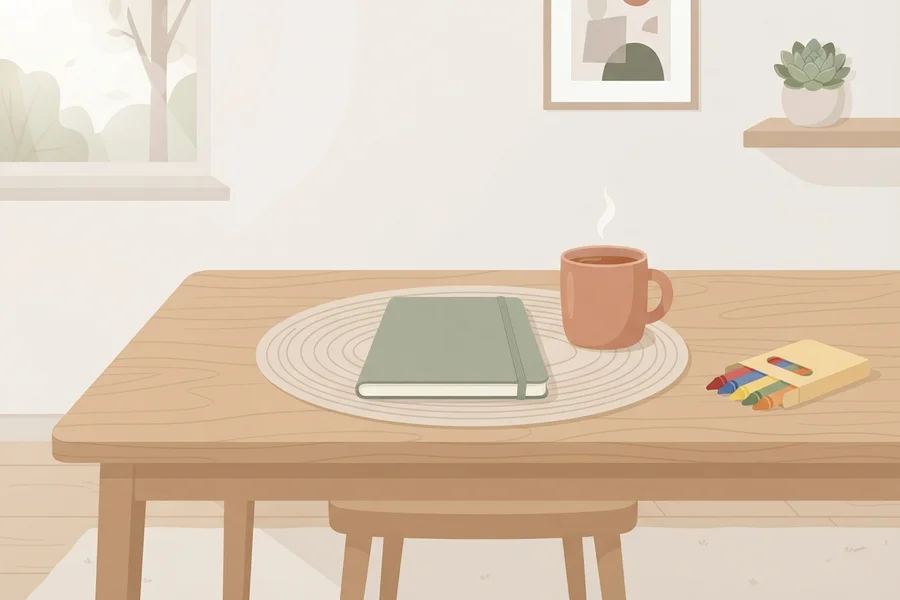
Clear Ground. Right now, creative behavior barely surfaces in your day-to-day life.
Right now, the space where extra options usually crowd in stays pretty quiet. A problem gets solved once, and that's the end of it — no detour into a second version, no lingering over an odd connection between two unrelated things.
This says something about the last stretch of time, not about what you're capable of. A short self-report like this one only loosely tracks how creative thinking actually performs on a directly tested task, so a quiet result here isn't a ceiling on anything.
There's a real upside to how things run at this level: plans move forward without the extra weight of chasing alternatives that might not pan out. Energy stays where it's needed instead of scattering into ideas that go nowhere.
What this result can't tell you is how things would look with a different stretch of free time, or a different set of daily habits. That part stays genuinely open.
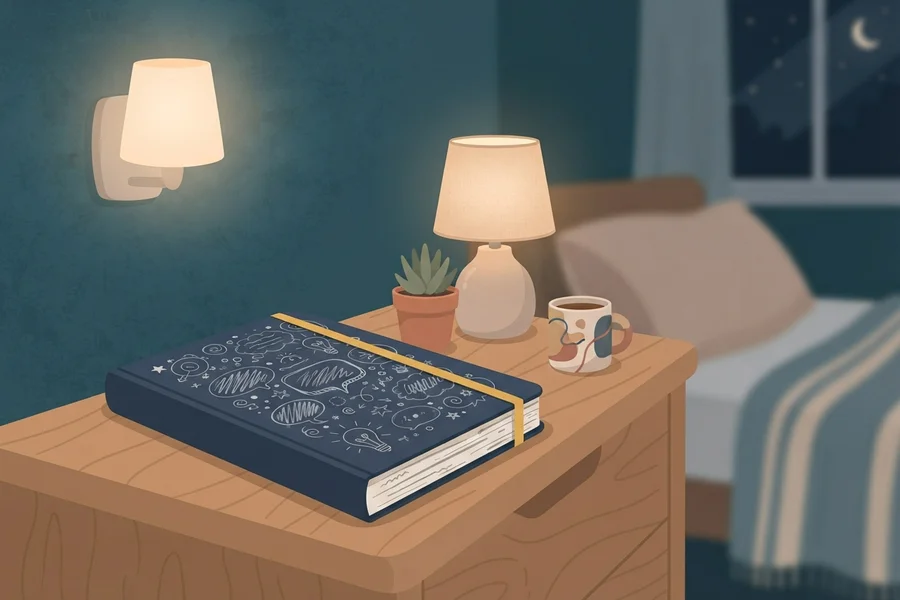
The Back Room. Ideas surface for you, but they rarely turn into something finished or shown.
Something is clearly stirring under the surface here — an odd connection that shows up unasked, a small idea you turn over just because it's interesting. That part of the picture is active, not missing.
What tends to stay put is the next step: carrying one of those ideas across the line into something finished, or letting anyone else see it. That's a separate move, and for now it mostly doesn't happen.
Plenty of people who think in genuinely inventive ways live at exactly this stage for long stretches — it's a common, ordinary place to be, not a stall or a waste of what you've got.
The upside is a private stream that never runs dry: alternatives, half-formed notions, odd little sparks, all without the extra cost of finishing or showing them. What's left open is simply whether any of it ever leaves the private stage — a different question from whether the ideas are there at all.
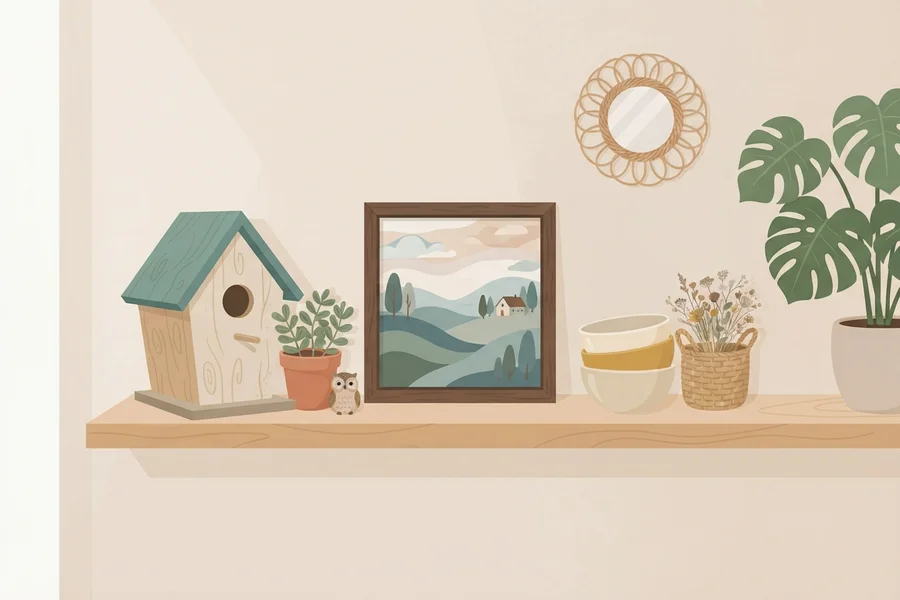
The Home Workshop. You regularly finish creative things, though most stay close to home.
By now, a personal project reliably makes it all the way to a finished state — a fix, a piece of writing, something built or arranged — instead of stalling out as just an idea.
This isn't confined to one narrow lane, either: it shows up in more than one part of daily life, from a practical problem solved on the spot to something made purely because it was interesting to make.
What still stays close is the audience — most of it lives within a small, familiar circle rather than travelling much further than that. That's a real and common place to sit, not an unfinished version of something else.
The habit itself — starting something and actually seeing it through — is the part that's genuinely worth noticing. Plenty of people never get past private ideas; you're already past that line, and you keep landing on it again.
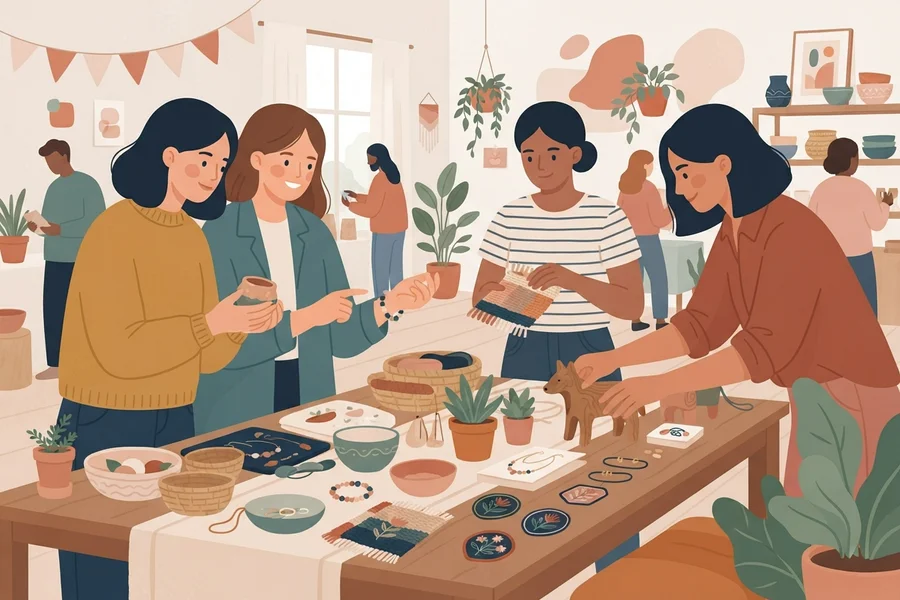
The Open Table. Your creative output regularly reaches other people, sometimes well beyond your immediate circle.
Whatever you make here doesn't stay locked to your own private experience of it. A small circle takes it in without a second thought, and every so often it reaches someone entirely outside that circle, or gets picked up in a more structured setting.
This isn't a single lucky moment — the pattern repeats for you, which is a different and steadier thing than one well-received piece of work.
There's a real cost worth naming plainly: handing something to people who never asked for it means absorbing reactions, indifference, and the occasional miss, again and again, not just once.
That's the price of a creative life that actually circulates instead of staying private — a trade a lot of people never choose to make even once.
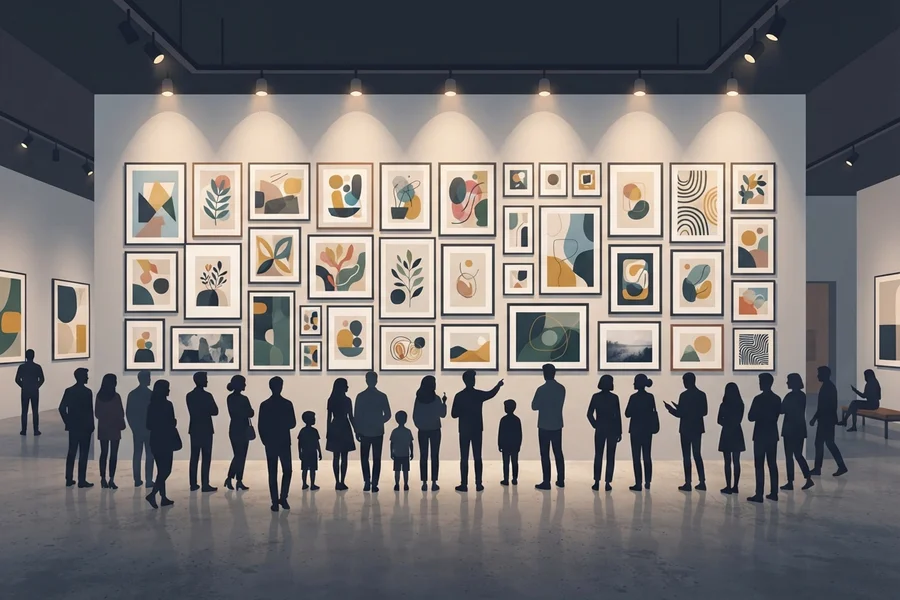
The Wider Room. Your creative output repeatedly reaches and gets taken up by people far beyond your immediate circle.
What you're doing here goes further than making something and having it seen — other people start using it, returning to it, and giving it credit, without any personal reason to care about you at all.
That kind of reach is genuinely uncommon, not a bigger version of everyday sharing but a distinct tier built on the same behavior sustained far longer and far wider.
None of this is a verdict on raw talent, intelligence, or creative potential — a self-report like this one only loosely tracks tested creative-thinking performance, and this result describes how far and how often something travels, not how good any single idea actually is.
The real cost is stamina: keeping the whole cycle — making, finishing, putting it out again — running again and again, long after the first round of attention has faded.
Your results are no accident
The classic 16-type personality test rooted in Jung's typology has been rebuilt from the ground up: a new CoreTypes methodology, and a far higher level of accuracy. These might be the most useful ten minutes you'll ever spend on yourself: you walk away with the key to your decisions, your relationships and your results — and it's yours for good.
Take the free testFrequently Asked Questions About the Creativity Test
Does this quiz have you brainstorming every possible use for a brick?
No — this format has no open-ended prompts and no one scoring the originality of your answers, so it couldn't run that kind of task even if it wanted to. What you get instead is a questionnaire about your actual creative habits, drawn from a separate, well-established line of research. That gap between describing your own behavior and having your ideas graded for quality is real — the correlation between the two is modest at best, and this test doesn't pretend otherwise.
Does being smart automatically make someone more creative?
Not automatically, no. Across a wide range of studies, intelligence and creativity end up only weakly related overall, and the picture changes depending on which part of creativity gets measured — how many ideas someone produces looks different from how good their single best idea turns out to be. There's no simple, universal threshold where one guarantees the other.
Do you have to be artistic in the traditional sense to count as creative?
No. This test treats a clever fix for an everyday problem, an original angle on something you're reading, a few lines written or a tune worked out for no one in particular, and a piece of visual art as equally valid signs of the same underlying pattern. Skipping visual art specifically won't pull your result down on its own.
Is creative behavior something you're born with, or can it change?
What gets measured here — habits around generating ideas, comfort with the unconventional, and whether your personal projects make it across the finish line and into view — behaves more like a set of current habits than a fixed trait stamped in at birth. Because a self-report like this one only loosely lines up with tested creative ability anyway, your result reflects where those habits stand right now, not a permanent ceiling.
Does this sort me into a specific type of creative person?
No — it answers a "how much," not a "what kind." Activity across different areas — art, tinkering, writing, everyday problem-solving — all feeds into one overall reading of how active that creative behavior is in your life right now, rather than sorting you into a named type or category.
Methodology
This test is built on the kind of self-report scales researchers use to track everyday creative behavior and lifetime creative achievement — not a single named instrument, but the same general approach: asking people directly about what they've actually done, rather than judging the quality of an idea on the spot.
That distinction matters enough to state outright: nothing here is an idea-generation task graded by a person or an algorithm. It's a self-report about your own habits and history, and that kind of self-report only tracks loosely with how someone performs on a directly tested creativity task — the two measure genuinely different things.
What the twenty questions add up to is a picture of how regularly your mind reaches for a new idea, how much you gravitate toward curiosity and the offbeat, how many separate corners of daily life creative behavior touches, and how far a personal creative result usually travels — kept to yourself, shared with people close to you, or picked up by people further out.
None of this reaches into talent, raw ability, or how good any particular idea is — and it says nothing about future success in any field. It also isn't a verdict on intelligence: across the research, creativity and intelligence turn out to be only weakly connected overall, and the exact relationship shifts depending on which side of creativity gets measured. For more on how psychologists define creativity, the APA's dictionary entry is a solid starting point.
References
- Kaufman, J. C., & Beghetto, R. A. (2009). Beyond Big and Little: The Four C Model of Creativity. Review of General Psychology, 13(1), 1–12. doi:10.1037/a0013688
- Kaufman, J. C. (2012). Counting the muses: Development of the Kaufman Domains of Creativity Scale (K-DOCS). Psychology of Aesthetics, Creativity, and the Arts, 6(4), 298–308. doi:10.1037/a0029751
- Carson, S., Peterson, J. B., & Higgins, D. M. (2005). Reliability, Validity, and Factor Structure of the Creative Achievement Questionnaire. Creativity Research Journal, 17(1), 37–50. doi:10.1207/s15326934crj1701_4
- Runco, M. A., Plucker, J. A., & Lim, W. (2001). Development and psychometric integrity of a measure of ideational behavior. Creativity Research Journal, 13(3–4), 393–400. doi:10.1207/S15326934CRJ1334_16