Mental Illness Test
Answer 21 short questions about your day-to-day experience over the past few weeks — it takes about five minutes. At the end, you’ll see which of seven patterns, six well-studied areas plus a steady, unremarkable one, your answers matched most closely, along with where you land on all seven scales.

This test is for informational purposes only and is not a substitute for a professional diagnosis. Consult a qualified professional for medical or psychological advice.

The Dimmed Room. What You're Describing Matches Depression Most Closely.
What you're describing matches depression more closely than anything else asked about here — a low mood that lingers like background weather, and a pull toward things that used to feel worthwhile going quiet.
Waking up already carrying the day's weight before anything's actually happened is one shape this takes. So is a hobby that used to feel automatic now needing a real push to start, or sleep and appetite drifting out of their usual rhythm.
None of that tells you how far in you are, though — the percentage on the Depression bar below does. Near the bottom, it means nothing here pointed toward depression, not that a small amount turned up; only a clearly higher reading means this stands out for you. Either way, it's a read of today's answers, not a label a professional would need to confirm.
Naming a flat stretch instead of performing a mood you don't have takes a kind of honesty most people skip — and it comes at a price, since that flatness can make replying to a message or getting dressed cost more than it used to. If that cost is adding up, a conversation with a professional is worth having.
The Restless Current. What You're Describing Matches Anxiety Most Closely.
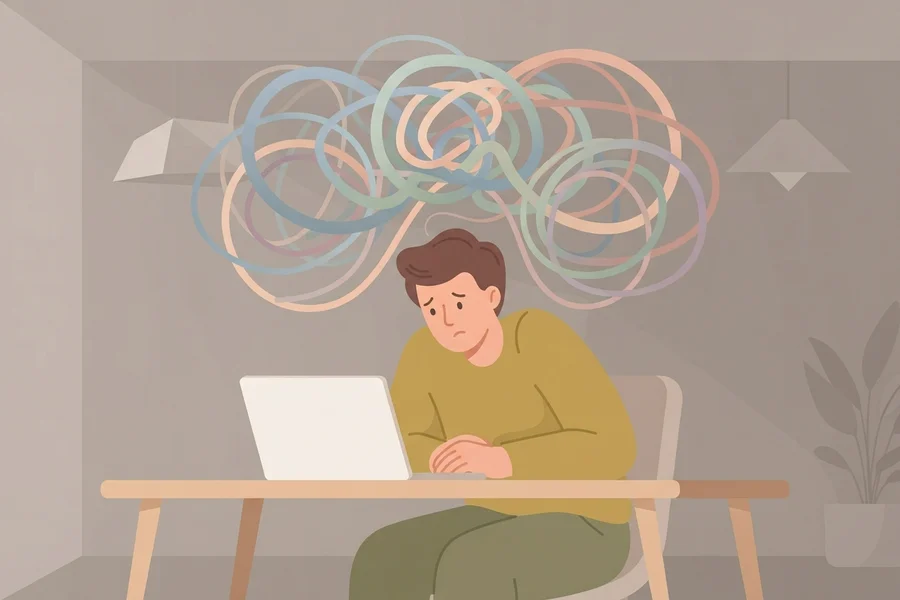
What you're describing matches anxiety more closely than anything else asked about here — worry that jumps between subjects rather than resolving one at a time, and a body that stays keyed up even when nothing is actually happening.
The percentage on the Anxiety bar below is where that actually gets measured, not in this paragraph. A reading near the bottom means none of your answers pointed toward anxiety at all, not that a small amount showed up — only a bar sitting clearly higher says this area genuinely stands out for you.
In practice, this can look like bracing for a meeting to go wrong days before it happens, or catching that your shoulders have been tight since lunch with no clear reason why. Expecting the worst by default, even in ordinary situations, tends to travel with it.
A mind that scans this closely rarely gets blindsided — it also rarely switches off, so rest can end up feeling like one more thing to manage rather than something that restores you. This is a read of today's answers, not a label a professional would confirm; that conversation is worth having if this keeps crowding your days.

The High Tide. What You're Describing Matches Bipolar-Type Mood Swings Most Closely.
What you're describing matches bipolar-type mood swings more closely than anything else asked about here — a stretch of energy or racing thinking that breaks from your baseline, paired with a swing toward a lower stretch later on.
People who lead here often get more done in a good week than most manage in a month, and the high stretch itself can feel genuinely productive: ideas arriving faster than you can act on, plans piling up. It's the stretch after where that intensity runs out, and getting off the couch starts taking real effort.
Taking on far more than usual, or sleeping far less without the tiredness you'd expect, tends to mark the high side of that swing — and what follows can feel disproportionately flat, precisely because the high set the bar so much higher.
How far into this you actually are is a question for the Bipolar Disorder bar, not this paragraph: near the bottom, it means nothing here pointed this way, not that a small amount was found. This is a read of today's answers, not a label — worth a conversation with a professional if these swings keep reshaping your weeks.
The Locked Loop. What You're Describing Matches OCD Most Closely.
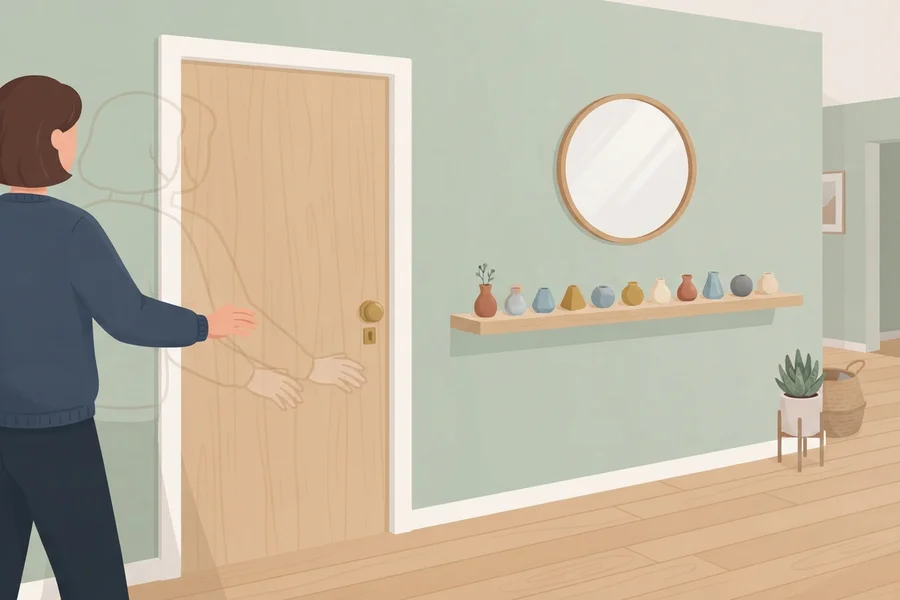
What you're describing matches OCD more closely than anything else asked about here — a specific thought that keeps returning uninvited, and a pull to repeat an action until it finally feels 'right,' even right after doing it.
That checking doesn't reliably stop once it's served its purpose, so minutes keep getting spent proving to yourself that something is fine — circling back to a lock a third time before leaving, or watching the same worry resurface at your desk no matter how firmly you dismissed it earlier.
The flip side is a real thoroughness: whatever you're responsible for tends to actually get double-checked, and little gets missed. When the checking crosses from a preference for tidiness into real time lost or real distress, that's the line this result is naming.
The OCD bar below is what actually answers how far into this you are — near the bottom it means nothing here pointed this way at all, not that a small amount was found. This is a read of today's answers, not a label: only a professional can say whether it reaches any clinical threshold, and that's worth raising if the checking is costing you real time.

The Shifting Light. What You're Describing Matches Psychosis-Related Experiences Most Closely.
What you're describing matches psychosis-related experience more closely than anything else asked about here — noticing something at the edge of a room that others don't, or a conviction about being watched that's hard to shake without clear evidence.
A sound or shape catching your attention when no one nearby reacts to it, or a thought about someone's intentions that won't fully let go, are the kind of things that show up here — often alongside an unusual attentiveness to atmosphere and detail that most people simply don't register.
The harder part is telling which of those signals to trust once one won't quit on its own — and that's a separate question from how far into this you actually are, which is what the Psychosis bar below shows. Near the bottom, it means nothing here pointed this way at all, not that a small amount was found.
This is a read of today's twenty-one answers, not a label. Only a licensed professional can say whether it reaches any clinical threshold, and that conversation is worth having if these experiences feel like they're taking up real space in your days.

The Scattered Compass. What You're Describing Matches ADHD Most Closely.
What you're describing matches ADHD more closely than anything else asked about here — trouble getting a dull-but-necessary task started or finished, and a mind that tends to outrun whatever you're actually in the middle of doing.
A form sitting half-finished on your desk for a week is one version of this. Losing track of your keys more often than the people around you seem to is another, and ideas arriving faster than you can act on any single one of them tends to ride along with both.
That same speed is also where the momentum comes from — plenty of ideas and connections a slower approach would never turn up. What it costs is follow-through: staying with any one thread long enough to actually finish it.
How far into this you are isn't something this paragraph can tell you — that's what the percentage on the ADHD bar is for. Near the bottom, it means nothing here pointed this way, not that a small amount was found. This is a read of today's answers, not a label: worth a conversation with a professional if this keeps getting in the way of what matters to you.

The Steady Ground. No Single Area Stands Out.
No single area stood out in this set of twenty-one answers — your mood, your routine, and your day-to-day life came through reading as fairly steady rather than clustering around any one of the six patterns asked about here.
Sleep and meals landing where they usually do is part of that picture. So is a stressful week staying tied to whatever actually caused it instead of bleeding into everything else — when something does knock you off balance, it tends to ease again once the original cause has passed.
That's not a rare or lucky result — on this kind of self-report test, most people land somewhere close to steady on most of these scales most of the time. It's also not a permanent guarantee: this reflects today's answers, not a fixed trait, and a rougher stretch later on could read differently.
If any of the other six areas — a lingering low mood, constant worry, dramatic swings, repeated checking, unusual perceptions, or a racing, hard-to-finish mind — ever starts to feel like it's taking up real space in your life, talking with a professional is always an option worth having, with or without a test to point you there.
Your results are no accident
The classic 16-type personality test rooted in Jung's typology has been rebuilt from the ground up: a new CoreTypes methodology, and a far higher level of accuracy. These might be the most useful ten minutes you'll ever spend on yourself: you walk away with the key to your decisions, your relationships and your results — and it's yours for good.
Take the free testFrequently Asked Questions
Can this test tell me what mental illness I have?
No. It names whichever of seven areas your twenty-one answers pointed to most strongly today — never a diagnosis. Diagnosing a mental disorder takes a full clinical evaluation, something only a licensed professional can do. If your result's area feels like it matters, that conversation is the next step, not another test.
How accurate are online mental health screenings like this one?
Self-report tools like this one are a starting point, not a measurement in the clinical sense. They can point toward an area that might be worth a closer look, but they can't rule a condition in or out on their own, and they aren't built to catch everything a full evaluation would.
What does it mean if my result is "signs not pronounced"?
It means that, across the six named areas, none of them came out ahead in this particular set of answers — which is a common, ordinary outcome on a self-report test like this one, not a rare placeholder result. It says nothing stood out today, not that nothing ever could later.
Does having some of these experiences mean something is seriously wrong with me?
No. Every one of the seven areas this test asks about describes common, recognizable, and often manageable experiences, not a verdict on your basic soundness. Naming an area is meant to help you recognize what you've been noticing, not to label you.
Methodology
This test is based on the approach of asking you to report your own everyday experience across seven areas: six drawn from recognized domains of psychological distress, plus a seventh capturing an unremarkable, steady stretch. Each area is scored from its own three questions, and the totals are compared to see which comes through strongest, while all seven stay visible as a small profile rather than just a single winner.
No result here is a diagnosis, a prediction, or a treatment recommendation. What it reports is a level of self-reported signs relative to the other six areas asked about today, not a claim that a clinical threshold has been crossed. A different stretch of weeks, answered again, could shift which area comes out ahead — this is a snapshot, not a fixed trait.
For a broader look at how these areas are usually described and screened for, MedlinePlus keeps a plain-language overview of mental disorders, including how a screening tool differs from a diagnosis. If a result here feels worth following up on, the National Institute of Mental Health keeps a directory for finding help nearby.
This is not a diagnostic instrument, and it does not replace an evaluation by a licensed mental health professional. Only a professional who can sit with your history in person is positioned to say whether anything here rises to the level of a diagnosis — this test can point at an area worth a closer look, but it stops there.
References
- Kotov, R., Krueger, R. F., Watson, D., Achenbach, T. M., Althoff, R. R., Bagby, R. M., et al. (2017). The Hierarchical Taxonomy of Psychopathology (HiTOP): A dimensional alternative to traditional nosologies. Journal of Abnormal Psychology, 126(4), 454–477. doi:10.1037/abn0000258.
- Kroenke, K., Spitzer, R. L., & Williams, J. B. W. (2001). The PHQ-9: Validity of a brief depression severity measure. Journal of General Internal Medicine, 16(9), 606–613. doi:10.1046/j.1525-1497.2001.016009606.x.
- Kocalevent, R.-D., Hinz, A., & Brähler, E. (2013). Standardization of the depression screener Patient Health Questionnaire (PHQ-9) in the general population. General Hospital Psychiatry, 35(5), 551–555. doi:10.1016/j.genhosppsych.2013.04.006.