Burnout Test
Answer 18 quick questions about how things have actually been for you lately, picking whichever option feels closest each time. At the end, you’ll see where your burnout signs currently stand across three sides – exhaustion, detachment, and how effective you feel – in about 4 minutes.

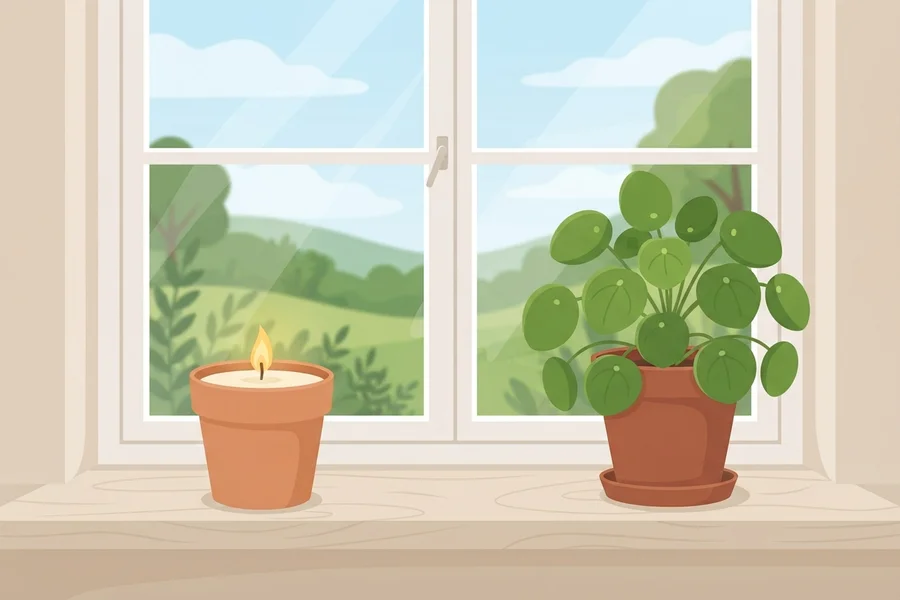
Steady Ground. Your burnout signs are running at a minimal level right now.
Right now, exhaustion, detachment, and reduced effectiveness aren't showing up as a standing pattern in your life. Where something from this list does turn up, it reads as one isolated moment rather than a fixture you have to work around.
That's worth naming plainly: everyone has a flat stretch, an off day, or a moment of doubting themselves. A minimal result doesn't mean you're unusually tough or immune to any of this - it means these particular patterns aren't a notable, recurring feature of your life at the moment.
The strength here is straightforward. Whatever is asking a lot of you right now isn't currently costing you in the ways this test tracks, and that's a genuinely good place to be standing.
What this snapshot can't tell you is whether that's because things are actually light right now, or because a harder stretch simply hasn't arrived yet. A single check-in can't tell those two apart - only time will.
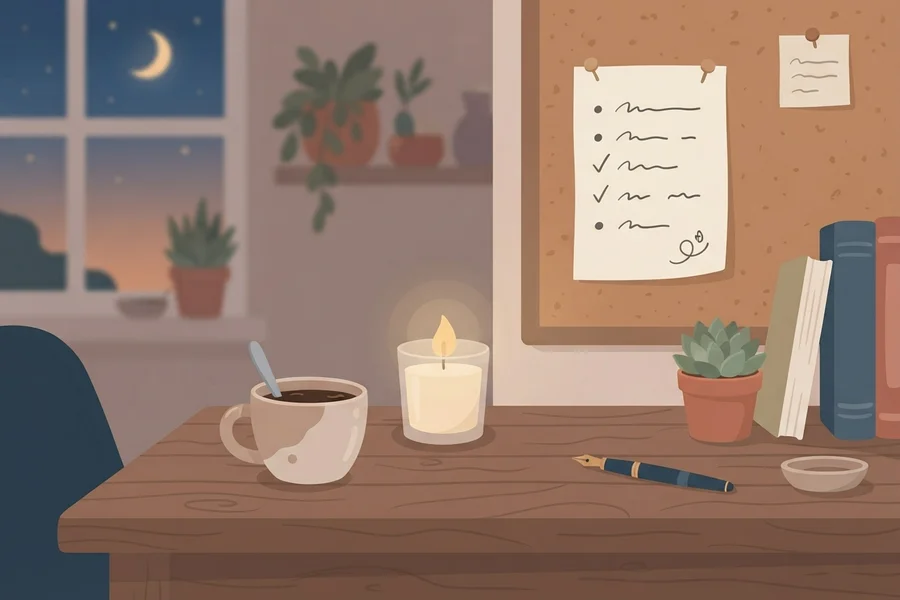
First Cracks. Your burnout signs are running at an emerging level right now.
At least one side of this - exhaustion, detachment, or how effective you feel - has started showing up in specific, recognizable situations, not just once in a while. You notice it while it's happening, not only afterward.
Most of your day-to-day still runs fine without any extra weight from this, and that's real.
The cost shows up in the particular spots where this pattern lands: a reset you need afterward, a bit of extra effort, a private note to yourself that something felt off. None of that used to be necessary.
What's left unclear is whether this is a response to a temporarily heavy stretch or the early edge of something more settled. This result can't separate the two - it only tells you the pattern has started showing up in a way worth paying attention to.
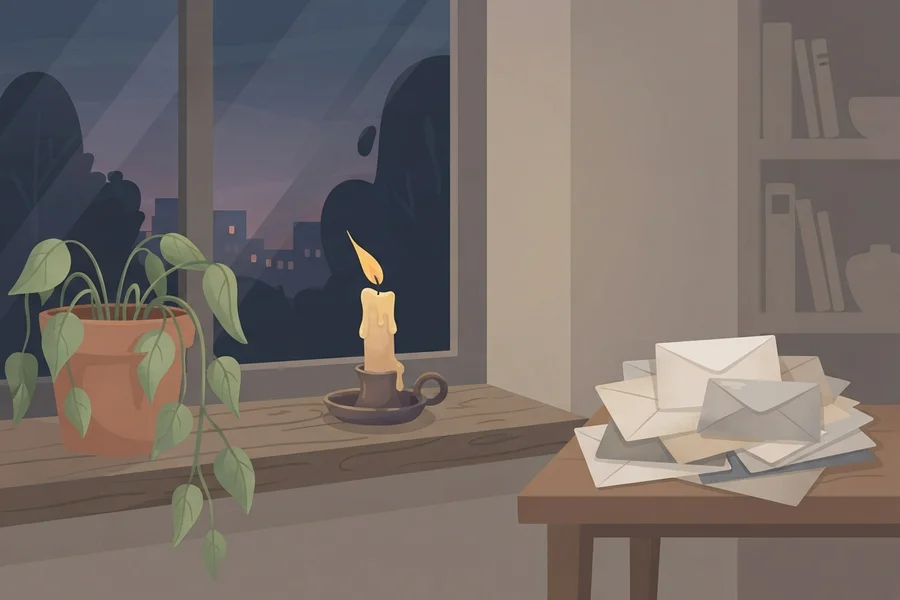
Worn Thin. Your burnout signs are running at a marked level right now.
At least one part of this has spread past the specific situations where it used to stay contained, and now needs some active workaround just to manage - stepping back from something you wouldn't normally skip, avoiding what used to be easy to start, or a harder edge toward the people this involves.
Exhaustion is often the loudest part at this level, and it's worth being direct about something: exhaustion is also the piece of this pattern most strongly linked to depression in the research on it. This result doesn't rule a separate, overlapping difficulty in or out - it simply isn't built to.
The strength worth naming is that you're still visibly managing this. None of it has settled into an unquestioned, everyday feature yet - you're still finding workarounds, and that takes real effort.
What stays off-screen is the same limit every self-report snapshot has, now with that added uncertainty about overlap layered on top.
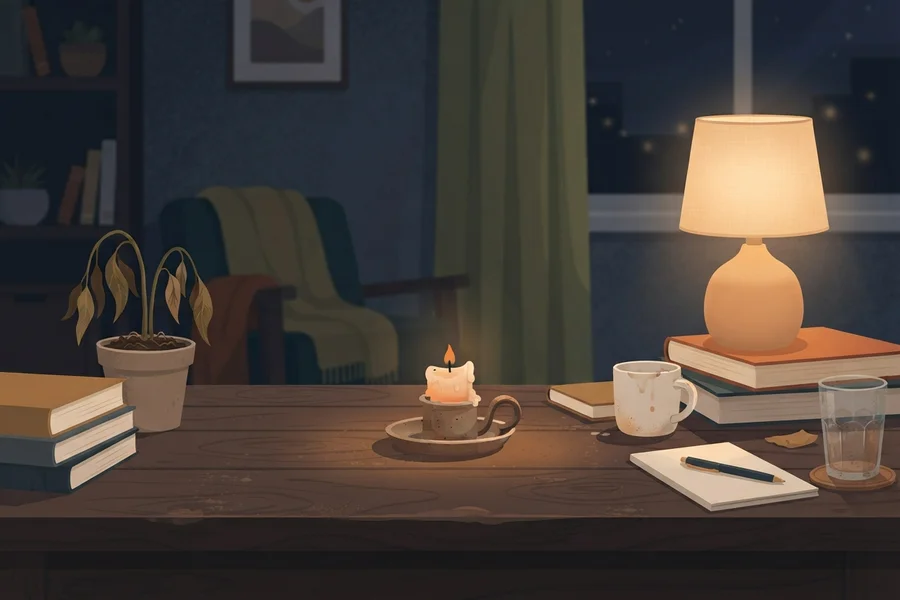
Running on Empty. Your burnout signs are running at an intense level right now.
This isn't a different pattern from the one above - it's the same three sides of it, each now running as a standing, largely unquestioned feature rather than something confined to particular situations or handled with a workaround here and there.
The stepping-back, the avoided tasks, the harder edge toward the people involved - all of that is still here, joined now by a shorter fuse than before and a pulling-away that has itself become the default rather than an occasional retreat.
As with the level below, this result does not distinguish burnout from an overlapping difficulty like depression - that boundary isn't something any self-report tool like this one can draw. When a pattern like this has become the standing way things are, talking it over with a doctor or another professional you trust is a reasonable, ordinary step to take, not a last resort.
What this result doesn't tell you is why - whether the driving factor is the role itself, something else entirely, or several things at once. It describes intensity, not cause.
Your results are no accident
The classic 16-type personality test rooted in Jung's typology has been rebuilt from the ground up: a new CoreTypes methodology, and a far higher level of accuracy. These might be the most useful ten minutes you'll ever spend on yourself: you walk away with the key to your decisions, your relationships and your results — and it's yours for good.
Take the free testFrequently Asked Questions
Can an online burnout test tell me if I have burnout?
No test like this one can hand you a diagnosis, and that's not really about caution - burnout itself doesn't have a medical diagnosis to give in the first place. Health authorities classify it as a pattern tied to unmanaged demands, not an illness, so what you get here is a read on a self-reported pattern, nothing more.
What actually counts as burnout?
It's a recognized pattern of running low on energy, pulling emotionally away from what you're doing, and feeling less effective at it than you used to. Health authorities frame it as the fallout from demands that never really got resolved, not as a health condition in its own right.
Is burnout just another word for being stressed?
Not quite. Stress is usually about a specific pressure or deadline in front of you right now; burnout is what can build up after that pressure has gone unaddressed for a long stretch, once the depletion outlasts whatever caused it.
Could this actually be depression instead of burnout?
It's a fair question, and there's no clean line to draw. Exhaustion - the part of burnout most people feel first - overlaps heavily with depression in the research, and a self-report tool like this has no way of sorting one from the other. A conversation with someone qualified to make that call does.
What are the usual signs that burnout is setting in?
They tend to cluster around the same three things this test looks at: persistent exhaustion, a growing emotional distance or cynicism toward what you're doing, and a sense that your effort isn't landing the way it used to. Health authorities describe burnout in almost exactly those same three terms.
Methodology
This test draws on research looking at what happens when demand keeps piling up without ever really letting up: energy drains away, the activity itself starts to feel emotionally distant, and your sense that the effort is paying off shrinks. It isn't modeled on, or worded after, any single named questionnaire.
Burnout itself carries no diagnosis to hand you: the World Health Organization classifies burnout as an occupational phenomenon, not a medical condition, which is exactly why this test stops at describing a pattern rather than naming an illness.
It's worth being upfront about overlap, too: exhaustion, the piece of this pattern most central to how it's usually described, tracks closely with depression in the research literature, and researchers don't fully agree on how cleanly the two separate. Nothing here is built to draw that line for you.
The score bands are this test's own - not a clinical cutoff borrowed from anywhere, since even long-established burnout questionnaires have dropped fixed cutoffs of their own for lacking diagnostic weight. This is a single-sitting self-report, not a full picture of a life, and it isn't built to explain why this is happening or how long it will last. If you want a fuller read on stress specifically, the NHS's guide to work-related stress is a solid next stop.
None of this is a diagnostic tool, and it doesn't stand in for an actual conversation with someone qualified to help you sort through what's going on.
References
- Maslach, C., & Jackson, S. E. (1981). The measurement of experienced burnout. Journal of Organizational Behavior, 2(2), 99-113. doi:10.1002/job.4030020205.
- World Health Organization (28 May 2019). Burn-out an "occupational phenomenon": International Classification of Diseases.
- Bianchi, R., Verkuilen, J., Schonfeld, I. S., et al. (2021). Is Burnout a Depressive Condition? A 14-Sample Meta-Analytic and Bifactor Analytic Study. Clinical Psychological Science, 9(4), 579-597. doi:10.1177/2167702620979597.
- Burnout: A Review of Theory and Measurement. International Journal of Environmental Research and Public Health, 19(3), 1780 (2022). PMC8834764.