Career Interest Quiz
This is an independent quiz on the same general idea, not a copy of any named career assessment — 24 quick either/or questions, about six minutes start to finish. Answer with your first instinct, and you’ll get a result built from two things: what draws your attention at work, and who or what your energy centers on.


The Anchor. You trust a record more than a hunch, and you come alive when there's a person to work with.
You trust a plan once it's written down. Put that same plan in front of a room of people, and you're in your element — that's when this combination actually clicks into place.
Think of a sign-up sheet where every name is spelled right. A shared calendar nobody has to double-check. Small things. But they're the reason nothing falls through the cracks when ten different schedules have to line up.
The work this suits isn't paperwork for its own sake. It's a schedule that gets people to the right place on time, a checklist that means nobody has to guess. What you're actually building is trust — the kind a room full of people can lean on.
That same habit that makes you dependable has a cost. When the information isn't all there yet, you'd rather wait for the missing piece than guess. And a process built to keep a group moving together doesn't always leave room for the one person who needed something looser.
None of this sits at either scale's far edge. Most people land somewhere closer to the middle on one dichotomy or both — and that's the ordinary shape of a result here, not a weaker one.
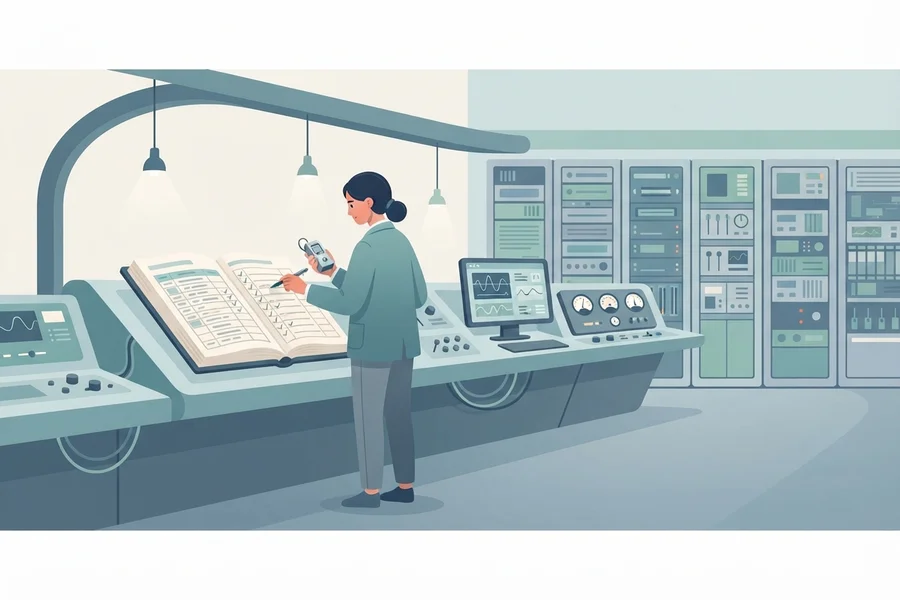
The Steady Builder. You trust a record more than a hunch, and you come alive when there's something to build or fix.
Numbers get checked before anything else does. Once they hold up, you're happiest putting them to work with your hands — not explaining them to a room.
A gauge gets read twice before you touch anything. A manual actually gets kept, not just remembered. Most of that work goes unnoticed — right up until something breaks, and you're the one who already knew why.
The work this suits centers on keeping something physical correct and running: a system, a piece of equipment, an operation. Careful records and a checked procedure do the heavy lifting. It's accuracy aimed at something you can actually touch, not at winning an argument.
That same care for what's documented and verified has a blind spot. A correct number doesn't always explain why someone's upset about it. This combination can under-invest in the conversation a situation actually needed, over-invest in the paperwork around it.
Both of these scores are read as a lean, not a verdict. Plenty of answers land somewhere short of either far edge — a mixed reading here is normal, not a sign the test couldn't make up its mind.

The Spark. You chase the idea more than the fact, and you come alive when there's a person to work with.
A fact on its own barely holds your interest. It's the idea underneath it that actually pulls you in — and you'd rather work that idea out loud, with someone in the room, than alone at a desk.
You're the one who takes a half-formed idea into a conversation. You leave with something sharper than either person had walking in — a pitch reworked in real time, a lesson that changes shape the moment a question comes back at you.
The work this suits is built around bringing an original idea straight to a group. Teaching it. Pitching it. Shaping something meant to move people, not something meant to sit finished on a page.
The same pull that makes an idea come alive with people in the room can pull it away from something else: the discipline of checking it against a fact first. And the same energy for engaging others can leave less of you for finishing an idea alone, in depth.
Think of both halves of this result as a direction, not a box. A fair number of people sit well short of either extreme — and that middle ground is the usual outcome here, not a blurry one.

The Alchemist. You chase the idea more than the fact, and you come alive when there's something to build or fix.
Give you a raw idea and a bit of quiet. What comes back is something built, not simply described. Worked out mostly alone, with your hands — not pitched to a room first.
An idea catches you before the fact behind it even finishes explaining itself. From there, you're already thinking in materials — what it would actually take to build the thing, not merely explain it.
The work this suits centers on turning an original idea into something made: engineered, built, assembled. It's worked out largely alone, with materials or a system, rather than pitched to an audience first.
That same independent drive can carry an idea further than it should go. It can travel a long way — worked out alone — before it meets a fact, or another person's read on it, and gets tested for the first time.
Read both halves as where you lean, not where you're locked. A result that lands closer to the middle on one axis, or both, is the normal outcome here — not an unclear one.
Your results are no accident
The classic 16-type personality test rooted in Jung's typology has been rebuilt from the ground up: a new CoreTypes methodology, and a far higher level of accuracy. These might be the most useful ten minutes you'll ever spend on yourself: you walk away with the key to your decisions, your relationships and your results — and it's yours for good.
Take the free testFrequently Asked Questions
How accurate is a quiz like this?
Think of it as a conversation starter, not a lab result. What you're answering is entirely your own read of yourself — there's no outside measurement checking it against anything, and a quiz this short and this quick has never gone through the kind of peer review a clinical tool would need. Useful for pointing you in a direction. Not built to hand you a verdict.
The mechanics behind a quiz like this
It asks two separate either/or questions and scores each on its own: what kind of raw material draws your attention — facts and records, or the ideas behind them — and who or what your energy centers on, other people or objects and systems. Your result combines whichever answer wins each question into one specific pairing.
What does my result actually mean?
It isn't a job title, and it was never going to hand you one. What you get instead is two separate leanings folded into a single pairing — not a personality type, not a ranking of anything. That pairing sketches a kind of work: what tends to pull at your attention, and who or what you'd actually be spending your energy on, day to day.
Will this actually tell me what job to take?
No — and be wary of anything this short that claims otherwise. A couple dozen questions can point you toward the kind of work you might enjoy. They can't promise you'll be good at it, can't put a number on your future salary, and can't stand in for an actual conversation with a career counselor. Treat the result as one input among many, not the final word.
Who this quiz is for
Anyone curious about the kind of work that might suit them — whether you're still in school, partway through a degree, or rethinking your career entirely. Nothing here assumes your age, education, or where you live; the same two questions apply either way.
Methodology
This test decides two separate either/or questions, and neither one influences the other. Twenty-four short items split evenly between them, each pulling toward one side or the other. Whichever side collects more points wins that half — the two winners together name the result.
One question comes down to what actually convinces you: a number or document, or the reasoning behind it. The other comes down to where your energy goes once you're in the room — toward the people in it, or toward whatever you can pick up and work with. Neither outranks the other; there's no grand label at the end, just the pairing of the two.
None of this is clinically validated — it's self-report, short, and works better as a starting point than a verdict. It doesn't guess at your age, education, job situation, or where you live; it reads the same whether school is still years off or a career change is already underway. Landing close to the middle on one question, or both, is the ordinary outcome, not the test failing to decide.
This isn't a stand-in for an actual career counselor, and it doesn't preview or predict what any specific named quiz would hand you — it comes from public academic material, not anyone's proprietary system. The reasoning behind the two-question structure is laid out at the model this follows; a genuinely free next step is a government-run tool for browsing real occupations.
References
- Holland, J. L. (1959). A theory of vocational choice. Journal of Counseling Psychology, 6(1), 35–45. doi:10.1037/h0040767.
- Prediger, D. J. (1982). Dimensions underlying Holland's hexagon: Missing link between interests and occupations? Journal of Vocational Behavior, 21(3), 259–287. doi:10.1016/0001-8791(82)90036-7.
- Prediger, D. (1986, March). The World-of-Work Map: Rationale and "Do-It-Yourself" Applications. ERIC ED267308.