Chance Dependence Test
Fifteen quick questions about how you explain what happens to you — your own doing, or chance. It takes about 4 minutes, and at the end you’ll get one overall read on how much of your life leans toward chance.

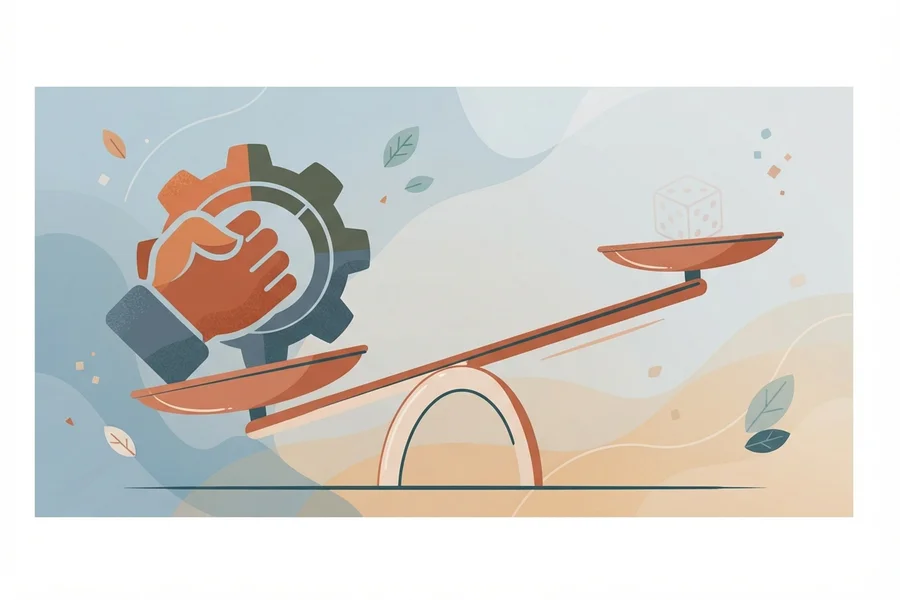
The Steady Hand. Chance decides almost none of what happens to you.
When something happens to you, good or bad, the story you land on almost always starts with what you did. No lucky object waits in your bag before a big moment, no routine has to run in a particular order — the outcome gets explained by your own choices, first and last.
An opportunity that shows up out of nowhere rarely just sits there — you tend to follow it through and see where it leads, rather than letting it close on its own.
The strength here is real: a steady, consistent sense that you're the one steering, and a habit of asking what to adjust rather than stopping at "that didn't work out."
The cost shows up when something genuinely was out of anyone's hands — this pattern can still reach for "what did I do," an explanation that isn't always the right one, and it can sit heavily on you when nothing you did would have changed the outcome.
What this result doesn't tell you is how much good or bad fortune is actually headed your way — only how you currently explain and react to what's already happened.
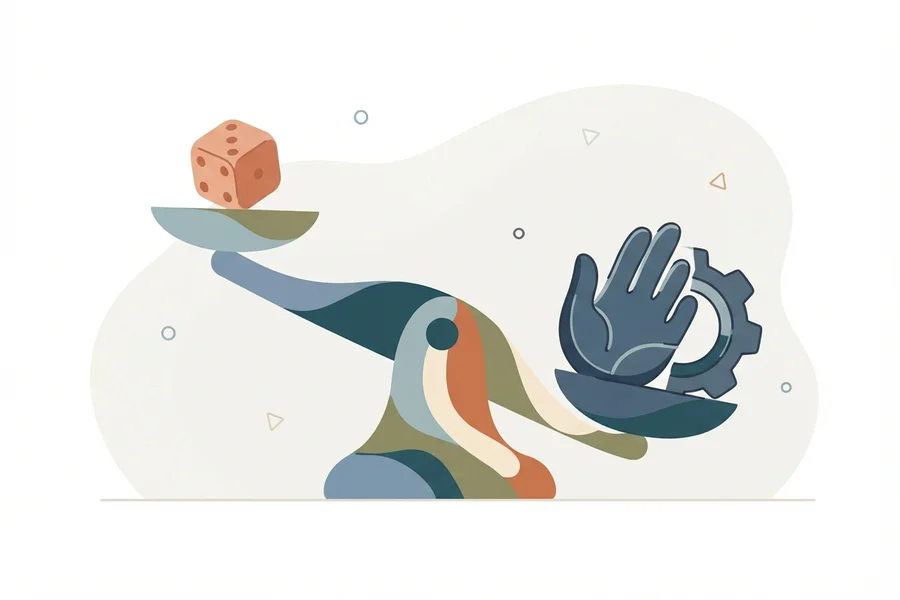
The Grounded Exception. Chance decides only a small part of what happens to you.
Most of what you're asked here comes back to your own actions — when something goes well or badly, you're the first place your explanation looks. But real exceptions show up too: a small routine before something uncertain, maybe, or a moment of half-expecting a good thing to get reversed.
These aren't everywhere. They show up here and there, without taking over the rest of how you explain things.
The strength is that you keep ownership of most of what happens to you, while still leaving room for a routine or two that doesn't do any harm.
From the outside, the exceptions can look inconsistent, since they don't follow one single rule — you credit yourself almost everywhere except in the one or two spots where you don't.
Which specific habit or belief supplies your exception is yours alone; this result can only tell you that one exists, not what it looks like.
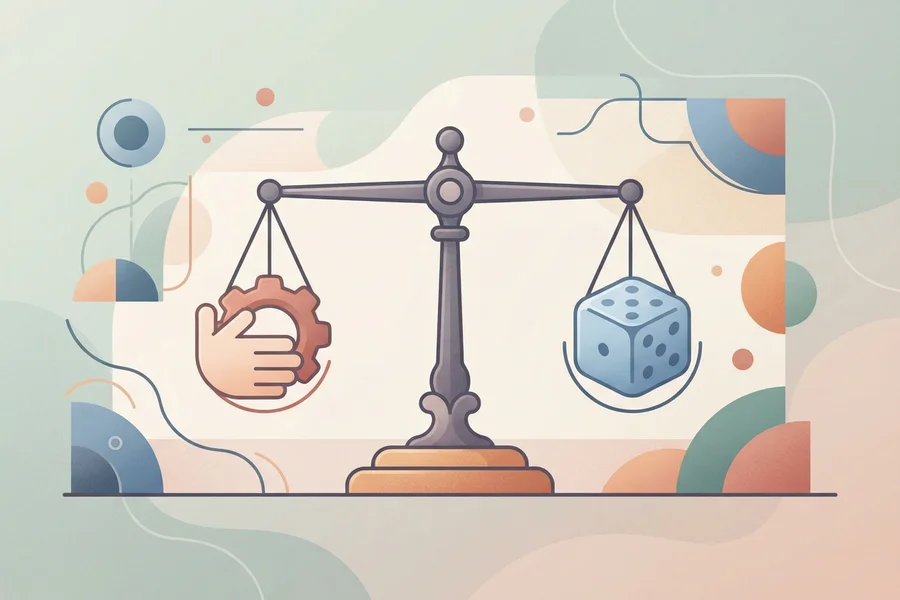
The Even Keel. Chance decides a genuinely even part of what happens to you.
No single lean runs through your answers. What happens to you gets explained by your own action in some situations and by circumstance in others, with no fixed default you reach for automatically.
A good outcome might get filed as your own doing one time and as pure timing the next — not from indecision, but because the two situations genuinely called for different explanations.
Nothing about this pattern gets stuck. A new situation can produce a genuinely different kind of explanation from you, rather than the same one on repeat.
The tradeoff is that without one dominant lean, your own outlook on chance can be harder to sum up in a single sentence than it is for someone who leans further to one side.
Landing here isn't a sign the test failed to produce a clear answer — a genuinely split pattern is exactly what this middle band is built to hold.
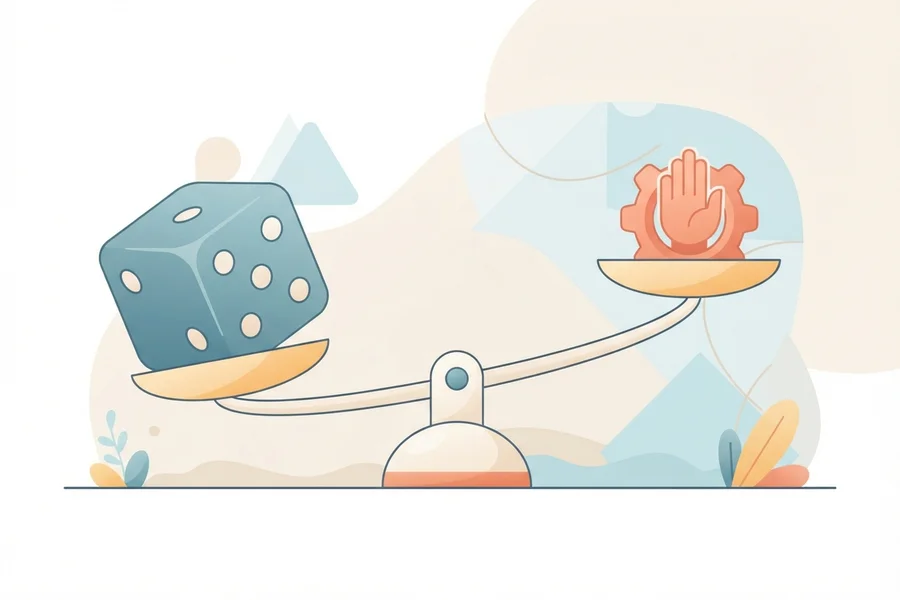
The Following Wind. Chance decides a large part of what happens to you.
Circumstance and timing tend to be the first thing you reach for when explaining what happens to you. A good outcome reads more like a one-off than something you expect to see again, a personal routine shows up before most uncertain moments, and a setback more often lands as confirmation than as something you sit down and pick apart.
This isn't overreach in the other direction — you're not claiming credit for things that may well have depended on circumstances you didn't control, and a routine that genuinely calms you gets used rather than dismissed as silly.
The tradeoff is in where your attention goes first: crediting outside forces before anything else can mean less gets noticed about the parts of an outcome that actually were within your reach to shape.
This pattern is common and ordinary — nothing here says anything about how much good or bad fortune is actually headed your way from here.
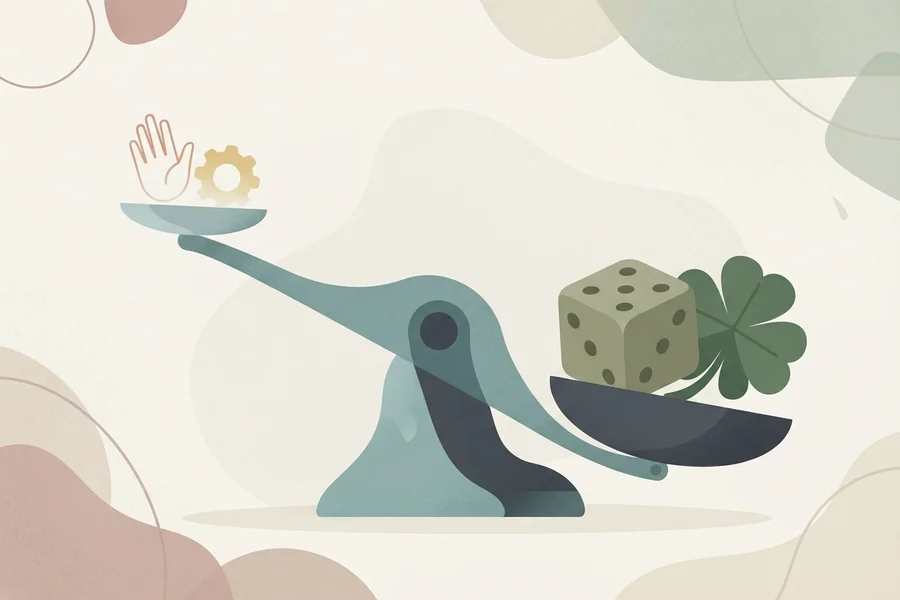
The Open Sea. Chance decides the largest part of what happens to you.
Across nearly everything this test asked, chance carries the explanation. There's a settled sense of being a generally lucky or unlucky person, both the good and the bad get traced back to outside circumstance more than to anything you did, and a personal routine or object gets real, regular use before an uncertain moment.
A setback tends to read as confirmation of a pattern rather than as something you stop and take apart to see what could be learned from it.
The strength is that you rarely load yourself with blame for something that genuinely may have been out of your hands, and a ritual that brings you real calm gets full use rather than being talked out of.
Crediting chance first, consistently, can leave less room to notice the specific things that actually were within reach to influence, in either direction.
This sits at the far end of an ordinary, everyday range of how people explain what happens to them — not a measurement of your actual luck, and not a character flaw either way.
Your results are no accident
The classic 16-type personality test rooted in Jung's typology has been rebuilt from the ground up: a new CoreTypes methodology, and a far higher level of accuracy. These might be the most useful ten minutes you'll ever spend on yourself: you walk away with the key to your decisions, your relationships and your results — and it's yours for good.
Take the free testFrequently Asked Questions
How do I know if I'm a lucky person or an unlucky one?
This test won't hand you a fixed label either way — what it gives you is a position on its own scale, based on how you actually answered the fifteen questions. That position reflects your own belief, attribution habits, and everyday patterns around chance, not a verdict on how lucky you actually are.
Is luck even real, or is everything just chance?
That's a question this test doesn't try to settle. Whether luck exists as something real, separate from ordinary probability, is a much bigger question than any questionnaire can answer — what you get here is a read on your own belief and attribution pattern, not a position on the underlying debate.
Can a person actually become luckier?
This particular test isn't built to answer that — it measures where your current pattern sits, not whether or how that pattern might be trained or changed over time. It also doesn't assume the opposite: nothing here claims your current pattern is permanent either.
What actually makes someone lucky?
Popular writing on the subject points to habits like noticing openings that others miss and bouncing back quickly after a setback. That idea comes from popular-science writing rather than a settled research finding, and this test treats it accordingly — as one facet among five it asks about, reflecting your own habits in that area rather than handing you a checklist to follow.
How many questions are in this luck test?
Fifteen questions, covering five different facets of how people relate to the idea of luck — three questions per facet, each answered on its own five-step scale.
Methodology
This test draws on general psychological research into how people think about their own luck, how they explain what happens to them, and how superstition and personal ritual show up around uncertain moments. Its fifteen questions and scoring bands were written independently for this test, not lifted from any existing instrument. One of its five areas — noticing and using chance openings, and bouncing back after a setback — comes from popular-science writing rather than a peer-reviewed source, and is treated here as a starting point, not an established finding.
Five facets feed into one overall lean toward explaining life by chance versus by your own action: belief in your own luck, how you explain outcomes, your pattern around good news, ritual and superstition, and everyday habits around opportunity and setbacks. The attribution side draws on this definition of locus of control; the belief-in-luck side follows the approach covered in the Belief Measurement section of this overview of luck as a concept.
This test measures only your own belief, attribution, and habit pattern around the idea of luck — never how lucky you actually are or will be. It's a self-report snapshot of a current outlook, not a fixed trait and not a logged record of what's actually happened to you. It isn't a fortune-telling tool, has nothing to do with betting or games of chance, and wherever your result lands, it sits within an ordinary, everyday range.
References
- Darke, P. R., & Freedman, J. L. (1997). The Belief in Good Luck Scale. Journal of Research in Personality, 31(4), 486–511.
- Rotter, J. B. (1966). Generalized expectancies for internal versus external control of reinforcement. Psychological Monographs, 80(1), 1–28.
- Vyse, S. (1997/2013). Believing in Magic: The Psychology of Superstition. Oxford University Press.