Phobia Test
This test walks you through 20 short scenarios and takes about 5 minutes. Answer with whatever specific thing you’re afraid of in mind — the questions never ask what it is — and at the end you’ll get a read on how strongly a phobia-like pattern shows up around it for you.

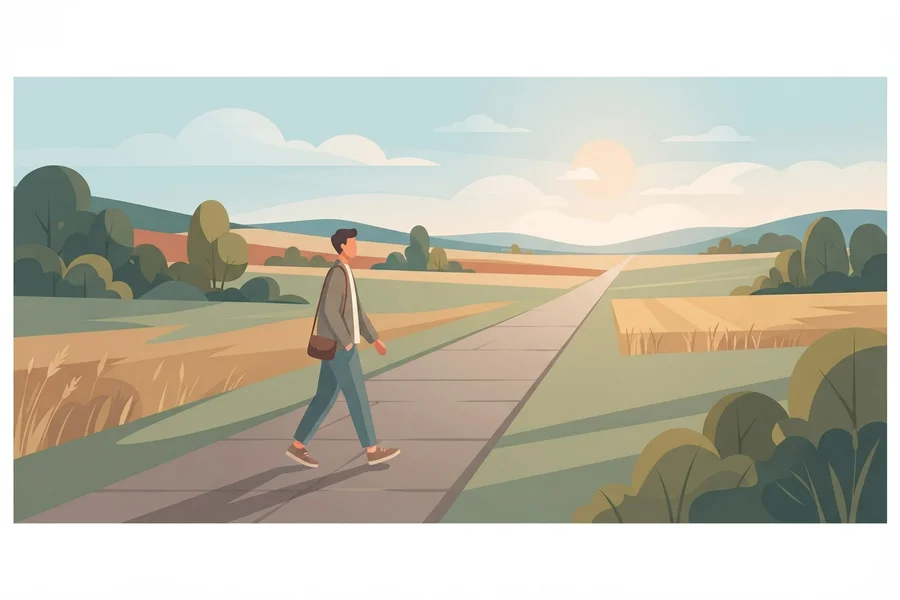
The Open Path. Hardly Any Phobia-Like Pattern to Speak Of
Even standing right next to it, you mostly stay on the calm side of things. Nothing about your body races out of control, and if any unease shows up, it's gone again almost as fast as it arrived.
Trips get booked, plans go ahead, ordinary errands happen — none of it gets rerouted around where this might be.
That ease is worth noticing on its own terms: it means nothing here has quietly taken the wheel.
What today's answers can't rule out is one unusually rough encounter somewhere down the road — that happens to plenty of people without changing the overall picture. A calm history like this describes where you stand now, not a guarantee about every moment still to come.
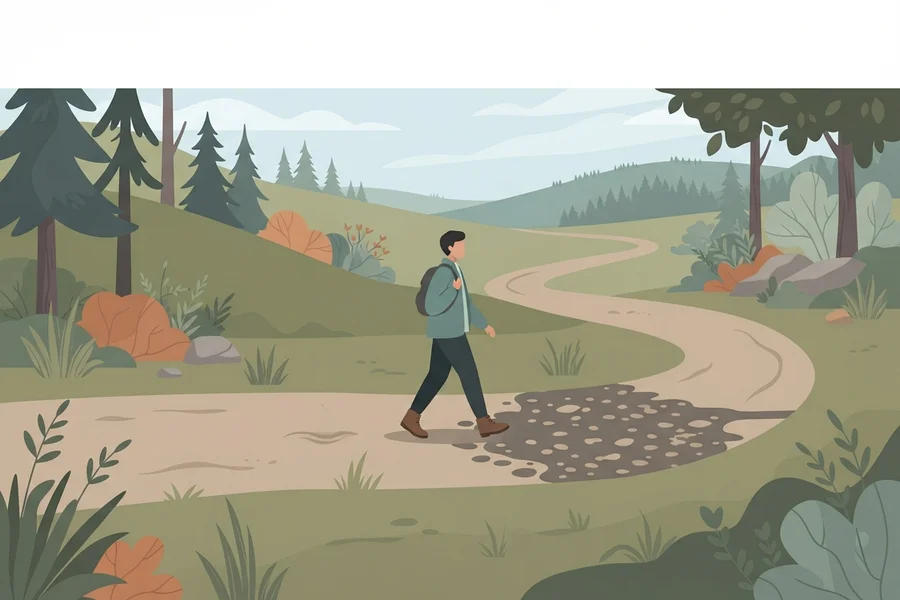
A Rough Patch. Occasional Flashes, Not Yet a Full Phobia-Like Pattern
Something real does flare up for you now and then — a jolt of reactivity, a stretch of dread — but it tends to need specific conditions to show its face: an unfamiliar version of the thing, or a moment that already feels higher-stakes than usual.
Outside of those moments, you're mostly just living your life. Plans hold, routes stay the same, nothing much gets reshaped because of it.
The strength worth naming here is that functioning normally around this is still the default setting, not something you have to fight for.
What a single pass like this can't answer is where these occasional flare-ups are headed next — quietly fading with time, or slowly gaining ground. That part only shows itself over months, not in one sitting.
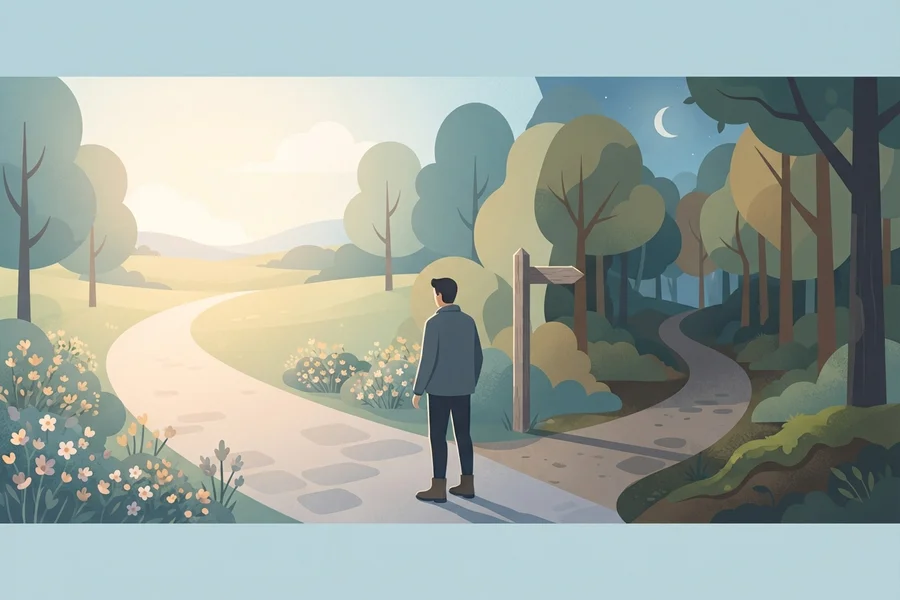
The Fork in the Path. On the Border of a Phobia-Like Pattern, Not Fully Formed Yet
Your answers put you in a genuinely hard-to-read spot — right where an intense dislike and something closer to a phobia become almost impossible to tell apart from the outside.
A few pieces of the picture are clearly there for you: maybe a sharp physical jolt, or dread that really builds. Others, like changing your plans or feeling the effects spill into your day, barely show up at all. It's just as possible the pattern runs the other way for you.
Here's the strength: your choices are still entirely your own, nothing is rerouting them behind your back. The cost is simply not knowing yet, for certain, which way this is trending.
Two people can land in this exact spot for completely different reasons — one because of how sharp the reaction is in the moment, another because of a quieter habit of steering clear that adds up the same way. Only you know which one sounds like you.
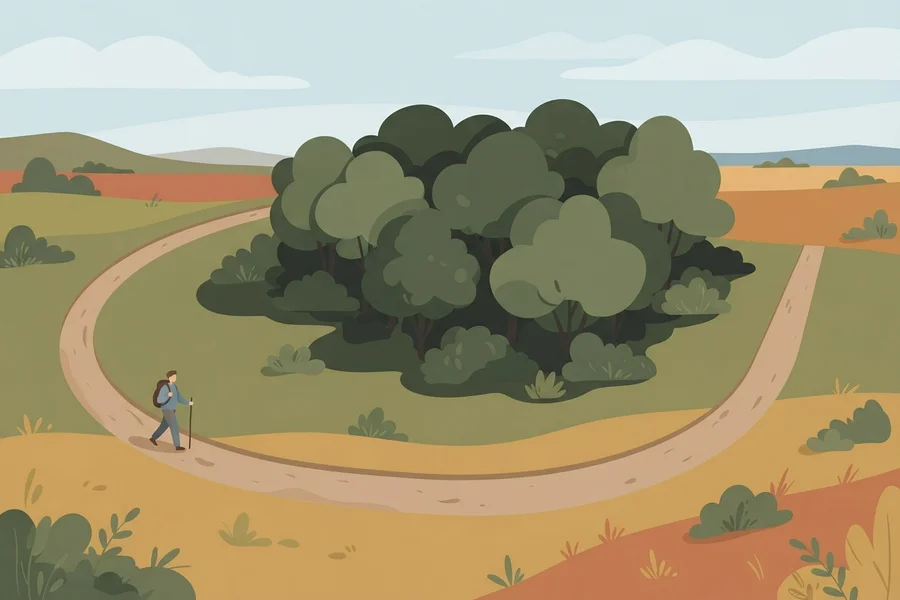
The Long Way Round. A Phobia-Like Pattern That's Clearly Taken Hold
This isn't one bad answer standing out; it's a pattern that turns up again and again across the picture — real physical reactivity, real dread beforehand, and avoidance that's actually rerouting decisions rather than just showing up as a preference.
A route gets planned around it. A trip gets reconsidered. It happens often enough now that it's woven into an ordinary week rather than standing out as an exception.
Underneath it is a protective instinct doing exactly the job it was built for — it's just aimed at something that probably doesn't call for quite this much firepower. And each time avoiding it brings that flash of relief, it also quietly reinforces the habit of avoiding it again next time.
No urgency here, but worth knowing: this is one of the better-understood kinds of pattern out there, and talking it through with a professional, whenever that feels right, tends to help more than people expect going in.
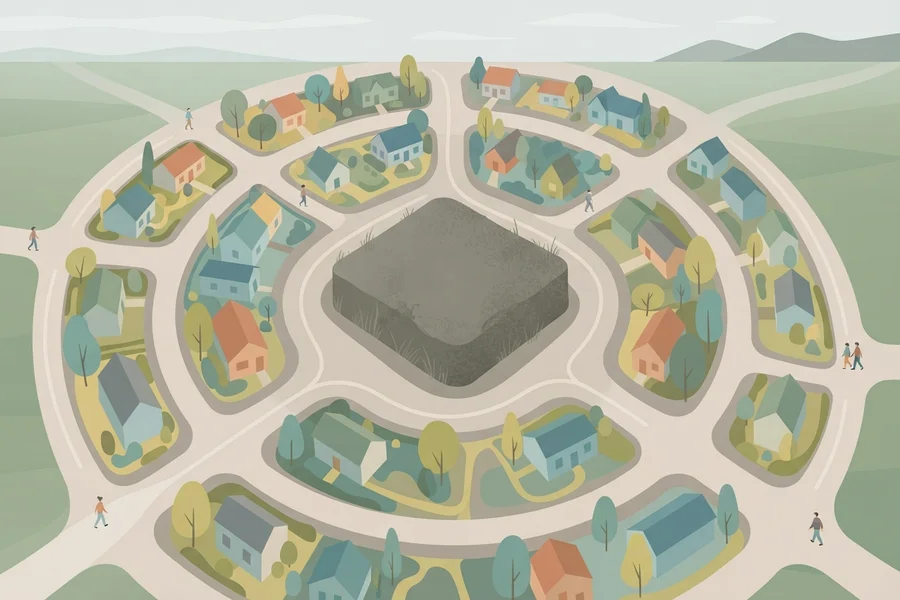
Built Around the Gap. When a Phobia-Like Pattern Runs the Whole Day
Almost every part of the picture shows something here, and consistently — this isn't confined to the moments you're actually up against it. It reaches into how a day gets planned and how it feels before anything has even happened.
Energy goes toward managing the possibility of it before you've even left the house. A job, a trip, a weekend — the choice quietly bends around it more often than not.
What's underneath is an intensely tuned protective instinct, doing exactly what it was built to do. What it costs is how much of an ordinary day ends up organized around something you didn't consciously choose to organize around.
None of this settles a diagnosis on its own. The plain next step, whenever it feels right and with no deadline attached, is talking to a professional — this particular kind of pattern is among the better-documented and more treatable ones, once someone decides to take a closer look.
Your results are no accident
The classic 16-type personality test rooted in Jung's typology has been rebuilt from the ground up: a new CoreTypes methodology, and a far higher level of accuracy. These might be the most useful ten minutes you'll ever spend on yourself: you walk away with the key to your decisions, your relationships and your results — and it's yours for good.
Take the free testFrequently Asked Questions
Can this test tell me if I have a phobia, or which one?
No — and it was never built to. Diagnosing something like this takes a qualified professional working through formal criteria, which is a different job than answering twenty questions honestly. What this actually hands back is a same-day sense of how loud the pattern — the physical jolt, the dread, the avoiding — has gotten for whatever you had in mind while you clicked through it. Worth a real conversation with someone qualified if that sense doesn't sit right with you.
What's actually the difference between a strong fear or dislike and a real phobia?
It's less about how sharp the fear feels in any one moment and more about what it does over time: a phobia tends to run well past what the real danger justifies, barely fades even with repeated, harmless exposure to it, and eventually starts nudging real decisions — which trip you take, which job you consider, which way you walk home — rather than staying a passing discomfort.
Can a phobia fade or go away on its own?
Sometimes, yes — it eases on its own, with nothing deliberate done about it. Just as often, it sticks around for years unless someone actively works on it. Plenty of solid, well-tested approaches exist for addressing one, and there's no clock running on if or when to look into them.
Is a phobia actually a recognized mental-health diagnosis?
Yes. It's an officially recognized category in mental health, not just a stronger version of everyday caution or an intense dislike of something. Working out whether a given pattern actually crosses into that category, though, is still a job for a qualified professional applying their own criteria, not something a quiz can settle.
How accurate is an online phobia test like this one?
What you get is a same-day snapshot built from your own answers about a handful of well-established manifestations — the physical jolt, the dread, the avoidance, and so on. That makes it a decent starting point, but it isn't the kind of result a lab or a clinician would produce, and it was never meant to stand in for an actual evaluation by one.
Methodology
This kind of test works the way most self-report phobia scales do: instead of asking about a specific animal, place, or situation, it lets you keep your own fear in mind throughout, and asks how it plays out — how your body reacts, whether you can tell in the moment that the fear outweighs the real risk, how much dread builds beforehand, how much you plan around avoiding it, and how much of an ordinary day ends up shaped by it.
What comes out the other end is a read on how strong that pattern is for you specifically — not which fear you were thinking of while answering, and not a diagnosis of any kind.
Like anything self-reported, it only captures a single pass, not a pattern tracked over weeks or months, and it has no way of naming which specific phobia might be involved even where one clearly applies. For a plain-language look at phobias in general and how ordinary caution differs from one, the NIMH's overview of phobias is a solid starting point; if a pattern like this is already affecting how you live day to day, the NHS's page on phobias covers where to go from here.
None of this replaces an actual evaluation. A phobia, as a diagnosis, is something only a qualified professional can establish, using criteria this test was never built to apply — treat what you see here as a starting point for paying attention, not as a verdict on its own.
References
- Lang, P.J. (1968). Fear reduction and fear behavior: Problems in treating a construct. In J.M. Shlien (Ed.), Research in Psychotherapy (Vol. 3, pp. 90–103). Washington, DC: American Psychological Association.
- Mineka, S., & Zinbarg, R. (2006). A contemporary learning theory perspective on the etiology of anxiety disorders: It's not what you thought it was. American Psychologist, 61(1), 10–26. doi:10.1037/0003-066X.61.1.10.
- Craske, M.G., Wittchen, U., Bogels, S., Stein, M., Andrews, G., & LeBeau, R. (2013). Severity Measure For Specific Phobia, Adult. American Psychiatric Association, DSM-5 Online Assessment Measures.
- MacLeod, S., Schneider, L.H., & McCabe, R.E. (2022). Investigating the psychometric properties of the Severity Measure for Specific Phobia. Journal of Psychopathology and Behavioral Assessment, 44(3), 826–835. doi:10.1007/s10862-022-09976-6.