Character Strengths Test
Answer 36 short questions about how you actually act, not how you’d like to act. At the end, you’ll see which of eleven character strengths leads for you today, with all eleven shown on their own scale. Takes about 8 minutes.


Fairness is the strength that leads you — holding the same standard for everyone, regardless of personal feeling.
Something in how you answered today kept applying the exact same rule to everyone it touched — a friend didn't get an easier read, someone you couldn't stand didn't get a harsher one, and an unfamiliar face got the same shot as someone with years behind them.
Inside the wider group of caring strengths, Fairness runs on consistency rather than warmth toward any one person — the line that separates it from Kindness, whose generosity is free to be selective and still count as real.
Treat this as a signal from how you answered today, not a verified fact about you — the framework is peer-reviewed, but a single self-report pass never counts as independent proof of anything.
Eleven strengths were scored here, and today Fairness simply came out on top. The other ten haven't gone anywhere — they're sitting on their own scales right beside it, and a different week could easily tell a different story.

Forgiveness is the strength that leads you — letting go of a wrong instead of carrying it forward.
Forgiveness came out ahead in how you answered today — anger that fades instead of lingering, and a willingness to treat someone differently once their own behavior has actually shifted, rather than holding them to the moment that first hurt you.
It sits in the same caring group as Kindness, but only ever answers a wrong that's already happened — Forgiveness reacts to harm done, while Kindness offers something with no harm behind it at all to respond to.
None of that makes this a verified trait. It's a same-day read on your answers, resting on peer-reviewed character-strengths research rather than on any lab check of how forgiving you actually are.
Nothing about this is permanent. Ten other strengths sit on their own scales right alongside Forgiveness, and today's answers only say which one spoke loudest this time around.

Kindness is the strength that leads you — noticing what someone needs before they ask.
Your answers today kept landing on the same shape: noticing what someone needed before a word was said about it, stepping in ahead of being asked, and letting a favor go without quietly keeping score.
Warmth decides it here, not a rule applied evenly to everyone — which is the line between Kindness and Fairness inside the caring group: Fairness holds the same line for everyone, while Kindness is free to show up for one person and not another.
This is a read on today's answers, not a lab result — the eleven strengths and their grouping come from peer-reviewed research, but no self-report questionnaire can independently verify precisely how kind any one person is.
This isn't the whole picture of you — just the loudest signal from today. Kindness leads for now, with ten other scores waiting quietly beside it, ready to lead on a different day.

Close Bonds is the strength that leads you — investing deeply in a few relationships, not many.
A handful of relationships did most of the work in how you answered today — real weight behind a small number of people, warmth from them actually landing instead of getting deflected, and a genuine share of the effort of keeping those bonds alive coming from your own side.
Inside the caring group, this strength is built around a few specific people rather than a group as a whole — Close Bonds needs depth with a handful of individuals, where Teamwork needs no personal closeness with anyone at all.
Your relationships themselves weren't measured here, only your own account of them today. The strengths and their groupings are peer-reviewed; this particular reading is self-report, nothing sturdier.
A different day of answers could easily hand the lead to one of the other ten strengths sitting right next to this result, each with its own scale and its own story to tell.
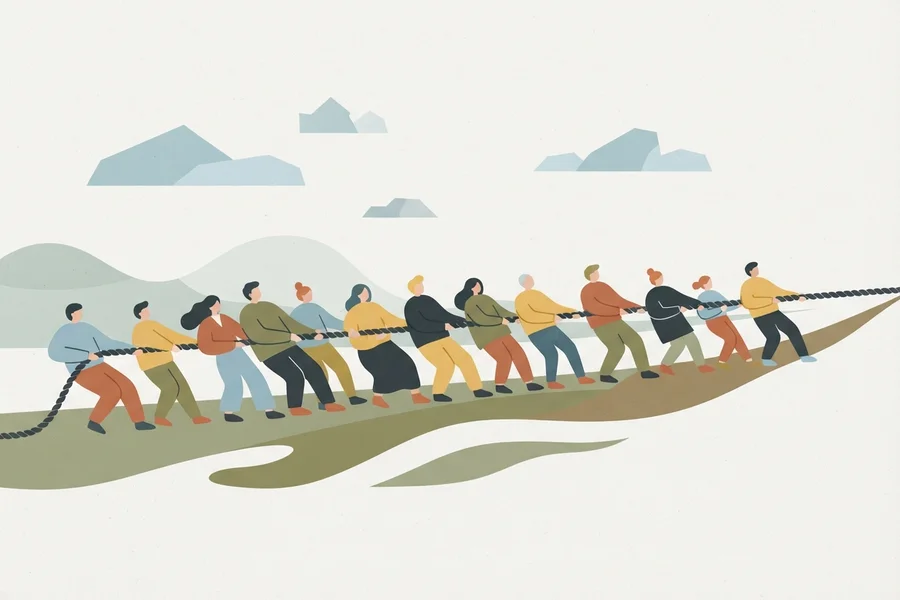
Teamwork is the strength that leads you — carrying the group's result as your own.
A shared result kept reading as personally yours in how you answered today — past your own individual piece of it, and even in situations where no one was guaranteed credit for any of the effort.
A group rather than one particular bond is where this points, inside the same caring group as Close Bonds — the opposite direction, since Close Bonds is about depth with a small handful of specific people.
Read it as a self-reported signal built from peer-reviewed character-strengths research, not as an independently verified account of how you actually show up inside a team.
Ten other strengths are scored here too, each on its own bar next to this one. Today, Teamwork simply happened to be the strongest — no more permanent than that, no less real either.

Creativity is the strength that leads you — turning a genuinely new idea into something that works.
More than one real option kept showing up before you'd settle on anything in how you answered today, and whether an idea would actually work mattered about as much as how novel it was — with follow-through carrying ideas to something that functions, not just a sketch of one.
An actual result has to come out the other end for this one to count — something useful, not just novel — which is the line between Creativity and Curiosity, where nothing ever has to be produced at all.
How creative you are in practice stays untested here. What you're looking at is a same-day self-report, built on peer-reviewed research into character strengths rather than on watching you actually work.
Call this today's answer, not a lasting one. Creativity led this time; the other ten strengths are still right there, each holding its own place on the scale.

Curiosity is the strength that leads you — reaching for the unfamiliar for its own sake.
Unfamiliar experience with nothing riding on it kept getting chosen in how you answered today, along with real ease inside situations with no clear guide, and exploring that you started yourself rather than waited for chance to bring along.
No output is required here at all, unlike Creativity, where something useful has to result, and unlike Love of Learning, which circles back to the same subject rather than reaching for what's new.
Nothing here independently confirms how curious you are — the eleven strengths and their structure are peer-reviewed, but today's specific answers are self-report and only that.
The other ten strengths didn't disappear because this one led — they're right there on their own scales, and any of them could be the one that answers loudest next time you take this.

Love of Learning is the strength that leads you — going back to master one subject, not just sample many.
One subject kept getting real depth in how you answered today, rather than a first look and a move on to the next thing — depth built because mastering it actually mattered to you, continuing well past whatever originally required you to learn it at all.
Depth is the whole point of this one, inside a group built around engaging with new things — returning to the same ground rather than moving to the next, which is the line between Love of Learning and Curiosity's pull toward whatever's unfamiliar next.
How much you actually know was never on the table. This measures a lean in your own answers today, against a peer-reviewed map of eleven character strengths.
Eleven strengths, one leader today: Love of Learning. The remaining ten are still fully visible, each on its own scale, none of them erased by this result.

Perseverance is the strength that leads you — staying with a goal long after the spark that started it fades.
A real setback didn't end things in how you answered today, and neither did the fading of whatever spark got a goal started in the first place — effort held up across a genuinely long stretch of time, doubt from other people included.
Among the self-control strengths, this is about pushing through a difficulty already under way — often the opposite instinct to Prudence, which would rather avoid that difficulty before it starts at all.
How far you'd actually go isn't something a single test can independently verify — this is a self-reported lean, grounded in peer-reviewed character-strengths research.
This says which strength spoke loudest today, not which one always will. The other ten sit on their own scales right beside Perseverance, unchanged by it taking the lead this time.
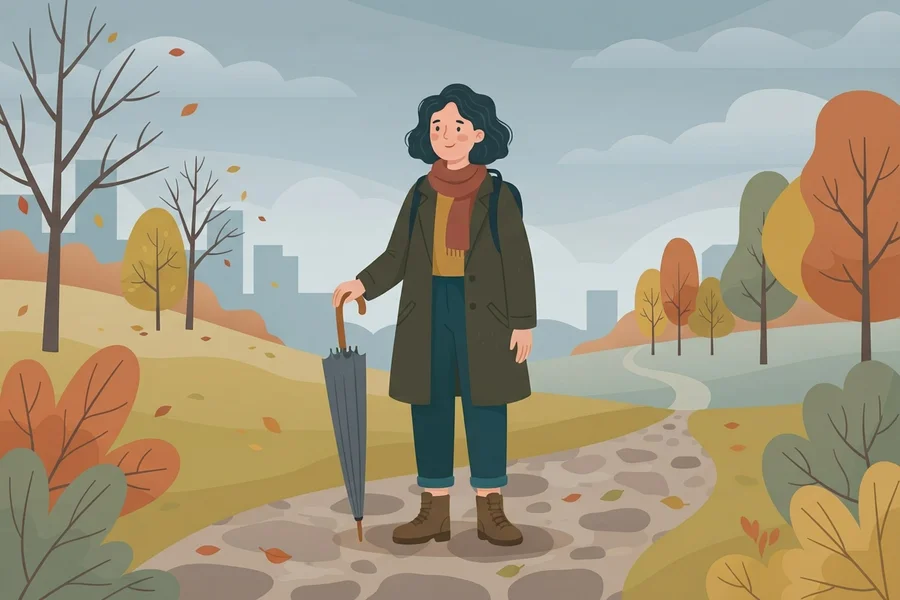
Prudence is the strength that leads you — weighing tomorrow's cost before acting today.
What comes next kept getting weighed in how you answered today, even under real pressure to decide fast — risk got planned around ahead of time, and a pursuit whose future cost outweighed its present appeal got passed on rather than started.
Avoiding a difficulty before it starts is the whole idea behind this one, among the self-control strengths — often the opposite instinct to Perseverance, which would rather grind through one already under way.
Being careful in practice isn't what got checked here — your own answers today were, against a peer-reviewed framework for what these eleven strengths look like.
Prudence simply edged out the other ten today. They're all still there, each with its own scale, and none of them stopped mattering because this one came out ahead.

Self-Regulation is the strength that leads you — keeping your own reaction in hand right when it counts.
A strong reaction got brought under control as it happened in how you answered today, an immediate impulse got held off long enough to choose something else, and composure held through provocation that kept building rather than slipping in early.
The timescale of right now is what this one runs on, among the self-control strengths — the line that separates it from Perseverance and Prudence, both playing out over weeks and months rather than a single moment.
How you'll react the next time something provokes you isn't predicted by any of this. It's a same-day self-report, resting on peer-reviewed character-strengths research.
Today, out of eleven strengths, this is the one that answered loudest. The other ten are right beside it on their own scales — not lesser, just quieter this time around.
Your results are no accident
The classic 16-type personality test rooted in Jung's typology has been rebuilt from the ground up: a new CoreTypes methodology, and a far higher level of accuracy. These might be the most useful ten minutes you'll ever spend on yourself: you walk away with the key to your decisions, your relationships and your results — and it's yours for good.
Take the free testFrequently asked questions
What does this strengths test actually measure?
It measures which of eleven character strengths, each with roots in peer-reviewed positive-psychology research, your own answers point toward hardest today. Those eleven sit inside three broader groups — one about how you treat and bond with people, one about how you take in new ideas and experience, and one about how you manage your own impulses and effort over time.
Is this strengths test accurate?
The eleven strengths and how they're grouped come from peer-reviewed research, so the underlying map holds up. The test itself runs on self-report, though, and that puts a ceiling on its accuracy — it can only reflect how clearly you see your own behavior, with nothing outside the test checking that against how you actually act. A result names today's strongest signal, not a stamp that's been independently checked and locked in.
Why did I get a different leading strength last time I took a strengths test?
A self-report result captures how you're seeing yourself right when you're answering — your mood that day, what's been going on lately, how sharply you're reading your own behavior, all of it can nudge which strength edges ahead. Swap in a different questionnaire built around the same eleven strengths, and it might sort them into different clusters or call them by slightly different names too. Two honest attempts landing on different leaders is normal, not proof that one of them missed.
What should I actually do with my strengths test result?
Treat whatever led today as a launch point, not a label to live inside. Over the next few days, pay attention to the moments at work and in your routines where it's already doing the heavy lifting, then pick one deliberate way to put it to more use — in how you take on a project, or how you show up for someone who needs help. Think of it as material for reflection and for shaping what comes next, not a verdict to file away.
Is this the same thing as a personality-type test?
No. It doesn't sort you into a single fixed type and leave it there. It names whichever of eleven strengths comes out strongest today while keeping all eleven visible side by side — because almost nobody is really just one of them; everyone carries a working blend, and this just points at which piece of that blend spoke loudest this time.
Methodology
This test is built on peer-reviewed research into character strengths, part of the wider field of positive psychology. Eleven strengths, each with its own everyday behavioral definition, are grouped here under three broader dimensions: how you treat and bond with other people, how you engage with new ideas and experience, and how you manage your own impulses and effort over time.
You answer 36 short questions about ordinary situations. Your answers lean toward one of the eleven strengths more than the others, and that's the one named as your result, with all eleven shown on their own 0–100% scale right alongside it. This isn't a fixed shortlist of a few strengths, and it isn't a full ranking of every strength anyone has ever studied — just the one your answers leaned toward hardest today, next to the other ten.
A few honest limits. This is self-report: the result can only reflect how clearly you see your own behavior, and nothing outside the test checks that against how you actually act day to day. Peer-reviewed literature supports the eleven-strength framework and its three-part grouping. What hasn't gone through that same kind of outside scrutiny is this particular questionnaire — its specific wording, its specific weighting — as a standalone measurement tool on its own. It isn't a diagnosis, and it isn't a ranking of your worth as a person — just a same-day prompt for noticing a strength you already lean on.
The APA Dictionary of Psychology has a short, formal entry on what a character strength actually is, if you want the underlying definition.
References
- Peterson, C., & Seligman, M. E. P. (2004). Character Strengths and Virtues: A Handbook and Classification. Washington, DC: American Psychological Association / New York: Oxford University Press. ISBN 978-0195167016.
- Park, N., Peterson, C., & Seligman, M. E. P. (2004). Strengths of character and well-being. Journal of Social and Clinical Psychology, 23(5), 603–619. doi:10.1521/jscp.23.5.603.50748
- McGrath, R. E. (2015). Integrating psychological and cultural perspectives on virtue: The hierarchical structure of character strengths. Journal of Positive Psychology, 10(5), 407–424. doi:10.1080/17439760.2014.994222
- Partsch, M. V., Bluemke, M., & Lechner, C. M. (2022). Revisiting the hierarchical structure of the 24 VIA character strengths: Three global dimensions may suffice to capture their essence. European Journal of Personality, 36(5), 825–845. doi:10.1177/08902070211017760