Emotional Intelligence Test
This test asks 32 quick questions about your everyday emotional habits — how you notice your own reactions, keep them in check, read other people, and handle the moments that test a relationship. It takes about seven minutes, and at the end you’ll get one overall read on how strongly these patterns show up for you.


The Distant Signal. The Least Developed Emotional Intelligence.
Right now, these habits sit at the faintest point this test can register. Catching a shift in your own mood, keeping a reaction in check, reading someone else's state, and finding your footing in a hard conversation — all of it currently shows up as more trace than pattern.
A friend might be the one to point out you've gone quiet, well after you'd already gone quiet. A tense conversation can end feeling settled, only for the same friction to turn up again a week later, unresolved and unremarked on.
There's an upside hiding in this: you're not the type to get stuck replaying a feeling for hours, turning it over and over. Things pass through you rather than lodging.
The cost shows up in other people's laps — they end up naming things out loud that you might have caught yourself, and a rift can sit unspoken longer than it needs to.
None of this is fixed. These are patterns you're not yet in the habit of noticing — which is a different thing entirely from patterns you're incapable of.

The Rising Frequency. A Middling Emotional Intelligence, Present but Not Yet Strong.
Your answers land squarely in the middle of this test's range — an honest, familiar mix rather than one consistent story. You notice plenty and miss plenty, hold steady sometimes and slip other times.
You'll catch a friend's mood shift mid-sentence one day, and completely miss it the next. A hard topic with a partner goes smoothly more often than it used to, but it can still tip into an argument when the timing's wrong.
The strength here is that none of it's automatic — you're actively working these muscles rather than coasting on either extreme, which usually means you already notice when something's off.
The tradeoff is inconsistency: the people close to you can't always predict which version shows up — the one who catches the shift early, or the one who needs it spelled out.
What this test can't tell you is which situations reliably bring out which version of you — that's a narrower question than a single overall read can answer.

The Steady Frequency. A Well-Developed Emotional Intelligence That Shows Up Often.
Your answers cluster near the strong end of this test's range — noticing, managing, reading, and navigating all show up as a frequent, dependable part of how you operate, not just an occasional talent.
You're often the one who clocks the mood shift before anyone mentions it, and the one who reaches out first once an argument's cooled. A hard conversation with a colleague usually stays a conversation.
The strength is obvious: people can lean on you in the moments that actually test this kind of thing, and you generally know your own reactions well enough to steer them.
The less comfortable side is that these same skills are just tools — they work exactly as well for keeping the peace as for managing people, and which one you're doing isn't something a test like this can tell apart.
What's left open is what you're actually using all of this for, in the specific relationships that matter to you — a question only you're positioned to answer.
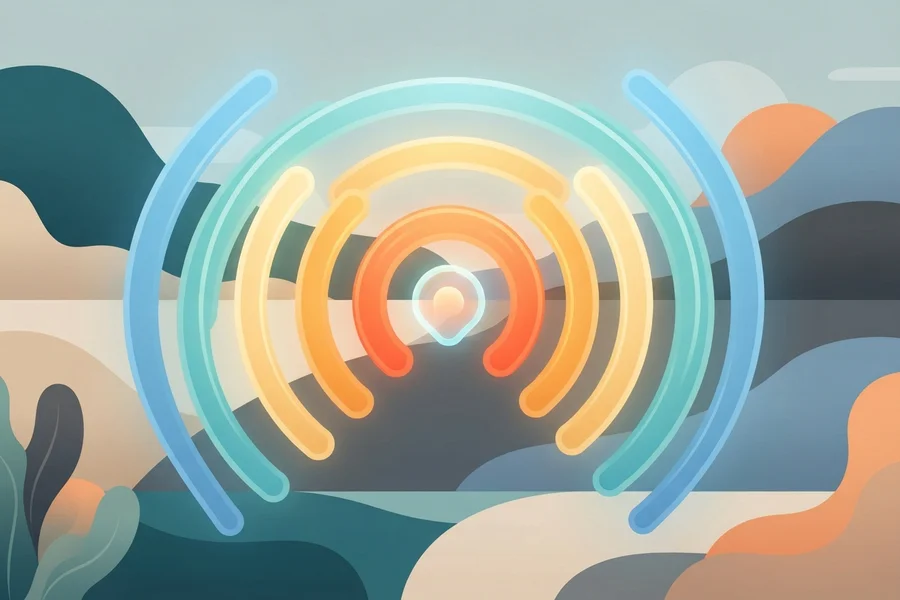
The Full Broadcast. The Most Developed Emotional Intelligence.
Your answers sit at the very top of this test's range — about as strong and consistent a self-reported pattern as this scale can register, across noticing, regulating, reading, and relating alike.
A shift in someone's tone rarely gets past you, a hard topic rarely turns into a fight on your end, and a strong reaction of your own rarely spills onto someone who didn't earn it.
This is a real asset, and an ordinary, practical one — the kind that makes a hard conversation go a little more smoothly for everyone sitting in it.
It's worth sitting with the other side of that, too: none of this says anything about what these skills are being pointed toward. The same read on a room that helps you support someone is equally capable of being used to steer them.
This scale can tell you how strong the pattern is. What it can't tell you — and what only your own relationships can — is what you're actually doing with it.
Your results are no accident
The classic 16-type personality test rooted in Jung's typology has been rebuilt from the ground up: a new CoreTypes methodology, and a far higher level of accuracy. These might be the most useful ten minutes you'll ever spend on yourself: you walk away with the key to your decisions, your relationships and your results — and it's yours for good.
Take the free testFrequently Asked Questions
What counts as a good emotional intelligence score?
There isn't an agreed-on cutoff for this kind of self-reported measure, the way there is for a validated clinical screening tool. This test gives you one position on its own scale, not a pass-or-fail line — and it's not measured against anyone else's answers at all, so there's no population figure anywhere to hold yours up against.
Can emotional intelligence be improved?
The habits this test asks about — noticing your own reactions, managing them, reading other people, and navigating relationships — are the kind of everyday skills people build over time, often just through practice and attention. This test itself only captures where things stand for you right now; it isn't built to measure change, and it makes no claim about how quickly or easily that might shift.
Is emotional intelligence more important than IQ?
That idea comes from a popular framing rather than one settled research finding, and this test doesn't repeat it. What the research actually shows is a modest, correlational link between self-reported emotional habits and various life outcomes — nothing like a clean ranking of one thing "mattering more" than another. This test doesn't predict any outcome at all; it just reports where your answers land.
How accurate are online emotional intelligence tests?
A test you answer about yourself measures self-perception — how you see your own emotional patterns — rather than a scored measure of skill, the way a right-or-wrong test would. Research on this specific gap finds the two line up only loosely: how someone rates their own emotional habits and how they'd actually perform on a measured task are related, but weakly. This test is explicitly the self-report kind, so read your result as a picture of self-perception, not a precision instrument.
What areas does this test actually cover?
The 32 questions draw evenly from four recognized, related areas: noticing and understanding your own emotional states, managing your reactions, reading other people's emotional states, and navigating relationships. Rather than scoring each area separately, the test folds all of it into one overall read, because the research behind this construct treats it as one continuous pattern rather than four neatly separable ones.
Methodology
This test is based on the approach of understanding emotional intelligence as a self-perceived, everyday pattern rather than a scored ability — closer to how someone would describe their own habits than to a right-or-wrong test with a correct answer key. It draws its 32 questions from several widely recognized, related areas of the construct: noticing your own emotional states, managing your reactions, reading other people, and navigating relationships — rather than testing any one of these in isolation.
Each question offers five graduated answers along a shared intensity scale, from rarely-if-ever to close to constant. Most questions describe the habit directly; about a quarter are worded the opposite way, describing what its absence looks like, so answering carelessly in one direction doesn't quietly inflate the result. All 32 answers are added into a single total and mapped onto one overall scale.
This is a self-report measure: it reports what you believe about your own emotional habits, not a performance-tested measure of skill — research consistently finds the two line up only loosely. It isn't evidence for or against any clinical condition, isn't equivalent to any named commercial instrument, and doesn't predict career, income, or relationship outcomes; the habits it covers can serve generous or self-serving ends alike, and a strong result on its own says nothing about which. For more on how this construct is defined, see this overview of emotional intelligence and a broader look at how it's been modeled and measured.
References
- Salovey, P., & Mayer, J. D. (1990). Emotional intelligence. Imagination, Cognition and Personality, 9(3), 185–211.
- Goleman, D. (1995). Emotional Intelligence: Why It Can Matter More Than IQ. Bantam Books.
- Petrides, K. V., & Furnham, A. (2001). Trait emotional intelligence: Psychometric investigation with reference to established trait taxonomies. European Journal of Personality, 15(6), 425–448.