Mental Health Test
Answer 15 short questions about your mood, coping, daily tasks, connection with others, and sense of purpose over the last couple of weeks. It takes about 4 minutes, and at the end you’ll get a read on how much load your everyday functioning is currently carrying.

This test is for informational purposes only and is not a substitute for a professional diagnosis. Consult a qualified professional for medical or psychological advice.

The Open Road. A light load on everyday life right now.
Right now, the picture your answers paint is a light one. Mood holds up, tasks get handled, people still get your time, and the days feel like they're going somewhere.
Nothing here forces a work-around. A hard week still passes without your sleep, your friendships, or your to-do list taking real damage.
That kind of range, where ordinary setbacks stay ordinary, is not nothing — it's the reason a rough day doesn't turn into a rough month.
A reading this clear is also easy to stop checking in on. A facet can start to slip quietly under a run this clear of trouble, simply because nothing here is currently demanding your attention.
None of this is a verdict on next month, and it leaves plenty of ground these fifteen questions never touched.
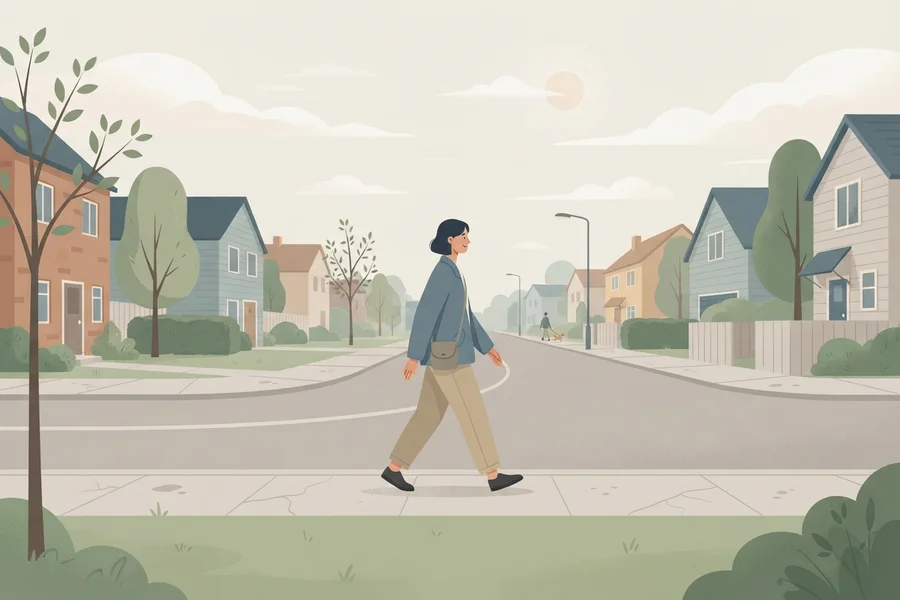
The Familiar Route. A mild, on-and-off load on everyday life.
Most of what you described in your answers still runs the way it always has — the overall shape holds.
The friction shows up in a place or two: maybe it's a string of shorter nights, or invitations you've been turning down more than you'd like.
Whatever it is, you're still functionally handling it, even if it takes a bit more effort than it used to — the rest of your everyday life goes on largely unbothered.
A load this mild is exactly the kind that's easy to shrug off — nothing about it looks urgent, so the one thing that's actually recurring can keep recurring, unnamed, for a while.
Which facet is actually carrying that friction, and whether it's already easing on its own, isn't something one snapshot can answer.
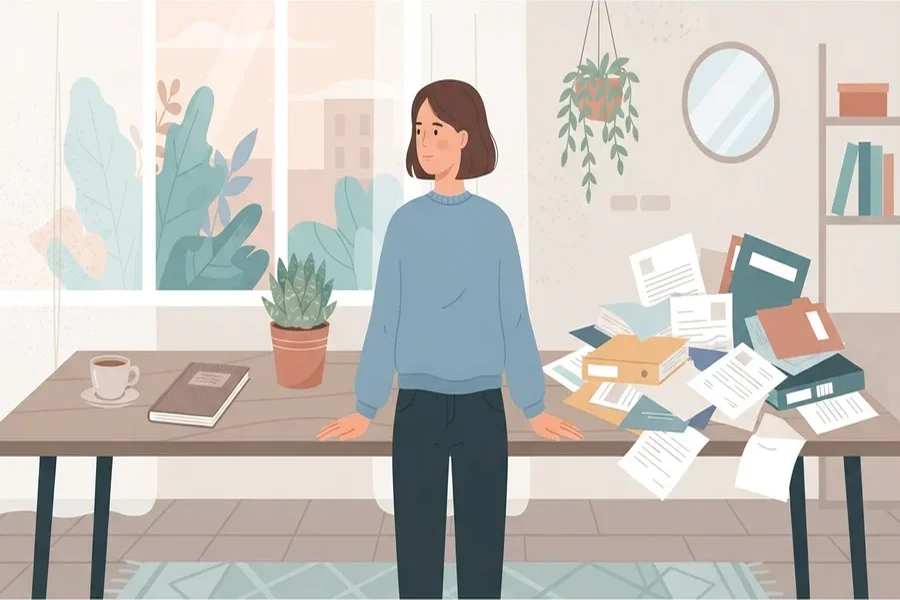
The Half-Cleared Desk. A genuinely mixed load on everyday life.
This isn't a vague middle ground. Your answers describe a real mix — part of your everyday life is holding its shape, and part of it is genuinely under strain, at the same time.
Maybe you're still showing up for the people who matter while your sleep has gone ragged, or you're getting the essential tasks done while the sense that any of it adds up to something has thinned out.
What keeps this from tipping further is exactly that some facets haven't given ground — the parts of you that are still working are doing real work.
Because nothing about the picture is uniformly bad, it's tempting to file the whole thing under "probably fine," which can let the strained facets go quietly unaddressed.
What's missing here is any sense of which strained facet matters most, or how the mix would read on a different day.

The Teetering Stack. A noticeably elevated load on everyday life.
Even under real strain, things are still getting done. Most of your answers describe a load that's noticeably heavier than it should be — and you're still carrying it, task by task.
Sleep is off more nights than not, plans with people take more convincing than before, and the sense that any of this is leading somewhere has gone thin — several facets at once, not just one.
That persistence is worth naming on its own: functioning under this kind of load, rather than functioning without it, is a real and different thing.
A bad week here, bad sleep there — each strained facet gets its own excuse, and the connected pattern underneath goes unnamed.
There's no way to say why the load got this heavy from here — only that it's real, and that it's being carried, not ignored.

The Curbside Pause. A heavy load across nearly all of everyday life.
Naming a load this heavy, honestly, is not a small thing. Your answers describe nearly every facet — mood, coping, tasks, connection, sense of direction — reading strained at once, right now.
That kind of breadth is exhausting on its own: even the ordinary stresses that used to roll off can feel like they're piling on top of each other, day after day.
When everything is straining together, it gets hard to pick out which single piece might ease first — the sheer size of it can crowd out that kind of detail.
A load like this is worth talking through with someone who can actually help you carry it — a doctor or a mental health professional can offer more than a self-check ever could, on your own timeline, whenever you're ready.
Why the load got this heavy, and what happens from here, are separate questions — right now, what's true is that it's genuinely heavy, and that's worth taking seriously.
Your results are no accident
The classic 16-type personality test rooted in Jung's typology has been rebuilt from the ground up: a new CoreTypes methodology, and a far higher level of accuracy. These might be the most useful ten minutes you'll ever spend on yourself: you walk away with the key to your decisions, your relationships and your results — and it's yours for good.
Take the free testFrequently Asked Questions
What is a mental health test?
It's a short, structured self-check across a handful of everyday-functioning areas — mood, coping, daily tasks, connection with others, and sense of purpose — answered from your own recent experience. Think of it as a reflection prompt, not a diagnostic or clinical instrument.
Can a mental health test diagnose me?
No. A mental health condition can only be identified by a licensed clinician — a physician, psychiatrist, clinical psychologist, or other qualified professional — through a clinical interview and a look at your history, never through a self-report quiz like this one. If you're concerned, a primary care provider or a licensed mental health professional is the right next step.
What does this test actually measure?
The score behind your result comes from five facets: emotional balance, coping with daily demands, day-to-day functioning, social connection, and sense of purpose. Each one is scored against your own recent experience, not compared to a symptom checklist for any specific condition.
Is a mental stability test the same thing as a mental health test?
The two searches usually point at the same general check-in — but this test reports how much load your everyday functioning is carrying right now, not a verdict on whether you're "stable" or not. That kind of framing implies a health-or-illness judgment that a short self-check like this one can't honestly make.
Methodology
This test is built from general definitions of mental health as everyday functioning, drawn from established frameworks in the field — not from any single disorder's symptom checklist. Its fifteen questions are organized around five well-established facets of day-to-day functioning: emotional balance, coping with daily demands, staying on top of usual tasks, social connection, and a sense of purpose.
What you get is a self-reported, subjective snapshot of how strained or how clear those five facets feel right now, measured against your own baseline rather than anyone else's. It does not identify or rule out any specific condition, and it makes no claim about clinical severity, cause, or what happens next. The one recommendation it offers beyond the result itself is that talking to a professional is always a reasonable next step.
For a fuller picture of what mental health means and how it differs from a mental health condition, see the World Health Organization's overview. If you're weighing whether to reach out for support, the National Institute of Mental Health's guide to when and whether to seek help is a practical place to start.
This test is not a diagnostic instrument, and it is not a substitute for an evaluation by a licensed professional. It can point out where your everyday functioning currently feels strained — it cannot tell you what's causing that, or what you should do about it.
References
- Keyes, C. L. M. (2002). "The Mental Health Continuum: From Languishing to Flourishing in Life." Journal of Health and Social Behavior, 43, 207–222. doi:10.2307/3090197.
- World Health Organization. "Mental health: strengthening our response" (fact sheet).
- World Health Organization (1998). WHO-5 Well-Being Index.