Trust or Check Test
This isn’t the well-known puzzle that shares this test’s name — nothing here has a right answer to get. It’s a short self-report test on a related but different habit: trusting your first thought, or pausing to check it. Answer for how you actually behave, and in about three minutes you’ll get a plain read on where you land between the two.

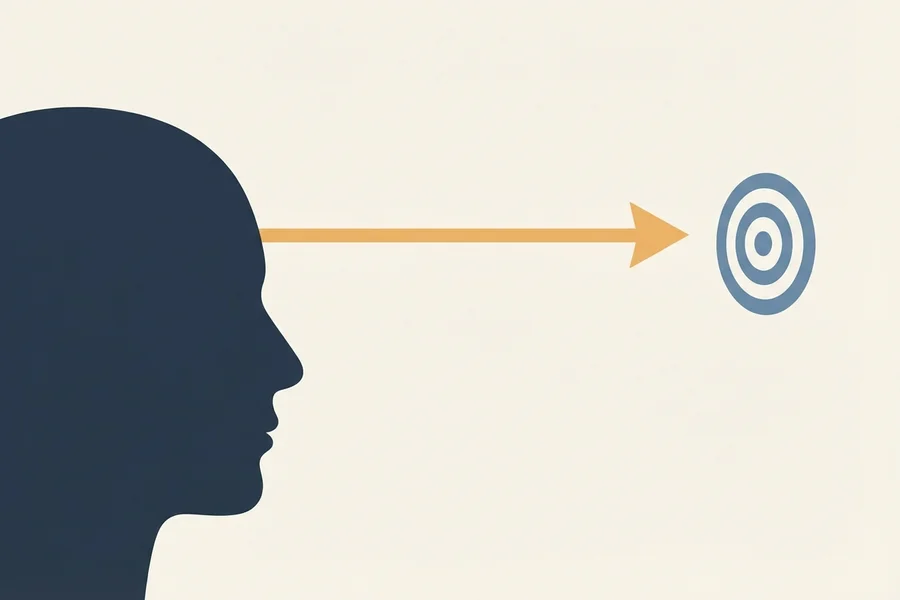
The First Take. You trust your first read, and you rarely look back.
Your first read is the one you go with — whatever verdict about a decision, a person, or a situation arrives first is already carrying your full weight before any second pass gets a chance to happen.
A stranger's tone on a phone call gets read in about two seconds flat, and you're already acting on that read before the call is even over.
That's not a shortcut taken under pressure. It's simply how you move, and it means you're rarely the one holding up a room while everyone else waits on a decision.
The cost sits on the harder calls, the ones with a wrinkle a fast read tends to miss — ease on familiar ground and a blind spot on trickier ground come from that very same reflex.
What this can't say is how good your first calls actually are, day in and day out. It also can't tell you whether you slow down on your own once something suddenly carries real weight.
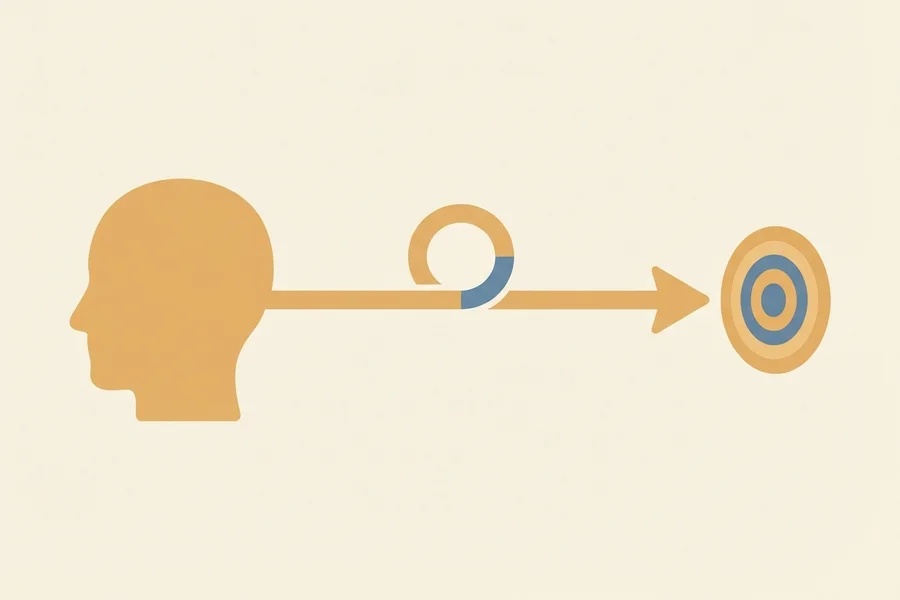
The Loose Rein. You lean on your first read, but you don't always let it stand.
Most of the time, your first read is the one that sticks. It's not absolute, though — there's a second gear somewhere underneath that occasionally kicks in and asks a question the fast read skipped.
A commitment involving real money is about the only thing that reliably makes you stop and glance back over a first impulse before acting on it.
It keeps most of your day light, one decision after another made without the drag of second-guessing.
The trouble is which door opens when. The checking that does happen isn't tied to anything predictable from the outside, so it surfaces on some calls and stays shut on others that could have used it just as much.
What actually triggers that occasional second look isn't something this result can name — that part is still worth watching for in yourself.
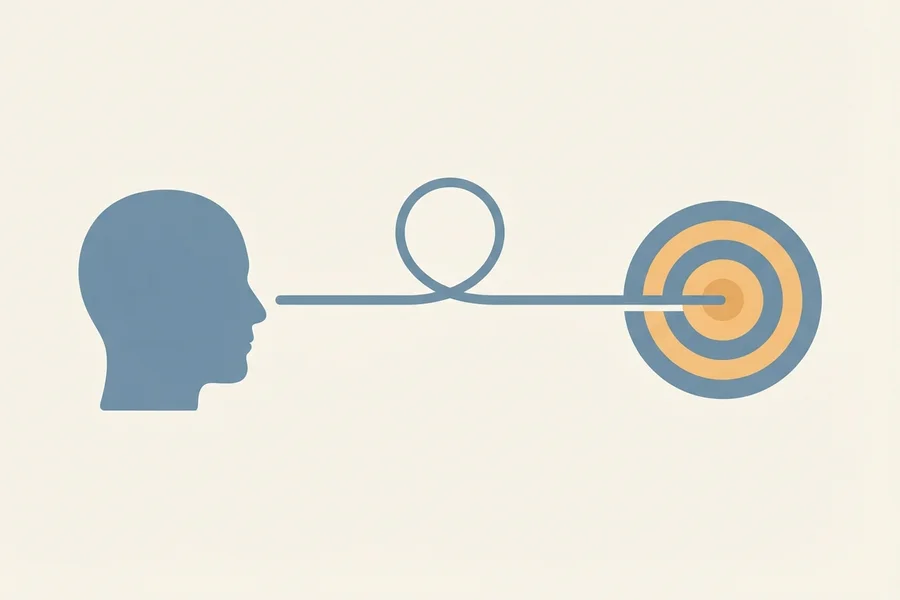
The Even Split. You divide about evenly between trusting a first read and checking it.
Neither habit has taken over here — pick any call at random and the odds are close to even between accepting the first thought outright and holding it back for a second look.
One decision gets made on a hunch inside of ten seconds. The next one, no bigger on paper, gets a second look before anything moves forward, with no obvious rule linking the two.
You're not locked into a single default, and that keeps you flexible in a way neither fixed style quite manages.
The catch is that neither strength is fully dependable, since a quick reflex won't reliably save you time and a checking habit won't reliably catch an error either.
What decides which way any single call goes is more than this result can pin down. Maybe it's how rushed you are. Maybe it's just the mood you're in that day.
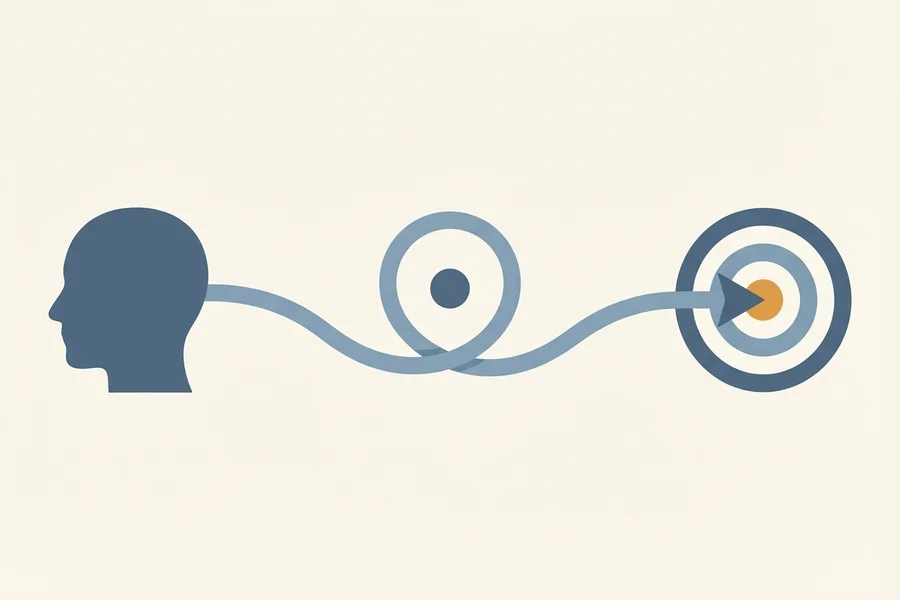
The Second Look. You lean toward checking your first read, though not every time.
Checking is your default, though not an absolute one. Most of the time, a first read gets a second pass before you'll act on it.
A first impression of someone new usually gets tested against a second conversation before it's trusted. Every now and then, though, something obvious enough just gets waved through without that second pass.
It picks up a good number of the mistakes a no-questions-asked approach would let through. It does this without slowing you down enough to feel like a drag on an ordinary day.
It's the calls that look most harmless that get waved through unchecked, and that's exactly the trap, since a first answer wearing total confidence isn't the same thing as a first answer that's actually correct.
This result can't point to which specific decisions slide by without a second look — noticing that pattern for yourself is the part left to do.
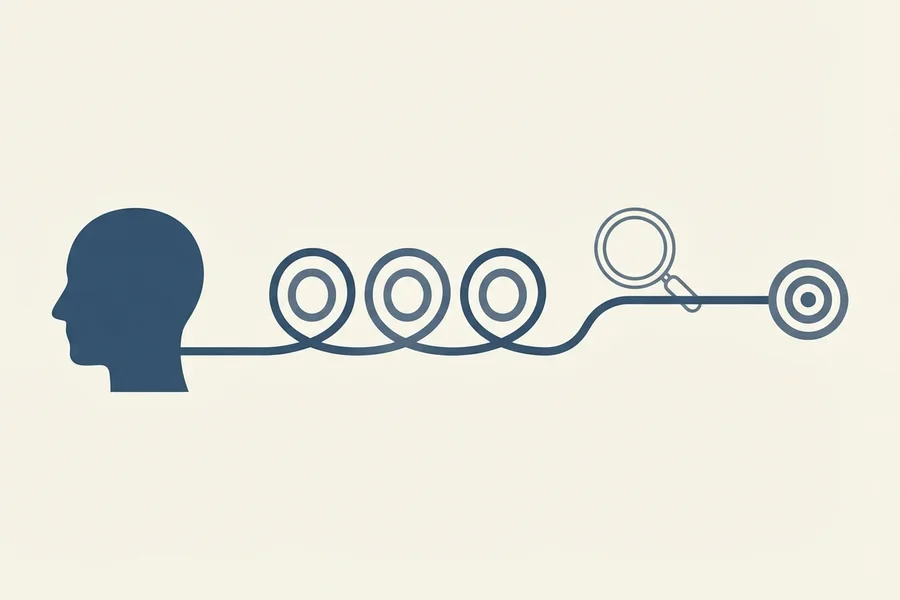
The Standing Pause. You check your first read almost every time, as a fixed habit.
A first read rarely gets to stand on its own with you — almost without exception, it gets a second pass, a re-read or a moment of holding off, before you'll treat it as settled.
A route gets checked twice before a long drive even when the map agrees both times.
Very little gets by without a look first. That means the borderline judgment calls and the answers that only feel slightly off, exactly what a quicker style would wave straight through, tend to get stopped and caught here instead.
It isn't free. Real time and attention go into calls that would have turned out fine either way. And no amount of double-checking makes an error impossible — it just puts more opportunities in the way of catching one.
Whether that habit lands equally on everything or piles up on the moments that already felt shaky is more than this result separates out.
Your results are no accident
The classic 16-type personality test rooted in Jung's typology has been rebuilt from the ground up: a new CoreTypes methodology, and a far higher level of accuracy. These might be the most useful ten minutes you'll ever spend on yourself: you walk away with the key to your decisions, your relationships and your results — and it's yours for good.
Take the free testFrequently asked questions
Why does this test have 14 questions when other sources give a different number?
This version runs fourteen statements deep because it's rating a habit, not scoring a puzzle. The number that shows up elsewhere — sometimes three, sometimes seven — belongs to two separate classic brainteaser sets that grade whether an answer is right, which isn't what's happening on this page. Comparing the counts side by side doesn't tell you much, since the two formats aren't measuring the same thing to begin with.
What does it mean if my result leans toward quick trust?
Not a failing grade of any kind. There's no item on this test where one option is marked correct and the others aren't, so nothing here can be failed — the outcome is simply which of two habits your answers leaned closer to. A pull toward trusting things quickly is a complete style with real upsides of its own, laid out on the result page rather than treated as a shortfall.
Is this test measuring intelligence or IQ?
No. The habit being reported — going with a first impulse or pausing on it — is something researchers file under personality and disposition, not under raw brainpower. Nothing about this test adds up to an intelligence score; it only places you on the trust-or-check habit.
Why does a first thought sometimes feel completely right and still turn out wrong?
Confidence and accuracy don't come from the same place — one is a fast, automatic feeling, the other only shows up after an answer's actually been checked against something. A snap answer can arrive dressed in all the certainty of a checked one while skipping that step entirely, which is how something can feel unmistakably right and still turn out wrong. Whether that checking step happened at all — not what the final answer was — is what these statements are actually asking about.
Is there a way to answer this test to get a particular result?
There isn't, and trying to steer it would defeat the purpose — this only reports a pattern that's already there, so an answer chosen to look a certain way just produces a result describing someone who doesn't exist. Answering for whichever habit actually shows up, day to day, is what makes the result worth reading at all.
Methodology
An answer to almost anything arrives in two stages: a fast first pass, and — only sometimes — a slower stage where that quick answer gets checked before it's trusted. This test reports how far you typically get into that second stage. Nothing here has a right or wrong answer, and none of it adds up to an intelligence or IQ score.
Being comfortable running with a hunch, or with whatever impression showed up first, is one end of what gets measured here. The habits pulling toward the opposite end show up in different forms: asking for one more fact before deciding, sketching a plan rather than deciding on the spot, or staying with a problem after a workable answer has already turned up. Psychologists usually describe these two speeds of thinking as opposite ends of one continuum, and the result places you somewhere along it.
One honest limit: filling out statements about yourself isn't sitting a timed task and getting graded on output — this only captures how you'd describe your own habits. Nor are the two ends a clean either/or: a snap read on Tuesday and a dug-into call on Wednesday can come from the same person, so what comes back here is a read on this one habit, not a full map of how someone thinks. Part of why that lean differs from person to person is something else entirely — how much someone enjoys sitting with a hard question, rather than any gap in ability.
References
- Frederick, S. (2005). Cognitive Reflection and Decision Making. Journal of Economic Perspectives, 19(4), 25–42. doi:10.1257/089533005775196732
- Cacioppo, J. T., & Petty, R. E. (1982). The Need for Cognition. Journal of Personality and Social Psychology, 42(1), 116–131.
- Pacini, R., & Epstein, S. (1999). The Relation of Rational and Experiential Information Processing Styles to Personality, Basic Beliefs, and the Ratio-Bias Phenomenon. Journal of Personality and Social Psychology, 76(6), 972–987.
- Betsch, C. (2004). Präferenz für Intuition und Deliberation (PID): Messung und Konsequenzen von affekt- und kognitionsbasiertem Entscheiden. Zeitschrift für Differentielle und Diagnostische Psychologie, 25(4), 179–197.