
PTSD Signs Test
Questions: 16Time: ≈ 4 min
Read each of the sixteen statements and pick the answer closest to your life as it is today; none is right or wrong. It takes about 4 minutes, and at the end you see your level of PTSD signs on a 0 to 100 percent scale, with a short explanation.


PTSD Signs Test: your result
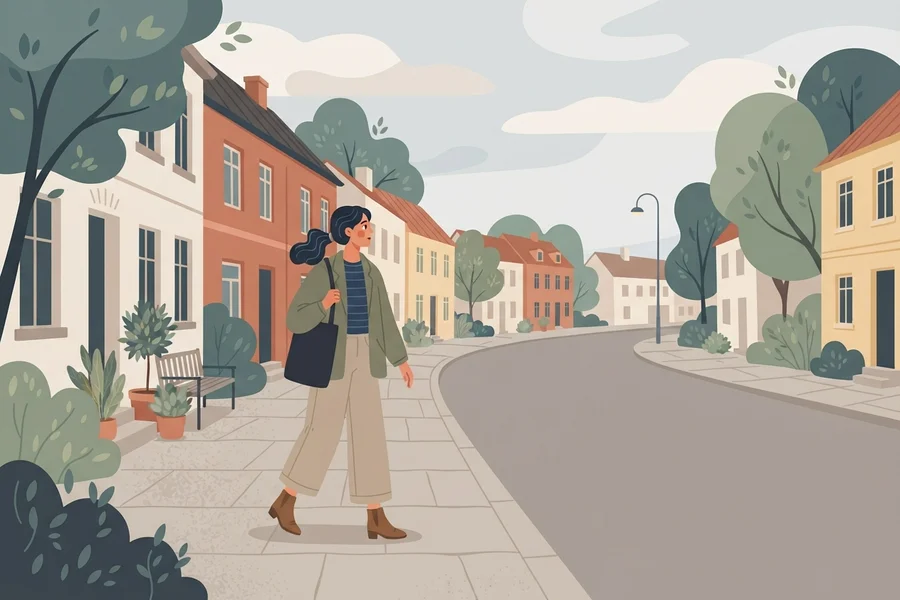
Clear Morning Signs of PTSD in your life right now are barely showing.
Across all four areas this test looks at, which are unwanted memories, steering clear of reminders, mood and closeness, and alertness and sleep, your answers sit near the bottom. Right now, signs of post-traumatic stress are barely part of your day.
You can see it in small things. When a door slams you glance up and carry on, and a quiet evening stays quiet. Your mind and body are getting on with life instead of standing guard over it.
You can sit in a room, hold a conversation or sleep through a night without any of it being run through that lens.
A low score neither confirms nor rules out anything about your past, so read it as a picture of today, and retake the test if things change.
PTSD Signs Test: your result
Passing Cloud Signs of PTSD in your life right now are present, but limited.
Some signs of post-traumatic stress show up in your answers, and they stay contained. Your total leans toward absence rather than presence, yet it sits clearly above the lowest level.
Think of a flinch at a loud noise, a topic you steer around, a night that takes longer to settle than you would like. Each one is small. None of them runs your day.
Your footing is intact: thinking, mood and reactions keep working for you, and these traces have not become the structure your life is built around.
They are worth naming rather than waving off because the overall lean is low, and the useful part is noticing which area they sit in: memory, avoidance, mood or alertness. What you see here is today's pattern; it passes no judgment on what came before.

PTSD Signs Test: your result
Crosswind Signs of PTSD in your life right now are a mixed picture, with no clear lean.
Your answers split almost down the middle. Signs of post-traumatic stress in your life right now lean neither toward absence nor toward presence.
A middle result is a specific finding: some parts of your day are quiet, others carry heavy weight, and both sit side by side.
Changing your answer to a single question could have placed you just below or just above this band. So the honest label is mixed.
Your picture has several notes in it, which gives you something to work with. You can look at it area by area: what surfaces unasked, what you steer around, how mood and closeness feel, how alert and rested you are, and see which of the four carries the most.
PTSD Signs Test: your result
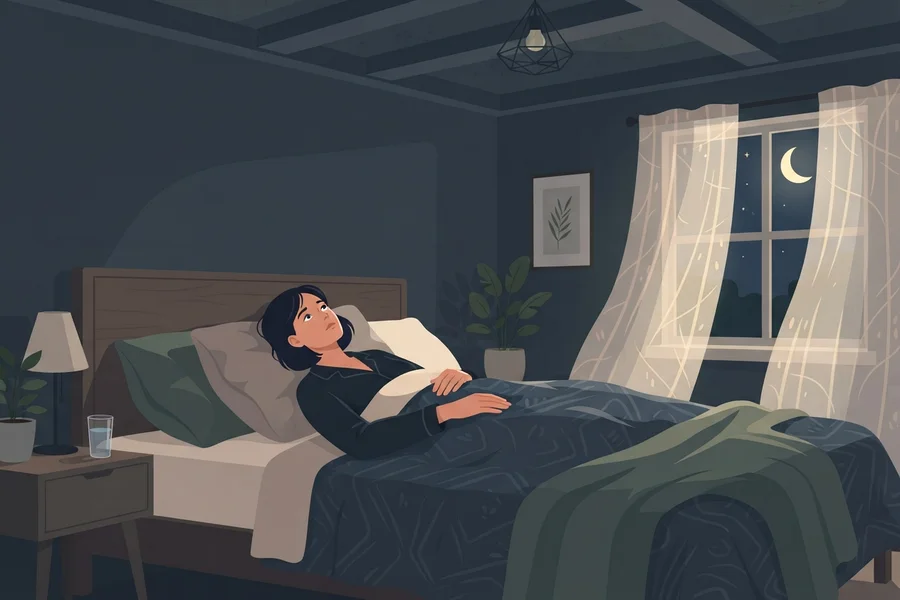
Loud Room Signs of PTSD in your life right now are raised and hard to set aside.
Your answers lean toward presence. Signs of post-traumatic stress are raised in your life right now, hard to set aside, and they touch more than one part of your days.
In practice that can mean memories that stay once they arrive, routes and conversations arranged around avoidance, a body that jumps and stays keyed up, a night that does not hold together.
There is clarity in having described this across several areas at once. Having words for it this precisely gives you a starting point.
The cost is probably energy. A good part of your day likely goes to managing or working around these signs, and that is tiring in itself.
Where these signs come from and how long they last are questions this result leaves alone, along with anything about earlier years.

PTSD Signs Test: your result
Heavy Pack Signs of PTSD in your life right now are pronounced enough to be worth discussing with a professional.
Your answers sit near the top in all four areas. Signs of post-traumatic stress are strongly present in your life right now, across memory, avoidance, mood and alertness alike.
Your answers describe a well-documented pattern clearly, and that counts. Memories that grip, routes and talk shaped by avoidance, a flat mood, a body that does not stand down.
At this level the pattern is broad enough that it plausibly gets in the way of daily life. A useful question to ask yourself is whether it stands between you and living the way you want to today.
If it does, a conversation with a licensed professional is a sound next step. It can begin as one appointment where you simply say what your days are like.
No diagnosis is made here, and the past stays out of it.
Your results are no accident
The classic 16-type personality test rooted in Jung's typology has been rebuilt from the ground up: a new CoreTypes methodology, and a far higher level of accuracy. These might be the most useful ten minutes you'll ever spend on yourself: you walk away with the key to your decisions, your relationships and your results — and it's yours for good.
Take the free testYour result card
More tests like this
 Phobia Test
See how strongly fear, dread, and avoidance show up around whatever you're afraid of with this free 5-minute phobia test — no need to say what it is.
 Mental Illness Test
A 21-question self-report test matching which of seven patterns — depression to ADHD — fits what you've noticed in yourself lately. Not a diagnosis.
 Drinking Pattern Quiz
A private 16-question self-check on how much room alcohol currently takes up in your coping, control, and daily routine — not a diagnosis, just an honest look.
How this test works
Methodology
This test is built on research that divides post-traumatic stress into four areas, each documented in its own right: unwanted memories and dreams, steering clear of reminders, shifts in how you think and feel, and being keyed up or quick to react. Sixteen statements, four for each area, ask how strongly each one shows up in your life today, and your answers add up to a single score on a scale from 0 to 100 percent.
Two things are left out on purpose. The test never asks you to name or describe anything that happened to you, and it has no way of telling whether anything did. It looks only at the present pattern in your thoughts, mood, body and habits.
The four-part layout echoes the classification system clinicians work with, DSM-5. It is mentioned here as a fact for context; none of its criteria are used or reproduced.
It is also a self-report, filled in during one sitting. Nobody interviews you, nobody checks what you wrote, and a rough week can tilt the answers. Read the result as a snapshot of how you see yourself today. If you want to see what a proper assessment looks like, the MedlinePlus page on post-traumatic stress disorder is a good place to start.
Think of it as a reflective questionnaire: it does not diagnose anything, and it is no stand-in for seeing a licensed professional. Only a qualified clinician can assess you in person.
Frequently Asked Questions
Can an online PTSD test tell me if I have PTSD?
No. Only a licensed clinician can diagnose PTSD, and they do it through a proper assessment, not through a web form. This test gives you a level of signs, based on what you report about your life today, and that is a different thing from a diagnosis. The link in the methodology section above leads to a page on what a real evaluation involves.
Is this PTSD test free?
Yes. When you answer the last question, your full result appears on the screen straight away. There is no sign-up, no trial period and no payment step.
Do I need to have been through one specific event to take a PTSD test?
No. The test asks about how your days feel now, and nowhere does it ask you to pick out, remember or sort anything from the past. Anyone can take it, including people who could not point to a single clear moment.
How many symptoms do you need for a PTSD diagnosis?
There is no number to count here. A clinician checks whether the pattern is there in all four symptom areas and has lasted for a sustained stretch of time, and weighs it in an assessment. This test does not produce that count and cannot stand in for it.
How accurate is an online PTSD test, and can it give a wrong result?
Any short self-report has limits. It captures only how you see your own experience on the day you take it, so a result can come out higher or lower than the picture a professional would reach. It is a prompt for reflection, and it cannot settle anything by itself, in either direction.
References
- Weathers, F. W., Litz, B. T., Keane, T. M., Palmieri, P. A., Marx, B. P., & Schnurr, P. P. (2013). The PTSD Checklist for DSM-5 (PCL-5). National Center for PTSD.
- Bovin, M. J., Marx, B. P., Weathers, F. W., Gallagher, M. W., Rodriguez, P., Schnurr, P. P., & Keane, T. M. (2016). Psychometric properties of the PTSD Checklist for Diagnostic and Statistical Manual of Mental Disorders–Fifth Edition (PCL-5) in veterans. Psychological Assessment, 28(11), 1379–1391. doi:10.1037/pas0000254.
- Prins, A., Bovin, M. J., Smolenski, D. J., Marx, B. P., Kimerling, R., Jenkins-Guarnieri, M. A., Kaloupek, D. G., Schnurr, P. P., Pless Kaiser, A., Leyva, Y. E., & Tiet, Q. Q. (2016). The Primary Care PTSD Screen for DSM-5 (PC-PTSD-5): Development and evaluation within a Veteran primary care sample. Journal of General Internal Medicine, 31, 1206–1211. doi:10.1007/s11606-016-3703-5.