Face Blindness Test
This test asks 20 short questions about recognizing people in everyday situations — for each one, pick whichever answer feels closest to your own experience. At the end, you’ll see how pronounced signs of face blindness are showing up in your day-to-day life, in about 5 minutes.

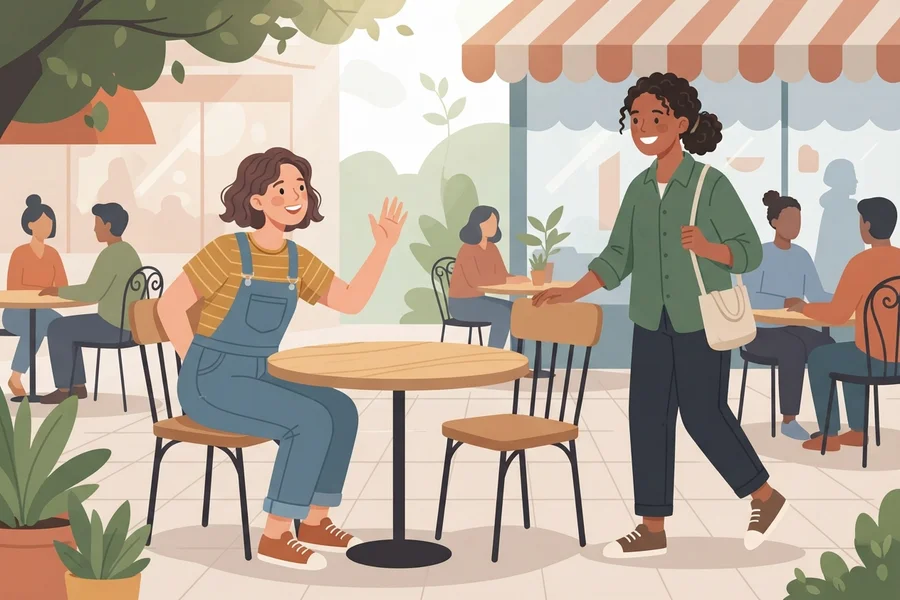
The Open Book. A face registers for you almost anywhere you run into it, and signs of face blindness barely show up in daily life.
Most of what this kind of check-in asks about just doesn't come up for you in any real way. A face registers the moment it needs to, whether that's an old classmate waving from across a noisy street or a coworker showing up somewhere you'd never expect them.
Where something does show up at all, it stays a single, forgettable instance rather than a pattern that keeps repeating — a name that took an extra second once, nothing that ever turned into a habit.
What this really tells you is about your own reported experience, not a verified reading of how you'd do on an actual photograph-based recognition test. The two aren't the same measurement, even when they point the same direction.
What's impossible to tell from here is whether you'd handle an unfamiliar face with the same ease, or whether life just hasn't thrown many strange encounters your way yet to put that to the test. One quiz can't sort that out on its own.
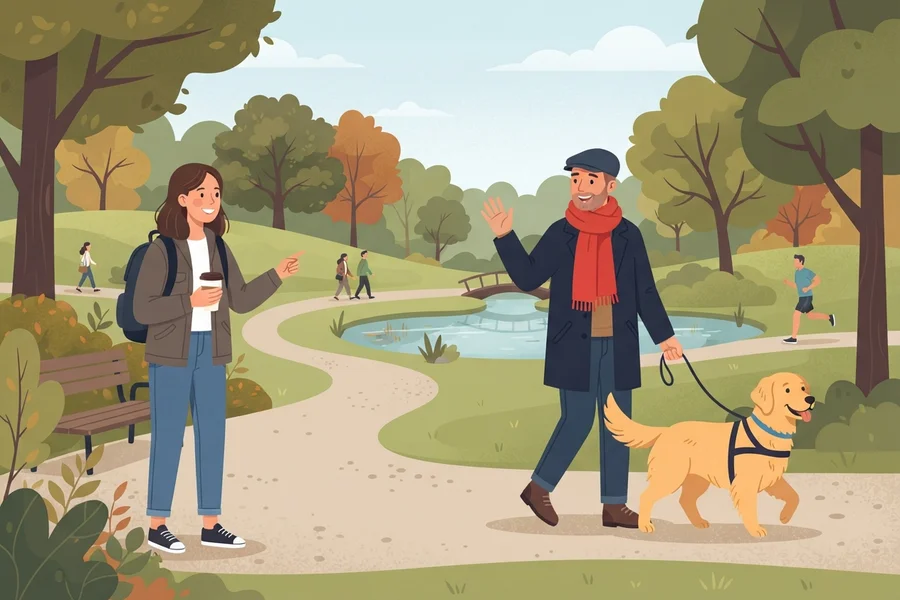
The Second Glance. A face away from its usual setting mostly still registers for you, but a specific set of situations already asks for an extra beat — mild face-blindness signs, not more.
One particular habit has quietly become routine: leaning on a voice, a walk, or a usual jacket to place someone, more than the face itself carries that weight these days. It's not something you'd have noticed happening on its own.
Alongside that, an occasional mix-up or a stretch of hesitation with an unfamiliar setting has started to show up, though it hasn't spread into anything bigger yet.
Most of your day-to-day recognizing still runs on its own, without much effort behind it. The cost shows up only in specific corners — a second look here, a beat of hesitation there, in situations that used to need neither.
Whether this is simply how things are now, or a side effect of a particularly hectic few months, isn't something one quiz can settle.
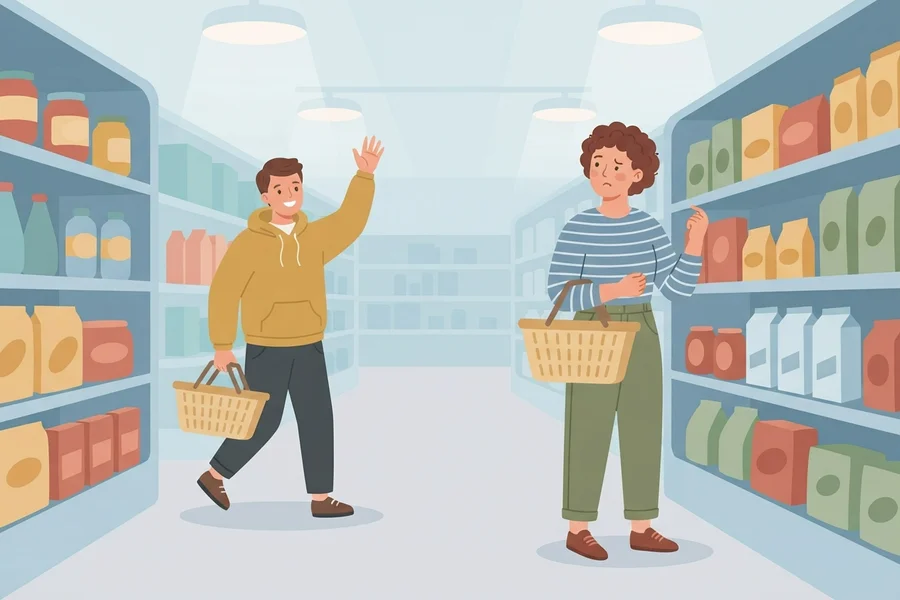
The Coin Toss. Whether a face away from its usual setting registers for you depends heavily on the situation — face-blindness signs that come and go rather than settle in.
This isn't a fence-sitting result. It's a genuinely common shape for a check-in like this one to take — recognition that holds in plenty of situations and slips in a specific few, rather than a verdict stuck in the middle out of indecision.
Two or three separate things this test tracks show up together here, each still tied to its own particular circumstance: a stranger who briefly looked familiar, a face that took longer to place once the lighting or the angle changed.
None of it has generalized into something constant yet, and that's exactly the kind of picture this sort of check-in is built to catch well — an ordinary, common one, not a false extreme.
There's no way to tell from a single check-in whether these same moments would show up at all under easier, lower-pressure circumstances.
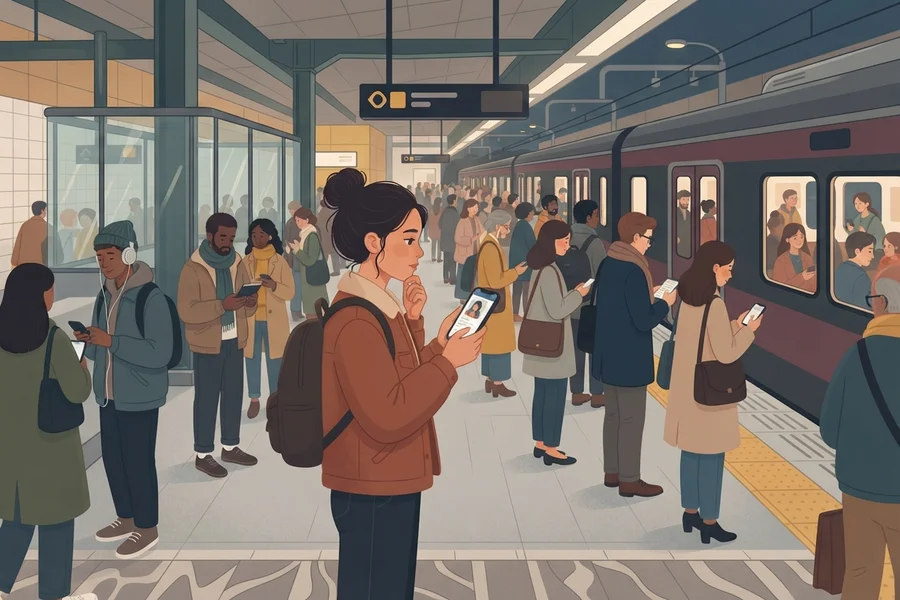
The Widening Gap. Fewer and fewer unfamiliar moments still let a face register for you, and noticeable face-blindness signs are starting to cost real effort.
A greeting lands on the wrong person, or gets held back a beat too long to be smooth — often enough now that it's stopped being a surprise. So is the extra check before you'll commit to saying a name out loud.
More than half of what this test looks at is showing up together at this point, reaching situations that used to be safe: a face that holds fine in its usual setting now slips the moment that same person turns up somewhere else, and an unplanned run-in can bring a real flicker of nerves with it.
Even so, this hasn't taken over your whole day — it shows up in identifiable spots, with plenty of hours it never touches at all.
There's no telling, from one quiz, whether this traces back to a rough patch that's since eased, or whether it's simply become the new normal.
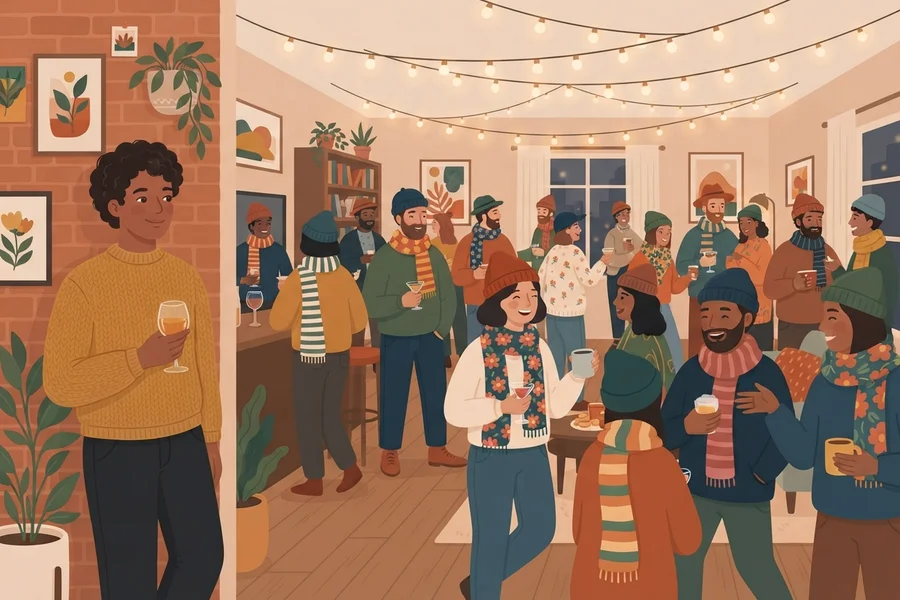
The Blank Slate. A face rarely registers for you anymore once it's away from where you're used to seeing it, and pronounced face-blindness signs have become the everyday default, not the exception.
By now, very little of this test's territory feels occasional. Placing people once the usual setting changes, catching a face at an unfamiliar angle, getting through a group gathering without extra bracing beforehand — most of it has settled into how things simply are, day after day.
Planning around it — a name checked in advance, a seat chosen with sightlines in mind, a second look built into nearly every hello — has become routine enough that it barely registers as planning anymore.
This comes entirely from your own account of everyday experience — not a diagnosis, and no promise that a photograph-based, objective test would land on the exact same picture. Pinning down what's actually underneath a pattern like this takes a specialist and the kind of objective testing only they can run.
A conversation with a neurologist or a neuropsychologist, once something like this has become simply how things are, is a sensible, no-pressure step — not an alarm bell, just a next move worth considering. Where it started in the first place is a separate question, one only that kind of conversation can really answer.
Your results are no accident
The classic 16-type personality test rooted in Jung's typology has been rebuilt from the ground up: a new CoreTypes methodology, and a far higher level of accuracy. These might be the most useful ten minutes you'll ever spend on yourself: you walk away with the key to your decisions, your relationships and your results — and it's yours for good.
Take the free testFrequently Asked Questions
Can this test tell me if I have face blindness?
No test like this can diagnose face blindness on its own. What it can do is reflect how pronounced these signs feel in your everyday life, based on how you answered. Pinning the condition down for certain takes a trained professional and a proper set of photograph-based exams — that's the honest next step if this result has you wondering.
Just how widespread is face blindness?
It affects a small minority of people. Pin down an exact share and the number shifts depending on exactly how it's measured, so no single figure tells the whole story — a small minority is the fair way to put it.
Is there any treatment or cure for it?
There's no cure for it. What does exist are practical coping strategies — leaning more deliberately on voices, names, and context clues — that can genuinely make day-to-day recognition easier to manage, even without changing the underlying pattern.
How many questions are in this test?
Twenty. Each one asks about a different everyday recognition situation, and your answers together sketch how pronounced these signs are for you right now.
Methodology
This test works from the same broad tradition as everyday face-recognition research — a familiar face's fate once its surroundings shift, mistaking a stranger for a familiar face, or the other way around, leaning on a voice or a walk more than the face itself, the pull to duck out of a crowd, and plain difficulty placing someone you already know, none of it modeled on any published questionnaire.
Real assessments of this kind are usually built around photographs with one correct answer to score against, and that's not something a quiz format can reproduce. What it offers instead is your own account of everyday experience, put into words by you — the same kind of reflection researchers in this field have leaned on for decades, apart from whatever a photograph-based test might separately show.
A tool like this tends to catch a genuinely strong, settled pattern quite well, and struggles more at telling two everyday, unremarkable answers apart — the broad middle is exactly where a quiz like this gets fuzzy, and that's expected, not a flaw in the design. Pinning down the condition itself takes a specialist plus objective measures, never a single questionnaire alone. More on face blindness and its clinical definition are available if you'd like to read further.
None of this is a diagnostic tool, and it isn't a substitute for a conversation with a professional — treat it as a starting point for reflection, not a final word on what's going on.
References
- Shah, P., Gaule, A., Sowden, S., Bird, G., & Cook, R. (2015). The 20-item prosopagnosia index (PI20): A self-report instrument for identifying developmental prosopagnosia. Royal Society Open Science, 2(6), 140343. doi:10.1098/rsos.140343
- Gray, K. L. H., Bird, G., & Cook, R. (2017). Robust associations between the 20-item prosopagnosia index and the Cambridge Face Memory Test in the general population. Royal Society Open Science, 4(3), 160923. doi:10.1098/rsos.160923
- Kirsch, L., Evans, T. C., Fry, R., Campbell, A., & DeGutis, J. (2025). Social interaction anxiety in developmental prosopagnosia: Prevalence, severity, and individual differences. Archives of Clinical Neuropsychology, 40(3), 409-424. doi:10.1093/arclin/acae074
- Bate, S., & Tree, J. J. (2017). The definition and diagnosis of developmental prosopagnosia. Quarterly Journal of Experimental Psychology, 70(2), 193–200. doi:10.1080/17470218.2016.1195414