
Social Styles Assessment
Questions: 24Time: ≈ 5 min
Each of the 24 quick scenes below asks how you’d actually act with the people around you — just pick whichever option feels closest. In about five minutes you’ll get the communication style that fits you best, plus where you land on all four. ≈ 5 minutes.


Social Styles Assessment: your result
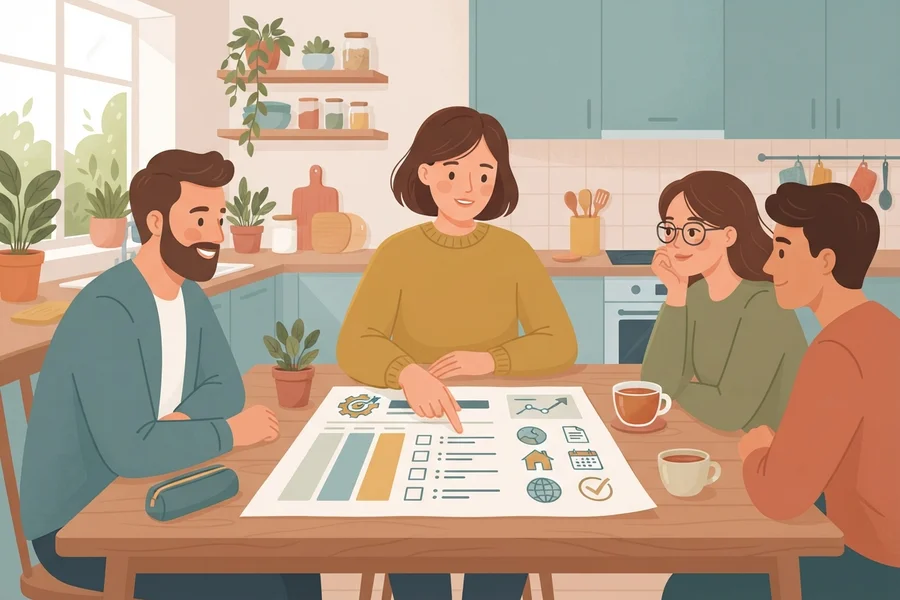
The Spark in the Room People usually clock two things about you fast: you jump in with the first word, and your face gives away exactly how you feel about it.
Somebody has to say the plan out loud first, and in most rooms, that somebody is you. You don't just announce it and walk off — you're watching faces the whole time, adjusting until people look like they're into it.
Momentum and warmth in the same move is rarer than it sounds. Stuck decisions get unstuck around you, and hardly anyone feels steamrolled getting there.
The cost shows up when someone else needed three more seconds to find their own words — you've already named the plan and asked if everyone's happy, sometimes before the quieter person has opened their mouth.
This is your own account of your own habits, not a report from anyone else about you, even if habits like these tend to look similar from outside too. This also isn't a fixed personality box: it's just where you currently sit on two sliding scales, and no spot on either one beats another.
Closest to yours: the style that speaks up just as fast but stays cooler about feelings, and the style that's just as warm but waits before jumping in. Scoring high on either of those too says something real.
Social Styles Assessment: your result
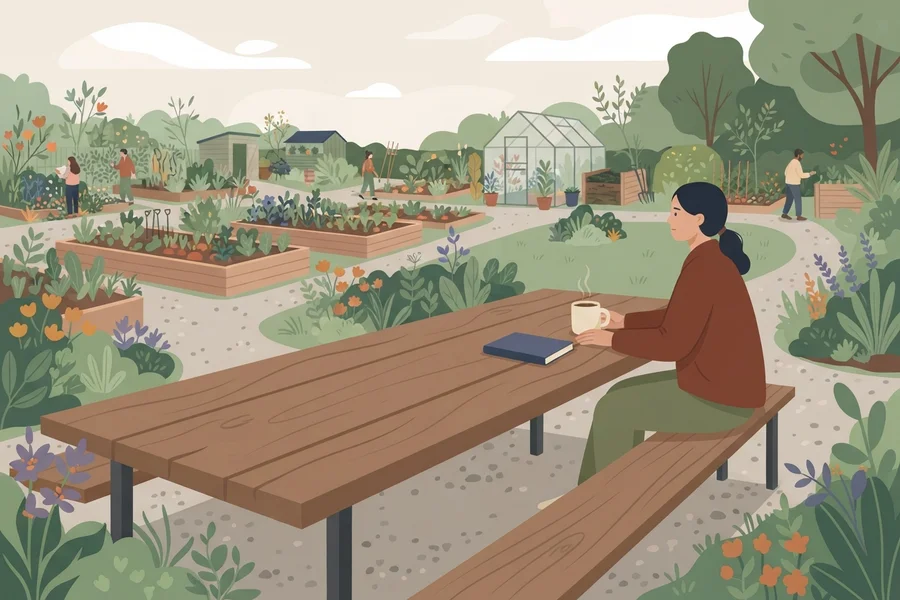
The Steady Hand People usually clock two things about you fast: you jump in with the first word, and you'd rather stick to the point than the mood in the room.
You get to the point. When a group needs a call made, you make it, then you keep the conversation on the actual decision instead of on how everyone's feeling about it.
That's a genuine skill: things move because you moved them, and the discussion stays on solid ground instead of drifting into everyone's mood.
Held under real pressure, the same bluntness can come across as bulldozing someone else's point, particularly once an argument turns heated and the other person needed you to ease off rather than press on.
This is your own account of your own habits, not a report from anyone else about you, even if habits like these tend to look similar from outside too. This also isn't a fixed personality box: it's just where you currently sit on two sliding scales, and no spot on either one beats another.
The two closest styles to yours are the one that jumps in just as fast but brings more warmth to it, and the one that shares your focus on facts but would rather stay quiet and let you take the lead. A noticeable score on either one is worth paying attention to, not background noise.
Social Styles Assessment: your result
The Quiet Compass People usually clock two things about you fast: you wait to hear where the room lands before you say anything, and your expression gives nothing away.
You let the room fill up with other people's opinions first. By the time it's your turn, you've usually already worked out what you think — you just haven't said it yet.
There's a real strength in that. A view formed in private, away from the pull of the loudest voice in the room, tends to hold up better than one blurted out mid-argument.
Pushed far enough, that same holding-pattern can turn into quietly checking out of a moment that actually needed your voice and your presence in it.
This is your own account of your own habits, not a report from anyone else about you, even if habits like these tend to look similar from outside too. This also isn't a fixed personality box: it's just where you currently sit on two sliding scales, and no spot on either one beats another.
Your two nearest neighbors are the style that shares your taste for facts over feelings but speaks up sooner, and the style that shares your patience but wears its feelings openly while it waits. A visible pull toward either matters too.
Social Styles Assessment: your result
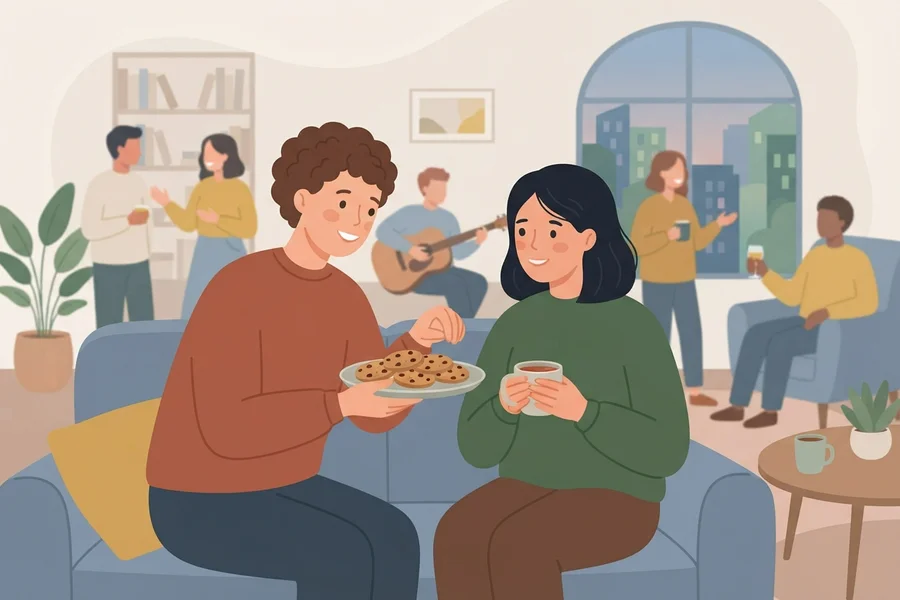
The Soft Landing People usually clock two things about you fast: you wait to hear where the room lands before you say anything, and it's obvious how much you care about everyone else in the room.
Someone in the group looks left out, and you notice before anyone's even settled on a decision. Getting your own preference on the table can wait; making sure everyone's comfortable usually can't.
People remember that. Being looked after without being talked over is rarer than it should be, and you're good at supplying it.
The flip side turns up when your own comfort quietly gets traded away — agreeing to something you didn't actually want, mostly to keep the moment pleasant for someone else.
This is your own account of your own habits, not a report from anyone else about you, even if habits like these tend to look similar from outside too. This also isn't a fixed personality box: it's just where you currently sit on two sliding scales, and no spot on either one beats another.
Nearest to you are the style that shares your patience but keeps feelings more private, and the style that shares your warmth but gets there first with an opinion. Either one showing up strongly in your answers is real too.
Your results are no accident
The classic 16-type personality test rooted in Jung's typology has been rebuilt from the ground up: a new CoreTypes methodology, and a far higher level of accuracy. These might be the most useful ten minutes you'll ever spend on yourself: you walk away with the key to your decisions, your relationships and your results — and it's yours for good.
Take the free testYour result card
More tests like this
 The Nine Enneagram Types
Answer 63 scenario-based questions built on the Enneagram's nine core motivations and see which pattern — fear, desire, and coping — actually fits you.
 Enneagram Type Test
Take this Enneagram test — 45 quick scenarios — to see which of the nine types your instincts actually match. Free, one sitting, instant result.
 16 Personality Types Test
Answer 40 quick either-or questions across four dichotomies — E/I, S/N, T/F, J/P — and find out which of sixteen four-letter personality types matches you.
How this test works
Methodology
This test grew out of an old research idea: what gets called someone's "style" with other people usually comes down to two separate habits — how fast they step into a conversation and steer it, and how freely they let their feelings show while it's happening.
Your answers place you somewhere along each of those two habits, and together they point to the one everyday style that fits your pattern right now — not a box you're stuck in for good.
What comes back is built entirely from your own choices in the moment — it can't poll the people who actually know you about their private opinion of you, so treat the result as your own self-portrait, not a verdict handed down by anyone else. The rougher edges written into each result are just ordinary friction between people, not a clinical checklist of anything.
To read more on the underlying model, see the interpersonal circumplex.
Frequently Asked Questions
How many questions does the Social Styles Assessment have?
This one runs 24 questions, each with four quick options to pick from — enough to get a real read without dragging the whole thing out. You go through all 24 in one sitting.
Is this an official social style test from a training company?
No — this test is built from open academic work on how people interact, not a company's in-house program, and it steers clear of the naming corporate training sessions use for their own four styles. If you've sat through one of those, don't expect the label here to line up with what you got there.
What is the difference between Social Style and DISC?
Related, but not the same tool. Both end up sorting someone into one of four everyday interaction patterns, yet they were built years apart by separate researchers with no shared lineage — a similar four-part picture drawn twice, from two different starting points.
What is the difference between Social Style and MBTI?
They get compared a lot, but they're not answering the same question. This one is a snapshot of how you actually act around other people right now, while a type-based personality test sorts you into a category you're supposedly stuck with for life, whether or not that day's behavior matches it.
Is this a personality test?
Loosely, yes — though it's closer to a behavior snapshot than a fixed identity. It puts a pin on two sliding scales instead of sorting you into an unchangeable category, so where that pin sits can move as your habits do.
References
- Leary, T. (1957). Interpersonal Diagnosis of Personality: A Functional Theory and Methodology for Personality Evaluation. New York: Ronald Press.
- Wiggins, J. S. (1979). A psychological taxonomy of trait-descriptive terms: The interpersonal domain. Journal of Personality and Social Psychology, 37(3), 395–412. doi:10.1037/0022-3514.37.3.395
- Trapnell, P. D., & Wiggins, J. S. (1990). Extension of the Interpersonal Adjective Scales to include the Big Five dimensions of personality. Journal of Personality and Social Psychology, 59(4), 781–790. doi:10.1037/0022-3514.59.4.781
- Horowitz, L. M., Alden, L. E., Wiggins, J. S., & Pincus, A. L. (2000). Inventory of Interpersonal Problems (IIP) Manual. San Antonio: The Psychological Corporation.