
BlossomUp Love Language Quiz
Questions: 25Time: ≈ 5 min
Read each of the 25 everyday situations and pick the answer that sounds most like you; none is right or wrong. At the end you’ll see which of five ways of feeling cared for is your strongest, plus a profile of all five, in ≈5 minutes. This is a self-contained test on the topic, not the BlossomUp quiz and not connected to it.

BlossomUp Love Language Quiz: your result
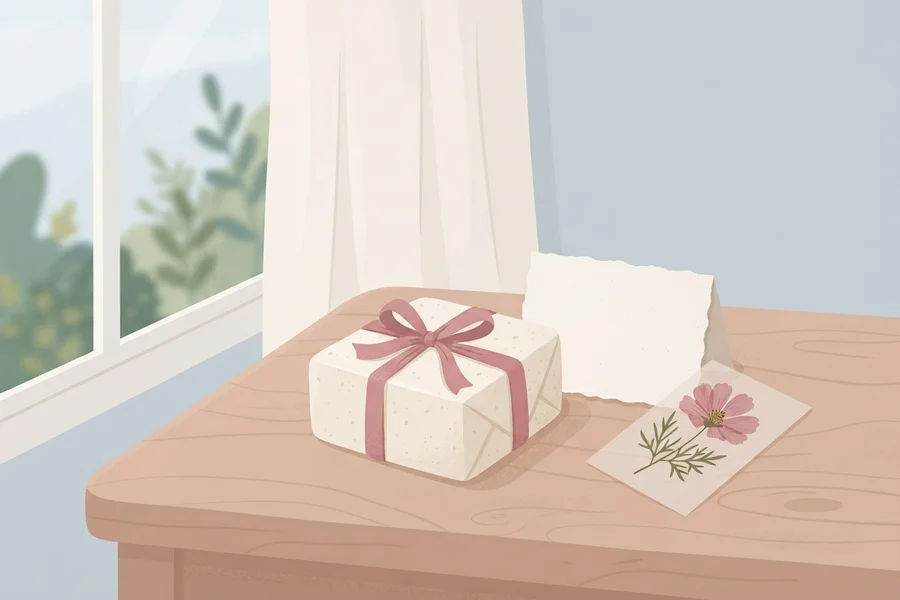
The Keepsake Keeper What you need most to feel loved is Receiving Gifts.
A postcard from a trip, a pressed flower tucked in an envelope, a snack bought because you once said you liked it: this is what tells you that you were on someone's mind. The price and the usefulness hardly figure. The thought packed inside does the work.
Of the five ways of feeling cared for, this is the one your answers lean toward most strongly. That is a reading of your own preferences, not a verified ‘true type’, and you probably value every one of them, so a close runner-up is normal. Acts of Service and Physical Touch are your nearest neighbours here, and a strong showing from either is real signal, not noise.
The other side of such a sharp eye: when a small gesture you expected doesn't turn up, the gap registers as something you can name, even while care is clearly arriving by other routes. Care that comes as help or as a hug can seem thinner than it was meant.
Nothing here says what anyone else ought to do, and two people with different results have nothing to fix. It describes only how you take in care.
BlossomUp Love Language Quiz: your result
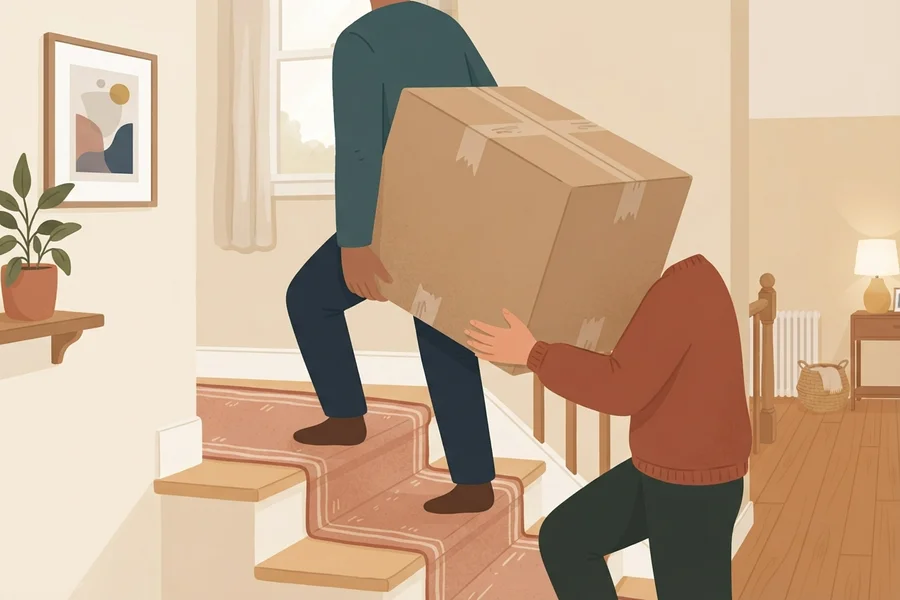
The Steady Hands What you need most to feel loved is Acts of Service.
A job quietly done before you asked, the bins out, the form filled in, the lift to the station: that is the way care speaks to you most clearly. You notice the effort behind it, not only the finished result, and a crooked wardrobe built with real trouble can move you more than a perfect one delivered.
Acts of Service came out as the strongest of your five. Read it as your own current leaning rather than a proven ‘true type’; people value all five to some degree, which makes a close second ordinary, not contradictory. Quality Time and Receiving Gifts sit next to it, and if either ran close behind, take that seriously too.
Measuring care by what gets done has a catch. Someone's company with no task attached, or a kind sentence on its own, may feel lighter than intended, even when it carries just as much warmth.
This result makes no claim about what any other person should do, and a different profile in someone close to you is simply a different profile. It speaks only for you.

BlossomUp Love Language Quiz: your result
The Open Letter What you need most to feel loved is Words of Affirmation.
You are moved by what is actually said. A message that arrives unprompted, a thank-you that names exactly what you did, a note you can reread: these reach you in a way that silent good will does not.
According to your answers, that is your strongest lean of the five. It is a snapshot of preference, not a scientifically validated ‘true type’, and since people value all five to some degree, a runner-up close behind is nothing odd. Quality Time and Physical Touch are the neighbours to watch: a strong pull toward either counts as real signal.
The catch comes from the same sharpness. When nobody says anything, the silence can feel like a gap in its own right, separate from being under-helped or short on hugs, even in a house full of kindness.
None of this speaks for anyone else or suggests what they should do, and a different result in two people is not a problem to solve. It is how you take in care, and no more than that.

BlossomUp Love Language Quiz: your result
The Warm Anchor What you need most to feel loved is Physical Touch.
A hug that goes on a beat longer, a shoulder against yours on a bench, a hand squeezed in a hospital corridor: contact tells you what sentences can't. For you, closeness is a channel of its own, and it works without a single word.
Of the five ways of feeling cared for, it's the one your answers lean toward hardest. Take that as a description of your preference, not a proven ‘true type’; the five overlap, and a close runner-up is common. Receiving Gifts and Words of Affirmation are nearest to it, and a strong lean toward either deserves a place in the picture.
Needing that particular channel carries a shadow. Care that arrives only as talk or only as help, with no contact in it, can register as thinner than it was intended, even when it is wholly genuine.
This result says nothing about what anyone else should do. If someone close to you scores differently, that is not a problem to fix; the page only describes you.

BlossomUp Love Language Quiz: your result
The Long Evening What you need most to feel loved is Quality Time.
An hour with the phone face down, a story told to the end without interruption, a Sunday that goes nowhere in particular: that is what makes you feel looked after. What is said or done during it matters less than the fact that someone is really there.
Your answers lean toward this more than toward any of the other four. It is your own preference at the moment, not a validated ‘true type’, and because people value all five, a close second is entirely ordinary. Words of Affirmation and Acts of Service are the neighbours, and a strong lean toward either is real signal.
Needing real presence has a cost. Help, a thoughtful object or a kind sentence offered without someone's actual attention beside it may not fully register, even though the intention behind it is good.
That says nothing about what anyone else ought to do, and two people who feel cared for in different ways have no problem to fix. It just describes you.
Your results are no accident
The classic 16-type personality test rooted in Jung's typology has been rebuilt from the ground up: a new CoreTypes methodology, and a far higher level of accuracy. These might be the most useful ten minutes you'll ever spend on yourself: you walk away with the key to your decisions, your relationships and your results — and it's yours for good.
Take the free testYour result card
More tests like this
 How We Love Quiz
Take this 5-minute quiz on 24 everyday relationship scenes to see which attachment pattern shows up most in how you connect, get close, and pull back.
 Soulmate Quiz
Two independent beliefs shape how you read a connection: does an early spark feel decisive, and is closeness something you build? Find out where you land.
 Friendship Quiz
Pick one real friend to think about. In six minutes and 30 questions, this friendship quiz names the one facet - out of five - that friendship runs on most.
How this test works
Methodology
This test is built on the approach of a widely known framework that sorts the ways people feel cared for into five groups. You answer 25 short situations, five per group, and the answers for each group are added up on their own, so you get a spread over all five categories, headed by the one you lean toward most.
Think of it as your own answers played back to you, not a reading taken from outside: it records how you describe yourself on the day you answer. It works whether or not you have a partner, and your gender has no say in which category comes out on top.
It also helps to know how the framework itself holds up. It is popular and easy to talk about, but a recent review by relationship scientists does not back three popular assumptions: that every person has a single main way, that the list stops at five, or that partners who share a result are happier. What research does suggest is that people enjoy all five kinds of care. You can read the encyclopedia entry on the five love languages, including its section on reception and criticism, or a university research centre's explainer on whether science supports the idea.
Frequently Asked Questions
Is this the BlossomUp quiz, and will my result match theirs?
No. This is a separate test on the same subject, with its own questions and its own scoring, and it has no connection to BlossomUp or to any paid report. A result here may well differ from one you got elsewhere.
How accurate is a love language test?
Treat it as a conversation with yourself, not a lab reading. The five-way idea is famous, but a recent review by relationship scientists found that people care about all of them, rather than having a single way. Your result shows what you lean toward as you describe yourself right now: a leaning, not a proven trait.
Can you have more than one love language?
Yes, and it's normal. The categories overlap in real people, so a high score in one often comes with a high score in another. A leading result with a close runner-up is a common outcome, and both say something true about you.
How many questions are in this love language test?
There are 25, five per category, and answering takes about five minutes.
What are the five love languages?
They are the five common ways of feeling looked after: Physical Touch (a hug, a held hand), Acts of Service (help that lightens a load), Quality Time (undivided attention), Receiving Gifts (a tangible sign you were remembered) and Words of Affirmation (appreciation said or written).
References
- Chapman, G. (1992/2015). The 5 Love Languages: The Secret to Love That Lasts. Chicago: Northfield/Moody Publishers.
- Egbert, N., & Polk, D. (2006). Speaking the language of relational maintenance: A validity test of Chapman's (1992) five love languages. Communication Research Reports, 23(1), 19-26. doi:10.1080/17464090500535822
- Bland, A. M., & McQueen, K. S. (2018). The distribution of Chapman's love languages in couples: An exploratory cluster analysis. Couple and Family Psychology: Research and Practice, 7(2), 103-126. doi:10.1037/cfp0000102
- Impett, E. A., Park, H. G., & Muise, A. (2024). Popular psychology through a scientific lens: Evaluating love languages from a relationship science perspective. Current Directions in Psychological Science, 33(2), 87-92. doi:10.1177/09637214231217663