
Romantic Love Test
Questions: 20Time: ≈ 5 min
Think of one person, then answer 20 short questions by picking the scene that sounds most like you with them. It takes ≈5 minutes, and at the end you see how clearly love shows up in what you described.

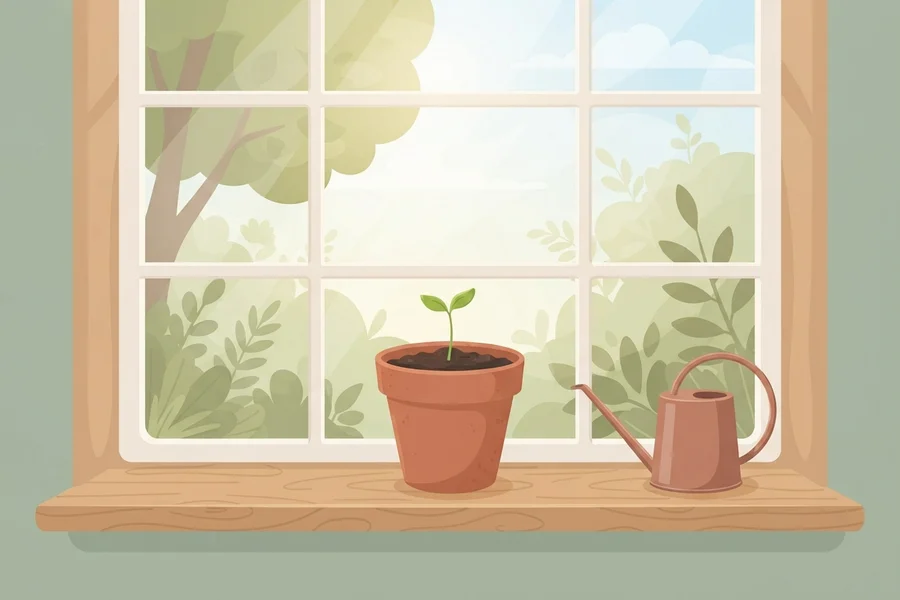
Romantic Love Test: your result
Seedling Your love is only just beginning to show.
Something about this person has caught you, and your answers read as real interest, maybe even a strong spark, more than a settled feeling. For now it lives in your thoughts and your pulse. Closeness, shared choices and everyday habits haven't had time to gather around it.
You might notice it in small things: a thought that arrives uninvited, a message you read twice, a wish for the next conversation to run longer. One bright side can sit inside this range on its own, which is an ordinary way for a new feeling to start.
Your strength is honesty. You don't press a big word onto something still forming, and 'I don't know yet' is an accurate answer, not a failure.
The trap is reading a great deal into a few intense moments, or wanting outside proof that this already counts. A feeling at this stage needs no stamp. This reading covers only how things feel for you today, so where it leads sits outside it.
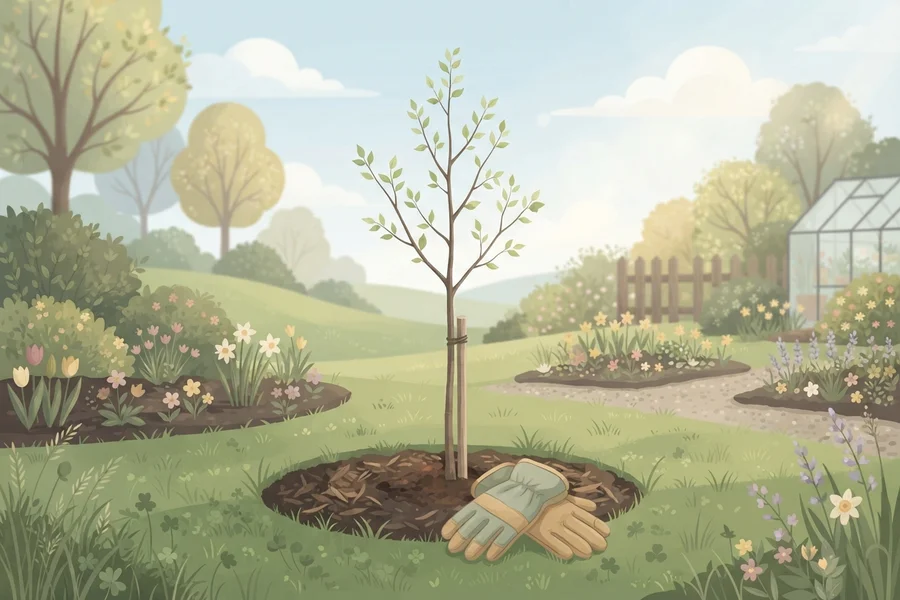
Romantic Love Test: your result
Staked Sapling Your love is starting to take real shape, but it isn't steady yet.
Closeness, attraction and the wish to keep choosing this person all show up in your answers, though not at the same strength. One or two are ahead and the rest are catching up.
Maybe the attraction comes easily and the planning stays cautious. Or you already turn up reliably while the spark runs quiet. Either way, the feeling has body now.
Your strength is patience: you can let something be built without demanding that it prove itself on day one. A feeling can have body before it has a routine.
The temptation is to lean on whatever is loudest this week, typically the pull, and to skip past the part that hasn't caught up, such as the plain everyday choosing. A strong flutter can make the quieter parts look finished. This is one overall reading, so it can't say which part is lagging.

Romantic Love Test: your result
Crossroads Your love is genuinely unclear right now, with signs pointing both ways.
Your answers don't land on one side. Some parts of what you feel read clearly as love, others lean the opposite way, and both pull at once.
That isn't a failure to decide. A mixed reading is a real in-between place: closeness can be warm while the pull is thin, or the pull can run strong while the everyday choosing is still unsure.
You are accurate here. Calling a muddle a muddle beats performing certainty in either direction, and a muddle named honestly is more useful than a certainty you don't have.
The price is restlessness. A feeling that refuses a clean label is hard to live with, and it is tempting to force one just to end the itch. This reading can't tell you which parts sit on which side, only that this is where things stand at the moment.
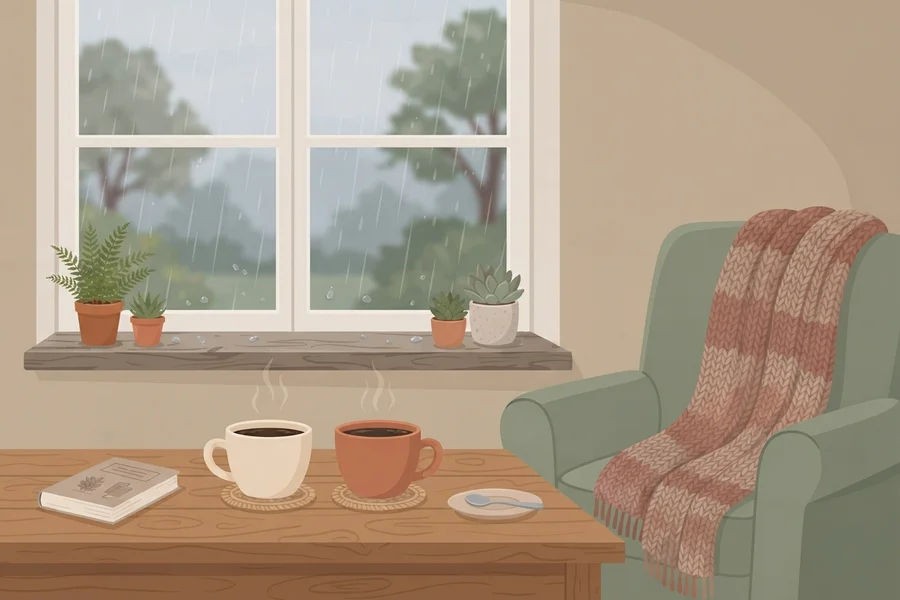
Romantic Love Test: your result
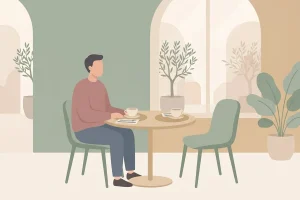
Two Cups Your love is clearly there, and it is holding up steadily.
Your answers show love that is clearly present and holding up. Closeness, attraction and the choice to stay turn up together, and not only on days when everything runs smoothly.
The evidence is in the hard moments. When something grates, you lean in and work it through, instead of drifting off and hoping it fades. That habit is what separates a settled feeling from a bright rush.
Your strength is that steadiness: friction is something you handle, not something you flee.
Look after the pull. Attraction is the part most likely to quiet down on its own while everything else holds, so give it time that isn't logistics, an evening that isn't an errand. What the other person feels, and what comes next, lies beyond this reading, which covers your side only.

Romantic Love Test: your result
Deep Roots Your love is strong and consistent in every part of what you described.
What you describe is love, present strongly and consistently across the board. Closeness, attraction and daily choosing are all strong, and your answers about why you care point to real interest in the whole person, beyond how they look or how they steady you.
At the table, on the phone, in a quarrel or when you look ahead, the same thing shows: you turn toward this person, and it costs you little effort.
Your strength is coherence. No single part is propping up the others.
Strong still isn't the same as finished. Choosing someone is something you keep doing, and what is strong now stays strong by being tended. Whether the feeling is shared, and what comes next, falls outside what this reading can see.
Your results are no accident
The classic 16-type personality test rooted in Jung's typology has been rebuilt from the ground up: a new CoreTypes methodology, and a far higher level of accuracy. These might be the most useful ten minutes you'll ever spend on yourself: you walk away with the key to your decisions, your relationships and your results — and it's yours for good.
Take the free testYour result card
More tests like this
 Is My Sister a Narcissist Quiz
A calm 21-question quiz that looks past the label. See whether what you've noticed points to self-focus, family dynamics, or a broader pattern — about 5 minutes, no diagnosis.
 Compatibility Test
This compatibility test looks at you, not a partner: 24 questions on closeness, conflict style, and shared goals reveal what you need in a relationship.
 Does He Like Me Quiz
Take this 3-minute does he like me quiz to see how clear — and how tested — your own read on the signs really is, not a guess about their feelings.
How this test works
Methodology
This test is built on the idea that romantic love has three strands: closeness, a romantic and physical pull, and the decision to keep choosing someone over time. Your questions spread evenly across them, with a handful of items added to check whether what you describe is aimed at the whole person, or more at their looks or at the comfort of having someone there.
Everything you answer is your own account of how you feel toward one person right now. Nobody else is asked anything, so the result says nothing about what that person feels or whether the two of you will stay together. You can read more about how psychology defines romantic love.
Treat the outcome as a description of the scenes you ticked, a snapshot you can come back to, and not as a ruling on your relationship or on what your feelings are.
Frequently Asked Questions about the Love Test
Is it love or infatuation?
Infatuation is a normal early stage with a strong spark and not much history behind it yet. Having it doesn't make your feeling fake. The test looks at whether closeness and the choice to stay have started to gather around the spark.
Is it love or lust?
Lust pulls toward the body and stops there. When physical attraction comes with wanting to talk, to know the person, and to keep showing up, it points to more than lust. The questions on looks versus the whole person are there for this.
Is it love or just attachment?
Two feelings can be equally intense and still differ in what drives them. Care that is about the other person's wellbeing is one thing; needing a reply so you don't feel alone is another. A few questions ask which of the two is behind your messages.
How do I know if I'm really in love?
No single feeling settles it, not butterflies and not certainty. It's the combination that counts: closeness, attraction, and a repeated choice to turn toward the same person. This test reads those together.
Does the feeling fade over time?
The thrill of attraction is the part most likely to calm down. If things feel calmer later, that is no proof love has gone. The proportions can change while the warmth and the daily choosing carry on. Retaking the test months on shows how that mix looks to you then.
References
- Sternberg, R. J. (1986). A triangular theory of love. Psychological Review, 93(2), 119–135. doi:10.1037/0033-295X.93.2.119
- Hatfield, E., & Sprecher, S. (1986). Measuring passionate love in intimate relationships. Journal of Adolescence, 9(4), 383–410. doi:10.1016/S0140-1971(86)80043-4
- Rubin, Z. (1970). Measurement of romantic love. Journal of Personality and Social Psychology, 16(2), 265–273. doi:10.1037/h0029841