Drinking Pattern Quiz
Answer 16 quick questions about your own recent relationship with alcohol — there’s no counting involved, just how familiar each situation feels. It takes about 4 minutes, and at the end you’ll get a plain-language read on how much room alcohol is currently taking up in your coping, control, honesty, and daily routine.

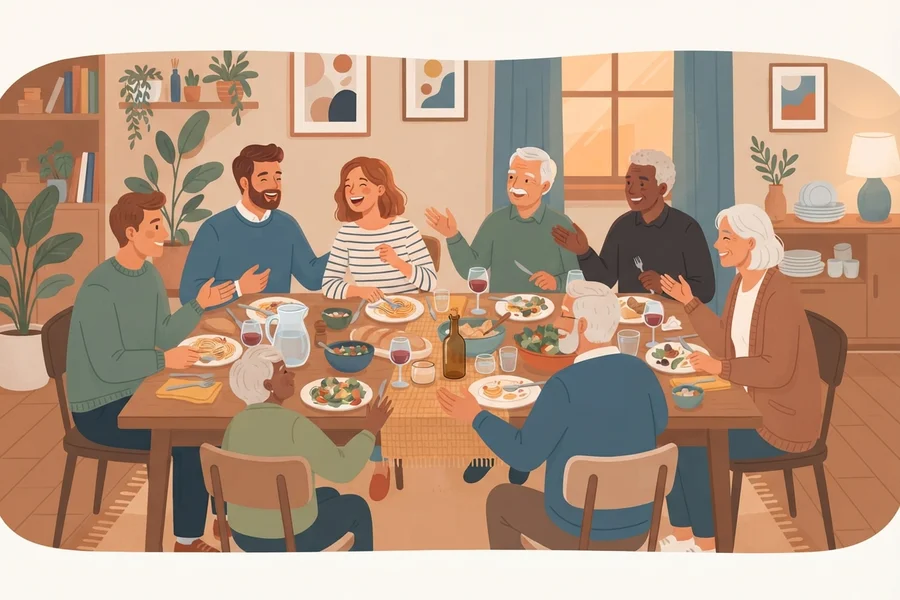
Level Ground. Alcohol Takes Up Minimal Room in Your Life
Right now, alcohol just isn't doing much heavy lifting in your life. A hard day gets shaken off some other way — sleep, a conversation, plain time passing — and a drink rarely even enters the picture as the fix for it. When it does show up, it's ordinary: dinner, a get-together, nothing that needed hiding or explaining afterward.
The things this quiz actually tracks — leaning on a drink to manage a mood, testing your own limits, staying honest about it, letting it creep into the routine — aren't showing up here in any real way.
There is remarkably little negotiating going on here. A glass gets poured without an inner debate first, and nothing gets rehearsed in case someone asks about it later. Plenty of people carry a quiet, constant hum of managing their drinking that you currently don't, and that difference is easy to take for granted.
Worth naming: this describes where things sit for the stretch the quiz covered, not a guarantee about every stretch ahead. Circumstances change, and so does what a drink can start to mean to someone.
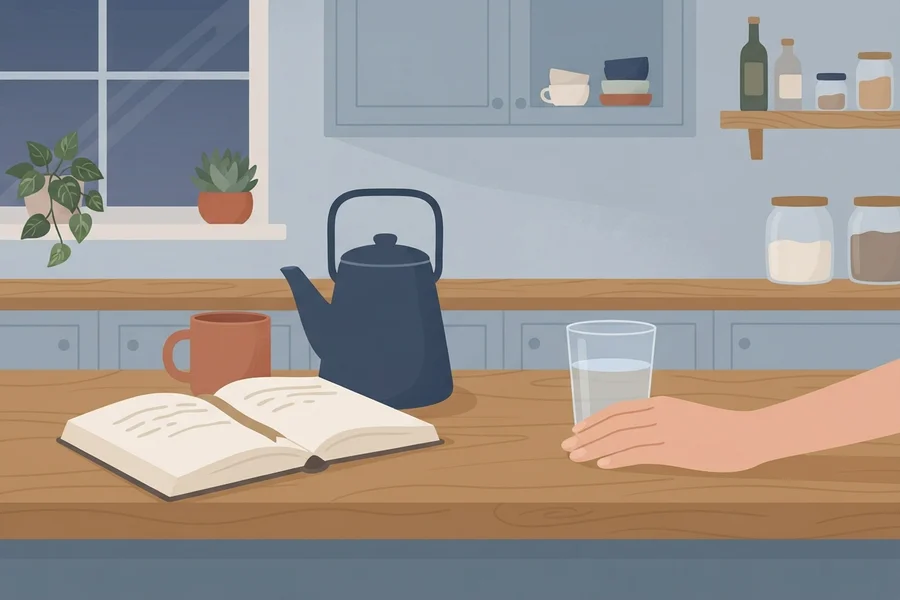
A Longer Reach. Alcohol Is Taking Up a Little More Room
Alcohol has started reaching a little further than it used to — not everywhere, but somewhere. Maybe it's the rough day that now ends with a glass instead of just going to bed, or a rule that got set once and has already been bent a couple of times since.
None of this reads as a settled habit yet. Most days still pass the old way, and most of what gets said about your drinking is still the plain truth, told straight. What's changed is that alcohol has quietly earned a seat at a table or two it didn't used to sit at.
Catching this early, while it's still small enough to notice and name, matters more than it might seem. A pattern that's just starting is far easier to redirect than one that's been running for years without anyone, including you, paying much attention.
The part worth sitting with: this kind of quiet expansion rarely announces itself. It shows up as one exception, then another, until "occasional" and "normal" start to blur into each other. Where this goes from here depends on what happens next, not on what's already happened.
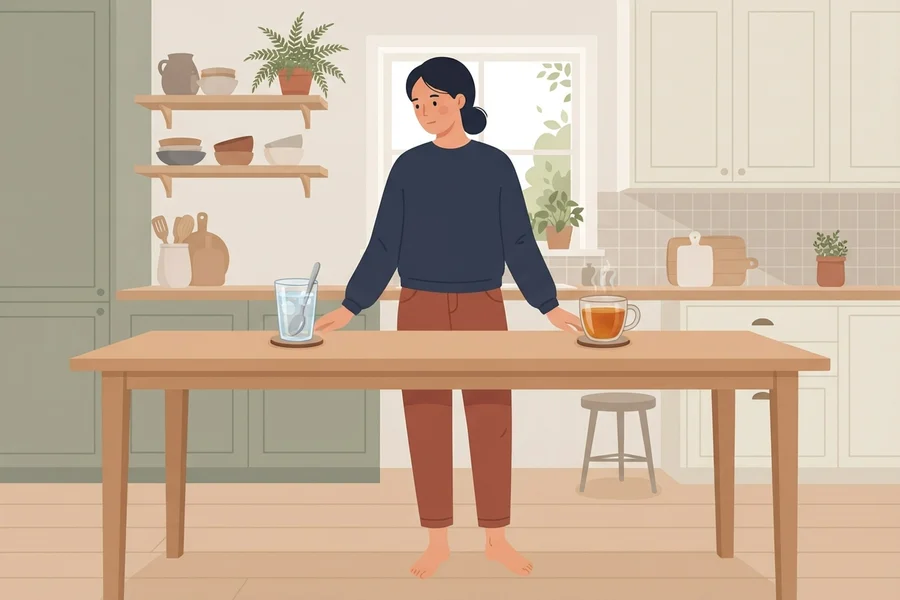
Standing at the Line. Alcohol Is Taking Up a Noticeable, Borderline Amount of Room
You're standing right at a line. Some parts of how alcohol fits into your life still look like anyone's — a drink here, a rule kept there — while one or two other parts, often how it manages a mood or how well a limit actually holds, have started showing up with real, noticeable regularity.
This is a genuinely mixed read, not a rounding error. A few different answers, on a few different days, could have placed you on either side of this line. That's not a flaw in the result — it's an accurate description of where things currently stand.
Nothing here is buried or denied; the mixed picture is right there to look at plainly. What it doesn't offer is a clean verdict — "borderline" asks for an honest look rather than handing you one.
What happens on the other side of that look is still an open question, and it's one worth taking seriously precisely because the answer isn't obvious yet either way.

The Regular Seat. Alcohol Has Taken Up a Lot of Room
Alcohol has earned a regular seat at the table of how you get through a day. A hard mood reliably gets handed to a drink to deal with, a limit that gets set rarely survives long, and the account you give of your own drinking has started shifting depending on who's asking.
This isn't one or two facets drifting — it's most of them, showing up often enough to be hard to miss once you look. The routine has widened too: more days, more settings, a little earlier than it used to.
Give credit where it's due: naming this plainly, without flinching from it, takes something. That honesty is worth more here than it might seem — it's the same honesty that makes it possible to actually do something about what it's describing.
Alcohol holding this much ground means other ways of managing a hard mood have had less practice lately, which makes them feel less available than they actually are. A conversation with a doctor or counselor is a reasonable, unhurried next step here — not because of any single answer, but because a pattern this broad is worth a second, professional set of eyes.

The Driver's Seat. Alcohol Has Taken Up Most of the Room in Your Life
At this point, alcohol isn't riding along — it's doing a lot of the driving. Nearly every part of this pattern is showing up strongly: it's close to the default way a hard mood gets handled, limits rarely get attempted or don't hold, and what other people hear about your drinking is rarely the full picture.
The routine has grown to match — more days, more settings, earlier in the day than it once did. None of this happened overnight; patterns this broad build slowly, one small exception at a time, which is exactly why they're hard to see clearly from the inside.
Seeing it this clearly right now, in plain language, is not a small thing. A lot of people go a long time without letting themselves look at the full shape of it, and you just did.
What this result can't do is explain why, or tell you what happens next — that's a conversation for a doctor or counselor, not a quiz. There's no deadline attached to that conversation and no emergency being declared here, just an honest picture that's worth bringing to someone qualified to help you make sense of it.
Your results are no accident
The classic 16-type personality test rooted in Jung's typology has been rebuilt from the ground up: a new CoreTypes methodology, and a far higher level of accuracy. These might be the most useful ten minutes you'll ever spend on yourself: you walk away with the key to your decisions, your relationships and your results — and it's yours for good.
Take the free testFrequently Asked Questions
Can a quiz actually tell me if I have alcoholism?
No. A self-scored quiz like this one reflects the patterns you've reported about your own coping, control, honesty, and routine — it isn't a diagnosis and was never built to be one. Only a qualified clinician can make that call, and they do it through an interview and personal history that can weigh real-world impact over time and rule out other explanations, none of which a fixed set of questions can replicate.
Can someone have alcoholism and still seem completely fine?
Yes. A meaningful share of people with a clearly problematic drinking pattern still hold down a steady job and steady relationships, with little on the surface to give it away. Looking fine from the outside isn't proof either way — this quiz looks at the relationship with alcohol itself, not at how put-together someone's life looks to other people.
Does one bad blackout mean I have alcoholism?
Not on its own, however serious that single night was. What a self-report tool like this can actually speak to is a pattern — how alcohol gets used to manage a mood, how much control actually holds, how much gets hidden or minimized, and whether it's been creeping further into the routine. One isolated event doesn't settle that; a fuller picture needs an actual clinician.
What's the real difference between alcoholism and heavy drinking?
This quiz sidesteps that particular label question on purpose. Instead of sorting anyone into either category, it looks at how much room alcohol currently takes up in coping, control, honesty, and daily routine — which turns out to be a more useful question than which word technically applies.
What are the warning signs of alcohol addiction to watch for?
Rather than a checklist where any single sign is supposed to carry the whole answer, this quiz looks at a pattern across four everyday facets together: mood management, control, concealment, and routine. It's the combination that matters here, not any one item in isolation.
Methodology
This quiz reads four everyday facets that research on drinking patterns has repeatedly linked together: alcohol's role in managing stress or mood, how well attempts at control hold up, how much gets minimized or hidden from others, and how far alcohol's place in the routine has grown over time. It follows the general approach used in research on drinking patterns, not any single named clinical instrument.
What it measures is how strongly and how often these four facets are currently showing up, based on your own account of a recent stretch of time — a snapshot of self-reported pattern, not a validated clinical screen and not a diagnosis.
Self-reporting on one's own drinking is well documented to run toward under-reporting, and this quiz inherits that limitation, like any tool that relies on someone's honest account of themselves. That's part of why it's built around pattern and relationship rather than an exact quantity, a number people are shown to round down anyway. It's also not a diagnostic evaluation, which needs a clinician's interview, history, and judgment that a fixed set of questions can't replicate.
This is not a diagnostic instrument, and it is not a substitute for talking to a professional. A real diagnosis is made by a clinician, through conversation and history, not a self-scored quiz. For context on what a problematic drinking pattern involves, MedlinePlus has a plain overview, and if any of this feels worth acting on, the NHS's guide to alcohol support is a solid place to start.
References
- Cooper, M. L. (1994). Motivations for alcohol use among adolescents: Development and validation of a four-factor model. Psychological Assessment, 6(2), 117–128. doi:10.1037/1040-3590.6.2.117
- Heather, N., Tebbutt, J. S., Mattick, R. P., & Zamir, R. (1993). Development of a scale for measuring impaired control over alcohol consumption: a preliminary report. Journal of Studies on Alcohol, 54(6), 700–709. doi:10.15288/jsa.1993.54.700
- Saunders, J. B., Aasland, O. G., Babor, T. F., De La Fuente, J. R., & Grant, M. (1993). Development of the Alcohol Use Disorders Identification Test (AUDIT): WHO Collaborative Project on Early Detection of Persons with Harmful Alcohol Consumption-II. Addiction, 88(6), 791–804. doi:10.1111/j.1360-0443.1993.tb02093.x