Four Attachment Styles Test
Answer 24 quick questions by picking whichever option feels closest to how you actually are, this works whether or not you have a partner right now, and see which of four attachment styles comes out on top for you, in about 5 minutes. This is an independent quiz built around the same topic as Diane Poole Heller’s well-known work on attachment, not an official version of it and not affiliated with her.


Your attachment style is secure: think of it as the Even Keel.
Your answers point to a secure attachment style, the Even Keel. Closeness doesn't come loaded with background static for you: when someone close cares about you, you take that as settled fact rather than something to keep checking on.
That same evenness shows up in how you handle distress. A quiet stretch alone can bring you right back to yourself, and so can time with someone who actually shows up for you; whichever one is on offer that day is usually enough.
The strength here is repair: when friction happens, you tend to name it directly instead of letting it fester or blowing it out of proportion. That directness keeps small frictions from turning into standing grudges.
The blind spot is easy to miss because it costs you nothing: it's simple to assume everyone recalibrates as fast as you do, when someone who reads a room more anxiously might need reassurance stated outright, not implied. None of this predicts how a particular relationship turns out, and it doesn't make this the model version of the other three.

Your attachment style is avoidant: think of it as the Solo Compass.
Your answers point to an avoidant, or dismissive, attachment style, the Solo Compass. Whether someone close cares about you isn't something you spend much time wondering about; what you do spend time on is handling things yourself, by preference more than out of necessity.
Offered help on something genuinely hard, you've often already mapped out how to manage it alone before the offer finishes landing. A long conversation about feelings tends to feel like more than the moment calls for: useful in theory, uncomfortable in practice.
There's real capability in this: a personal problem rarely turns into someone else's burden, and you keep functioning without needing anyone to prop you up first.
The cost hides in what doesn't get said. The same instinct that keeps a problem from becoming someone else's burden can just as easily leave something you need unsaid, less about not caring and more about defaulting to handling it solo. And when someone close pushes to get nearer, it can land as pressure before it lands as care. None of this says anything about how much you're capable of caring, your gender, or whether you currently have anyone in your life at all.
Your attachment style is anxious: think of it as the Watchful Heart.
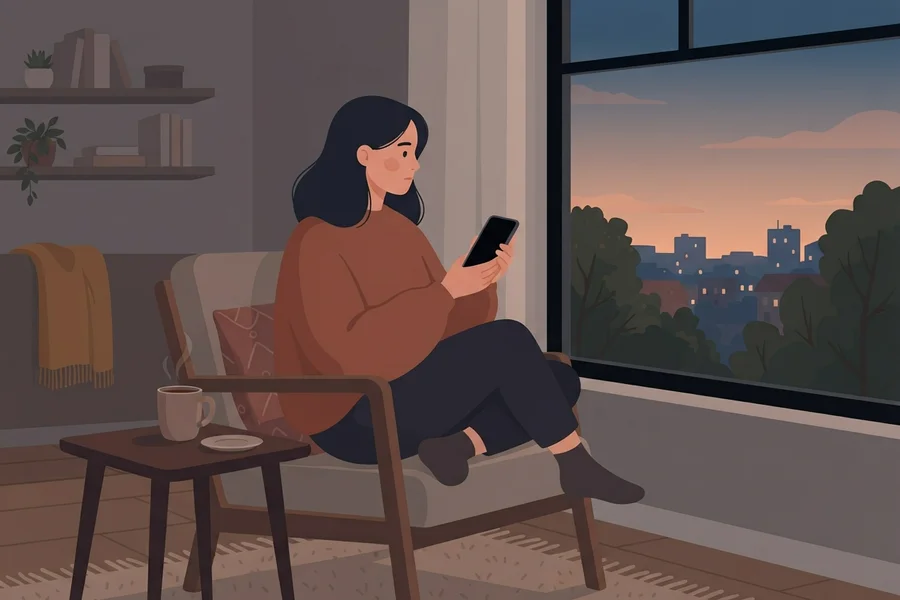
Your answers point to an anxious, or ambivalent, attachment style, the Watchful Heart. A quiet moment rarely stays quiet in your head: some part of you keeps track of whether the person you care about feels the same weight about this that you do.
A text that takes longer than usual to come back, a message that reads a little flatter than normal: these tend to catch your attention, and the read you land on is rarely "nothing's wrong." Reassurance from that person, once it actually arrives, is what brings the feeling back down; managing it entirely on your own is a much harder road.
That same watchfulness is also what lets you pick up on something real days before anyone says a word about it out loud.
The cost is that the same instinct can turn an ordinary quiet stretch into something it never was, and confirming it afterward can go further than the moment actually calls for. None of this makes you "too much," and it doesn't say whether any particular relationship is actually shaky, what your gender is, or whether you have someone right now.

Your attachment style is disorganized: think of it as the Push-Pull Current.
Your answers point to a disorganized attachment style, the Push-Pull Current. Wanting someone close and guarding against that same closeness can show up in the very same stretch of time, not two moods taking turns, but both pulling at once toward the same person.
Comfort you genuinely want can still land feeling unsettling right as it arrives, and when you're upset, neither leaning on someone close nor working through it by yourself makes much difference.
Sometimes neither route moves things at all, and what's left is a real sense of not knowing which direction would actually help; less a case of not being able to choose, more like two genuine pulls that never resolve into one.
This describes how your answers add up today, about your current relationships, not a verdict on your childhood, not a comment on anyone who had a hand in raising you, and not evidence of abuse or trauma. This isn't fixed for good, and it isn't the harder or worse of the four results here, just one pattern among four, with its own shape and its own week-to-week reality.
Your results are no accident
The classic 16-type personality test rooted in Jung's typology has been rebuilt from the ground up: a new CoreTypes methodology, and a far higher level of accuracy. These might be the most useful ten minutes you'll ever spend on yourself: you walk away with the key to your decisions, your relationships and your results — and it's yours for good.
Take the free testFrequently Asked Questions
How reliable is a quiz like this at pinning down your attachment style?
Think of this as a mirror on your own answers, not a clinical tool: it sums up how you responded to these twenty-four situations, and it isn't weighing in on any specific relationship of yours. The closer the questions land to how you actually operate day to day, the more useful the result is; it's a way to notice your own patterns, not a stand-in for seeing a therapist.
What are the four types of attachment people usually talk about?
Adult attachment research generally groups people into four recognizable patterns: secure, anxious (also called ambivalent), avoidant (also called dismissive), and disorganized. Each one describes its own way of reaching for someone when things get hard and settling back down afterward, and none of the four counts as the healthier or more put-together option; they're different shapes, not a ranking.
Can your attachment style, including a disorganized one, change over time?
Yes. None of these four is a life sentence: people's patterns move as relationships change, with therapy, or just with time and deliberate effort. A disorganized result is no exception: it reflects where your answers land right now, not a locked-in verdict on your past and not something permanent.
How is an anxious attachment style different from a disorganized one?
Both patterns carry a real undercurrent of doubt about whether the two of you feel the same way about each other. Where they part ways is what actually brings the feeling back down. If you're anxious, hearing from the other person genuinely settles things; the worry has an off switch, even if it takes their reassurance to hit it. In a disorganized pattern, that off switch is less reliable: their comfort can help one time and miss completely the next, and the same pull toward closeness sits right next to an urge to keep some distance from it.
Methodology
This quiz is based on the long-running academic approach to adult attachment, which groups how people reach for others and calm themselves down into a small set of recognizable patterns. Instead of asking what happened in childhood, it works from your own present-day answers about how you handle closeness and distress right now.
Across twenty-four questions, your answers add up to whichever of four patterns, secure, anxious, avoidant, or disorganized, comes out on top: how much you worry about whether the other person feels the same way, how naturally you turn to them versus handling things solo, and which of company, solitude, both, or neither actually settles you down. This works whether you're seeing someone right now or not, and it assumes nothing about anyone's gender. For more, see this short definition of an attachment style, or of disorganized attachment specifically, the fourth pattern here.
These four patterns simplify traits that actually run on a continuum, so treat the line between them as a useful model, not a hard rule carved into the science. This isn't a diagnostic tool, a prediction about how any relationship will turn out, or a compatibility check with anyone, and no result here is the healthier or more "together" one.
Your result describes how you currently tend to seek closeness and settle yourself, not a judgment on your childhood or on the people who raised you, and it isn't a substitute for talking to a mental health professional.
References
- Ainsworth, M. D. S., Blehar, M. C., Waters, E., & Wall, S. (1978). Patterns of Attachment: A Psychological Study of the Strange Situation. Hillsdale, NJ: Erlbaum.
- Hazan, C., & Shaver, P. (1987). Romantic love conceptualized as an attachment process. Journal of Personality and Social Psychology, 52(3), 511-524. doi:10.1037/0022-3514.52.3.511
- Main, M., & Solomon, J. (1986). Discovery of a new, insecure-disorganized/disoriented attachment pattern. In M. Yogman & T. B. Brazelton (Eds.), Affective development in infancy (pp. 95-124). Norwood, NJ: Ablex.
- Schore, A. N. (2001). Effects of a secure attachment relationship on right brain development, affect regulation, and infant mental health. Infant Mental Health Journal, 22(1-2), 7-66. doi:10.1002/1097-0355(200101/04)22:1<7::AID-IMHJ2>3.0.CO;2-N