
Alcohol Limit Test
Questions: 16Time: ≈ 4 min
This is not the short CAGE questionnaire but a separate, more detailed test on the same subject. Read each question, choose the scene closest to your own life, and answer in about 4 minutes. At the end you will see how much room alcohol currently takes up in your life.


Alcohol Limit Test: your result
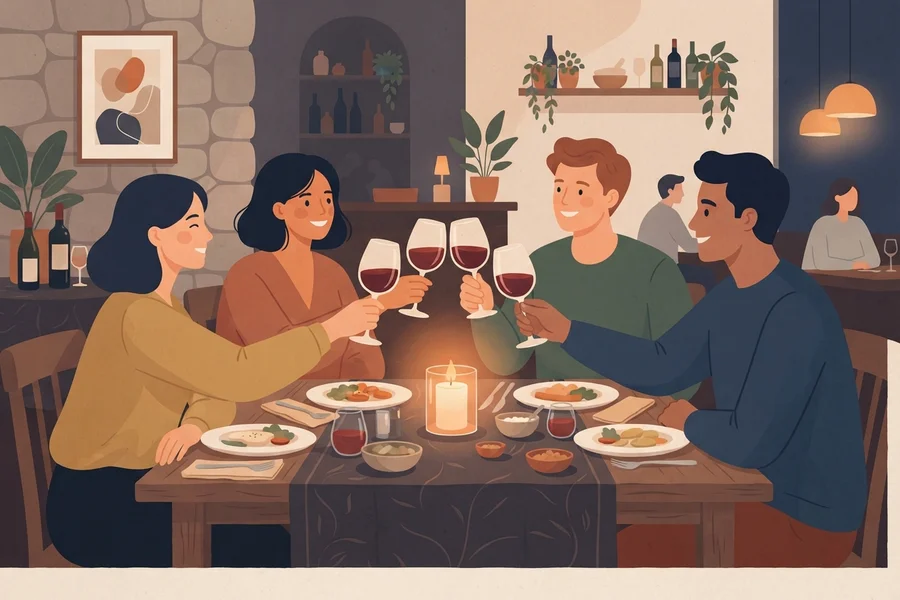
Right now, alcohol takes up almost no room in your life.
Across the four areas this test looks at (control, the people close to you, your private verdict on an evening, and what a drink is for) alcohol currently takes up almost no room. Your answers sketch a life where a glass is an accompaniment, not a feature.
Rules about drinking do not come up, because nothing tests them. If someone close to you remarks on a drink, it lands as plain conversation. A morning after is just a morning, and a hard day gets handled without reaching for a bottle.
A glass is something that happens at your table, not something your day is arranged around. That is a strength worth naming: you can enjoy a toast without it asking anything of you tomorrow. An odd evening here and there in your answers is ordinary and does not change the picture.
This reads your answers for the present stretch only. It describes where things stand today, and you can come back to it whenever your life changes.
Alcohol Limit Test: your result
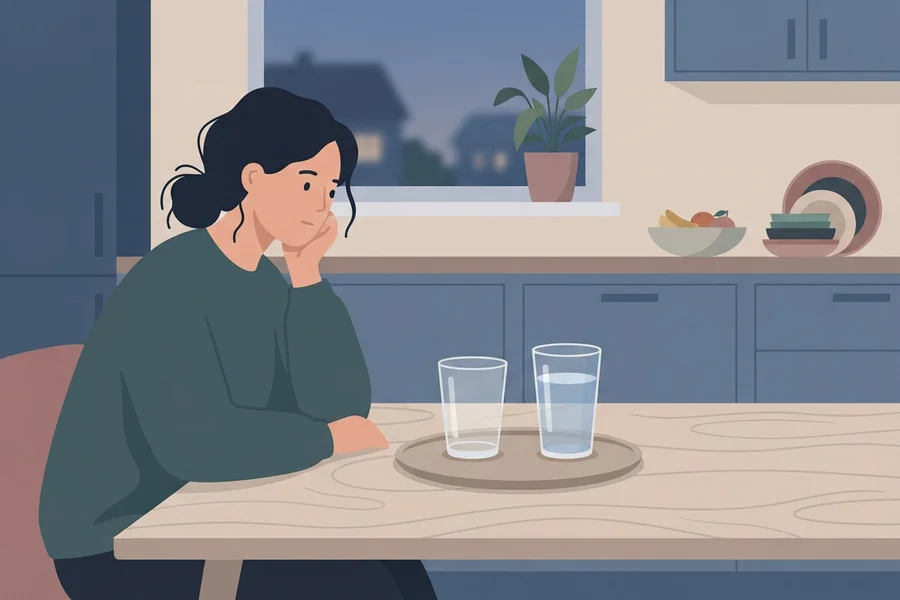
Right now, alcohol has a small, occasional place in your life.
Alcohol has a small place in your life: real enough to notice, not big enough to shape much around it.
A few of the four areas show a trace. A personal rule may bend on one particular evening. A comment from someone close may bring a flicker of defensiveness. A hard day may pull toward a glass a little more than an ordinary day does.
What keeps this picture contained is that no trace has spread across all four areas at once, and each one has an explanation tied to its own evening. Your life is not arranged around a drink.
Noticing which area carries the trace, whether a rule, a remark, a morning or a hard day, tells you where to look when you retake this later. Nothing here asks you to change anything.
Alcohol Limit Test: your result
Right now, alcohol's place in your life is mixed noticeable in some parts, barely there in others.
Your picture is genuinely mixed. In some parts of your life alcohol has a real, contained presence, and in others it hardly registers.
One or two areas stand out in your answers while the rest sit close to an ordinary baseline. Those standing-out areas are where a drink has the most say right now.
This band is narrow on purpose. It marks a crossing point, not a default, and a handful of different answers could place you on either side of it. Read it as an honest in-between, not a half-finished verdict.
A useful next step is to go back through the questions and notice which ones made you hesitate. Those are the places where your own line sits.
Alcohol Limit Test: your result
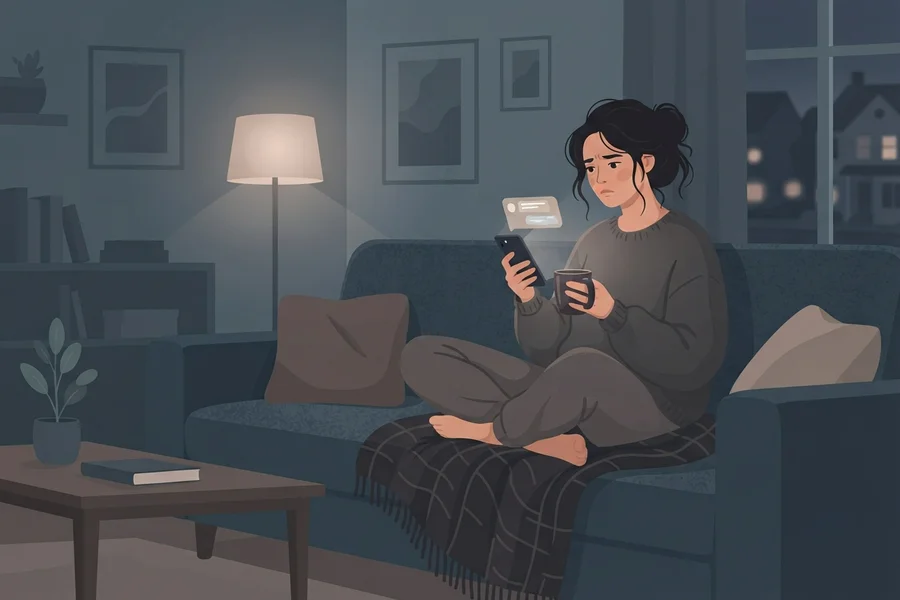
Right now, alcohol has a clear, recurring place in your life.
Alcohol has a clear, recurring place across your daily life, and your answers show it in most of the four areas.
A rule you set gives way once an evening tests it. Comments from people close to you have become a point of friction. A drink leaves a private discomfort behind it, and a hard day pulls toward a glass in a way an ordinary day does not.
Where your answers run lower, alcohol has less say, and that belongs to the picture too. What you do with all of it is yours to decide. If you would like someone to look at it with you, a doctor or a counselor is a reasonable person to talk to, whenever you feel ready.
Alcohol Limit Test: your result
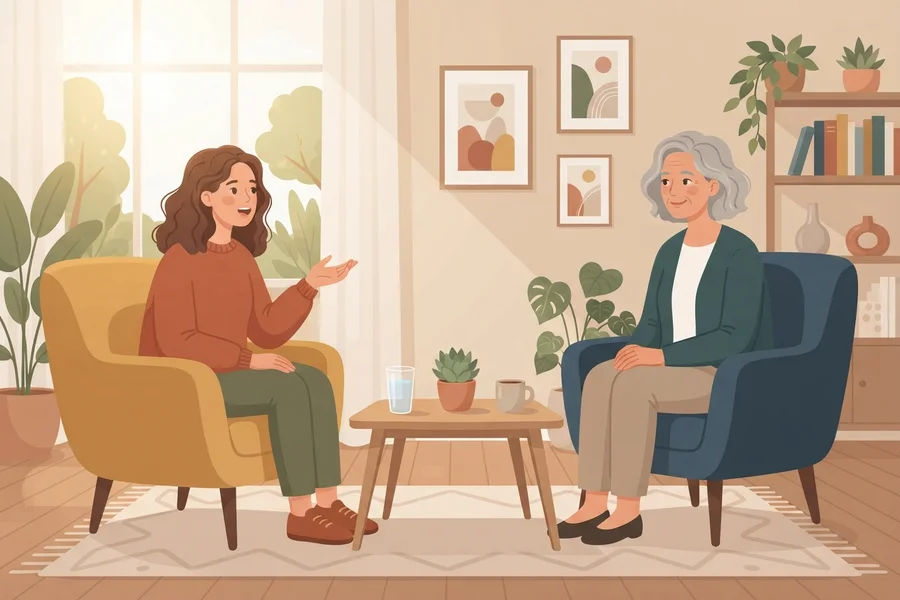
Right now, alcohol takes up a large, hard-to-miss place in your life.
Alcohol occupies a large, hard-to-miss place across your daily life. Nearly all four areas show it strongly in your answers.
Attempts to set a limit give way when tested. In at least one relationship, the subject has become a standing feature. The morning after weighs on you, and a drink is the way you settle a hard day, close to automatic.
This describes how much room alcohol has right now, nothing more, and it carries no verdict about who you are.
If the picture feels heavy, talking it through with a doctor or a counselor is a good next step. They can listen to your whole story, which a questionnaire cannot. Starting with a single conversation is enough.
Your results are no accident
The classic 16-type personality test rooted in Jung's typology has been rebuilt from the ground up: a new CoreTypes methodology, and a far higher level of accuracy. These might be the most useful ten minutes you'll ever spend on yourself: you walk away with the key to your decisions, your relationships and your results — and it's yours for good.
Take the free testYour result card
More tests like this
 Phobia Test
See how strongly fear, dread, and avoidance show up around whatever you're afraid of with this free 5-minute phobia test — no need to say what it is.
 Dermatillomania Signs Test
Take this dermatillomania test: 15 short questions on urges, autopilot picking, lost time and hiding. See your level of skin-picking signs in 4 minutes.
 Religious Trauma Self-Test
Religious trauma test with 18 short questions on how much your religious past weighs on your daily life today. A private self-check, about 4 minutes.
How this test works
Methodology
This test is based on an approach familiar from short clinical questionnaires about alcohol: look at a few everyday areas of life instead of counting drinks alone. Here the four areas are how well your own rules hold up, what goes on with the people close to you, how an evening sits with you afterwards, and whether a drink is for the occasion or for settling a mood. Brief checklists of this kind are still widely used, yet health information sites now point toward longer, more finely graded tools, as this overview of alcohol screening tests explains. That is the gap this test is built for.
Every question has five steps, each one a concrete scene, and the total (0 to 64) shows how large a part alcohol plays in your own account of the recent past. It is a snapshot. It depends on how candidly you answer today, it has not been validated as a clinical screen, and it measures nothing the way a lab would. If you want to know where to turn for support, this guide to alcohol support lists places to start.
Nothing here is diagnostic, and none of it takes the place of a professional. A diagnosis comes from a clinician who talks with you and learns your history, never from a score on a questionnaire you filled in yourself.
Frequently Asked Questions
Is this test a diagnosis?
No. What you get here is a self-reported picture of what place alcohol holds in your life at the moment. A diagnosis is a different thing: only a doctor or another qualified clinician can make one, and they do it by talking with you and learning your history, not by adding up points. If your result seems significant to you, the sensible next move is to talk to a doctor or a counselor.
Is this test just the short alcohol quiz everyone knows?
No. This is a separate, longer test in the same general territory. Instead of a quick yes or no, every question has five graded steps, so you can show where you actually sit. The briefest checklists remain in circulation, but they are blunt, and finer-grained options now exist; this test aims to belong to that newer group. Its score is not comparable to theirs.
Can you trust an online alcohol self-test?
It is as accurate as your answers are honest. Think of it as a thermometer reading rather than a lab result: it captures a pattern you notice in everyday life, and a different month can give you a different number if life has moved.
What should you do with your result?
Use it as a starting point for your own thinking. Look at which questions felt most like you, and ask yourself what you would want to be different, if anything. If the result feels weighty, or you simply want it looked at properly, make an appointment to talk with your doctor or a counselor. The test cannot settle that part for you.
Are there other alcohol screening tools out there?
Yes. Several established questionnaires exist, in different lengths and formats, on paper or online, and clinics use them. This test belongs to the same family without copying any of them. It asks more questions with finer steps, so the nuance that the briefest checklists flatten stays visible.
References
- Heather, N., Tebbutt, J. S., Mattick, R. P., & Zamir, R. (1993). Development of a scale for measuring impaired control over alcohol consumption: a preliminary report. Journal of Studies on Alcohol, 54(6), 700–709. doi:10.15288/jsa.1993.54.700
- Read, J. P., Kahler, C. W., Strong, D. R., & Colder, C. R. (2006). Development and preliminary validation of the young adult alcohol consequences questionnaire. Journal of Studies on Alcohol, 67(1), 169–177. doi:10.15288/jsa.2006.67.169
- Baker, T. B., Piper, M. E., McCarthy, D. E., Majeskie, M. R., & Fiore, M. C. (2004). Addiction motivation reformulated: An affective processing model of negative reinforcement. Psychological Review, 111(1), 33–51. doi:10.1037/0033-295X.111.1.33