Parenting Style Quiz
Answer 24 quick either-or questions about your everyday parenting — no right answers, just what actually happens at home. In about 5 minutes you’ll see where you land on two separate scales: structure and warmth, right now.

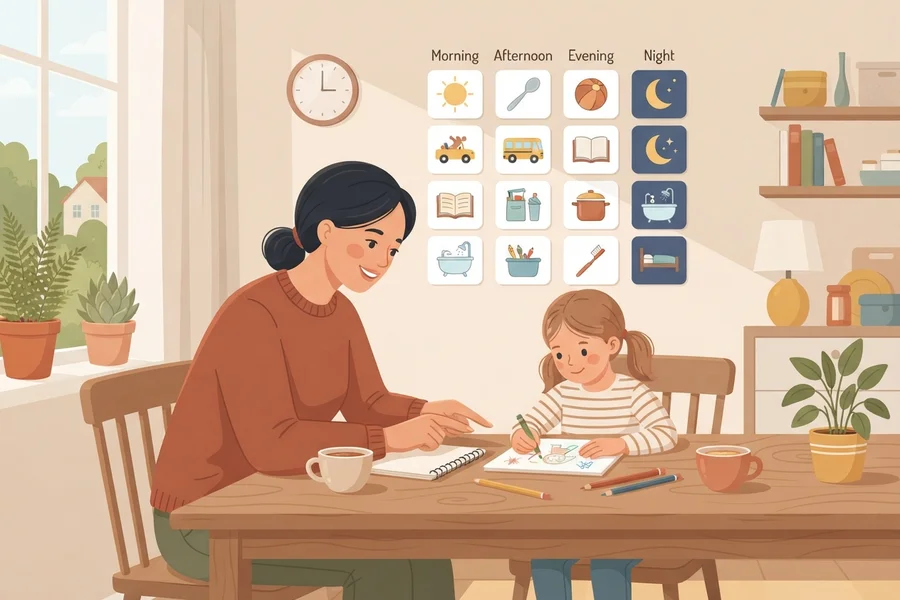
The Steady Hearth. Right now, your rules hold firm and you make time to talk things through.
Right now, your parenting holds two things at once: the rules you set get followed through, and your child gets the reason behind them along with your attention when something's bothering them.
A bedtime that doesn't move even on a rough night. A chore explained rather than just assigned. A moment where you stop what you're doing because your child's face says something is wrong.
The payoff is real: your child gets to know where the line is and why it's there, and that their feelings register with you even when the answer is still no.
None of that runs on autopilot. Keeping both sides going at once — the follow-through and the explaining, the limit and the check-in — takes more from you than leaning on just one side would. This is effort you're sustaining, not a trait you were simply born holding.
Parenting style isn't fixed. It moves with your child's age, with which child you're talking about, with how the week is going. What keeps this combination steady on the days it wobbles is worth noticing on its own.
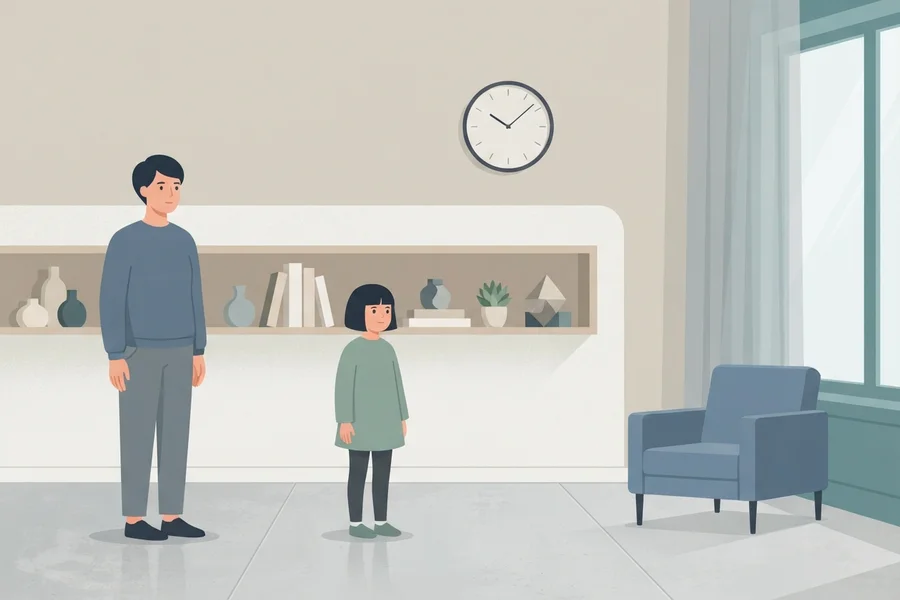
The Metronome. Right now, your rules hold firm and you keep it brief.
Right now, the rules in your house are clear, and they hold. Once you've said something, it happens — the bedtime stays the bedtime, the consequence stands. The explaining and the emotional check-in side is quieter at the moment.
A rule gets stated once and doesn't get renegotiated. A consequence lands, and the day moves on without much circling back to how your child felt about it.
Your child gets something solid out of this: a very clear sense of where the line actually is, with no guessing about whether today's rule still applies tomorrow.
What's lighter right now is the reasoning a rule can carry with it, and the check-in after it lands — your child may hear the what more than the why at the moment. That's a trade-off, not proof this is the wrong way to run a household: no single parenting mix wins out everywhere, across every family and culture.
This is a snapshot of the current stretch, not a fixed identity — it can shift as your child gets older or as the week eases up. Which side loosens first, if it does, says something worth paying attention to.
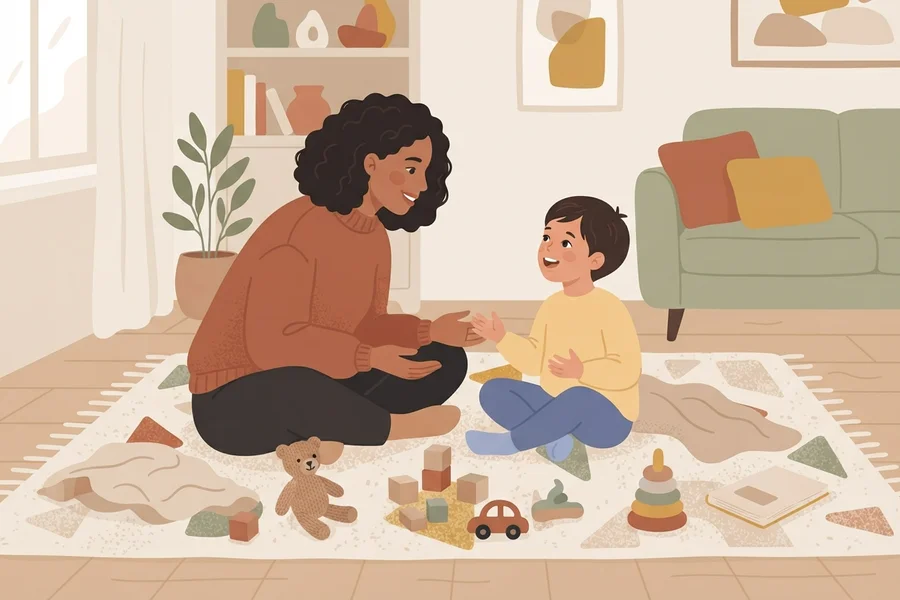
The Warm Current. Right now, your rules bend with the moment and you make time to talk things through.
Right now, your child's voice carries real weight in your house. You explain the reasoning behind a decision, ask what they think before you decide something that affects them, and notice when something's bothering them. Firm follow-through on rules and limits is lighter at the moment.
A screen-time cutoff gets a real reason attached to it. A weekend plan bends around what your child actually wants. A consequence, when one does land, tends to get renegotiated if the reaction is big enough.
The clear upside: your child is heard, genuinely, and knows their opinion changes outcomes — that's not a small thing to grow up with.
The cost sits on the other side of the same coin. When limits move depending on the day or the pushback, the line itself gets harder to predict, and your child may spend more energy testing where it actually sits this time.
None of this is fixed. How much a limit holds and how much gets negotiated shifts with the child, the age, the week — this reading is about the current stretch, not a verdict on who you are as a parent.

The Quiet Traveler. Right now, your rules bend with the moment and you keep it brief.
Right now, both of the dimensions this test measures are quieter than in the other three combinations: rules and limits are looser day to day, and the explaining-and-checking-in side is lighter too.
A rule bends more than it holds this week. A reason doesn't always make it into the instruction. A hard moment passes without much circling back to how your child felt about it.
Read plainly, this is useful information rather than a mark against you: it's the clearest signal this test can give that whatever usually goes into setting limits and staying actively engaged is genuinely being spent somewhere else right now — a demanding stretch, competing pressures, a period where there's simply less to go around.
That's a read on the current circumstances, not on your ability as a parent, and not a comment on your child's wellbeing — this test measures your own self-reported behavior this week, nothing more.
Parenting style tracks the period as much as the person: it shifts with the child's age, the specific relationship, and what's actually going on right now. What's pulling your attention elsewhere this stretch is worth naming, even just to yourself.
Your results are no accident
The classic 16-type personality test rooted in Jung's typology has been rebuilt from the ground up: a new CoreTypes methodology, and a far higher level of accuracy. These might be the most useful ten minutes you'll ever spend on yourself: you walk away with the key to your decisions, your relationships and your results — and it's yours for good.
Take the free testFrequently asked questions
How do I know what my parenting style actually is?
Look at your own everyday behavior on two separate things: how consistently you follow through on rules and limits, and how much explaining and emotional back-and-forth goes into your decisions. This test scores those two on their own rather than folding them into one label, because your position on each can genuinely differ.
What are the everyday signs to look for?
On the control side: do stated rules actually hold once your child pushes back, or do they mostly get negotiated down? On the warmth side: do you explain your reasoning and notice your child's mood, or do decisions mostly get stated and left there? Both are ordinary, observable moments — nothing here needs a lab.
Can your parenting style change over time?
Yes. Research on this tracks it shifting as a child gets older, differing between children in the same family, and moving with whatever else is going on in a given stretch. A result here is a read on right now, not a permanent label.
Is a stricter, more structured style automatically a bad thing?
No. Studies looking across different cultural contexts haven't found one parenting mix that comes out ahead everywhere — a lot of structure reads differently, and lands differently, depending on the wider context a family is in. There's no single correct answer this test is measuring you against.
Does this test assume a certain family setup?
No. It scores your own behavior and attitude, and nothing in it assumes how many children you have, whether there's a co-parent in the picture, or any particular household setup. However your household is arranged, you're answering about your own side of it.
Methodology
This test is built on two dimensions researchers have used for decades to describe everyday parenting: how much structure and follow-through you bring to rules and limits, and how much warmth — explanation, noticing feelings, taking your child's perspective into account — comes through in how you handle things day to day.
What it scores is your own current self-reported behavior and attitude across those two dimensions, not a single all-purpose label. These same two dimensions sit behind the familiar four-style way of describing parenting, but this test reports your actual position on each one directly instead of sorting you into one of those four boxes.
Like any self-report tool, it has real limits. It's a snapshot of this period, this child, this relationship — not a fixed trait carved in stone, and it can shift over time. It isn't a diagnostic instrument, and it isn't an evaluation of your child; it only reads what you tell it about your own behavior.
For more on how researchers define and study this, see the APA's entry on parenting.
References
- Baumrind, D. (1971). Current patterns of parental authority. Developmental Psychology Monograph, 4(1, Pt. 2), 1–103. doi:10.1037/h0030372
- Maccoby, E. E., & Martin, J. A. (1983). Socialization in the context of the family: Parent–child interaction. In E. M. Hetherington (Ed.), Handbook of Child Psychology, Vol. 4: Socialization, Personality, and Social Development (4th ed., pp. 1–101). Wiley.
- Robinson, C. C., Mandleco, B., Olsen, S. F., & Hart, C. H. (1995). Authoritative, authoritarian, and permissive parenting practices: Development of a new measure. Psychological Reports, 77, 819–830. doi:10.2466/pr0.1995.77.3.819
- Kuppens, S., & Ceulemans, E. (2019). Parenting styles: A closer look at a well-known concept. Journal of Child and Family Studies, 28, 168–181. doi:10.1007/s10826-018-1242-x