Is My Sister a Narcissist Quiz
Answer 21 quick questions about specific things you’ve noticed in your relationship with your sister — no overthinking, just what actually happened. At the end you’ll get one of three reads on what’s really going on, in about 5 minutes.


The Low Hum. What you've described reads like everyday self-centeredness — not narcissism.
Most of what you've described here is thin and scattered — a comment that stung once, a habit that shows up sometimes, nothing that concentrates around one kind of moment or shows up everywhere you look. That's usually how ordinary self-focus looks from the outside: present, occasionally annoying, not a throughline.
The word "narcissist" gets used loosely these days — plenty of people apply it to a sister, a coworker, a friend, for behavior that's really just the normal amount of self-interest most people carry around. What you've noticed reads closer to that: unremarkable self-centeredness, not a trait that sets her apart from most people you know.
That doesn't mean nothing's ever bothered you, or that the moments you picked out didn't happen. It just means reaching for a clinical-sounding label here would probably read more into it than is actually there. Naming the specific thing that annoyed you — directly, to her or just to yourself — will likely get you further than a diagnosis-shaped word would.
What this can't tell you is whether a recent fight, or a rough stretch between the two of you, is coloring how these moments land right now. One account, even an honest one, can't sort that out on its own.
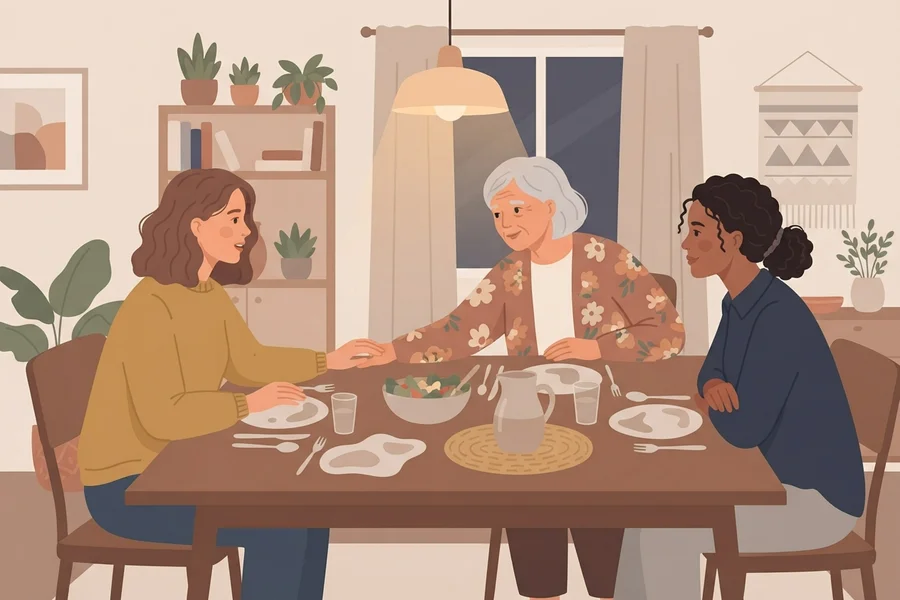
The Family Weather. What you've described lines up with common sibling and family dynamics — not with narcissism.
What you've picked out here doesn't spread evenly across your relationship — it clusters. Money, a parent's attention, holidays, who gets compared to whom: specific, recurring family situations pull this out of her more than day-to-day life outside them does.
That pattern points somewhere real. How parents divide attention and affection between siblings, and how each of you has felt about your own standing against the other, are two of the more consistently studied predictors of exactly this kind of coldness and friction — separate from anything about her personality on its own.
That's not proof she's free of any difficult traits, either — family dynamics and personality aren't an either-or, and both can be true of the same relationship at once. What it does suggest is that some of the tension you're carrying may have less to do with who she is and more to do with a family system neither of you built alone.
Your parents would likely tell this same family history differently than you do — and that account isn't something one sibling's answers here can supply.
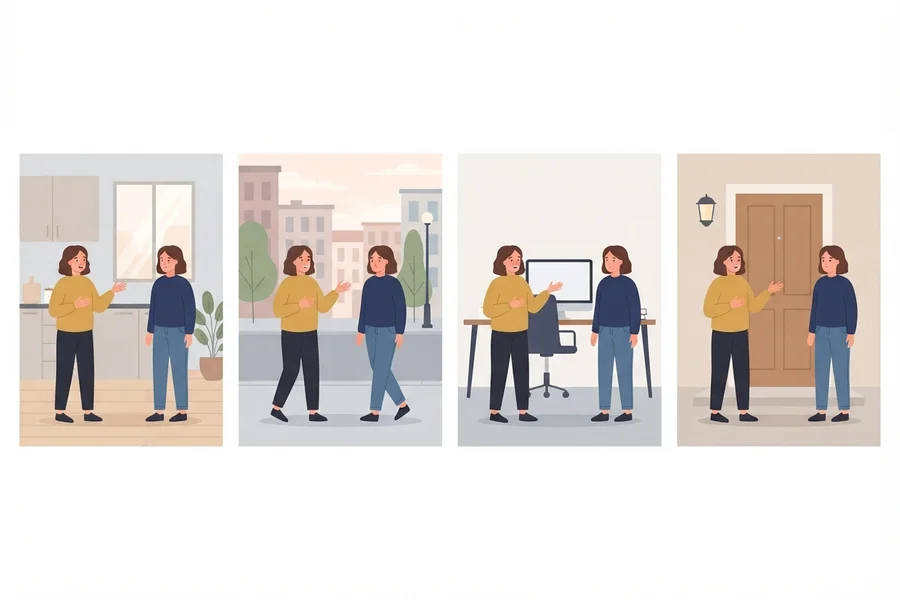
The Constant Thread. What you've described shows a pattern broad and consistent enough to be worth discussing with a professional.
What you've described doesn't stay in one lane. It shows up with strangers and with people who've known her for years, over small things and bigger ones, in rooms that have nothing to do with each other — broad, and fairly consistent, rather than tied to one kind of occasion.
Researchers who study this kind of self-focus as an ordinary trait — present in everyone to some degree, more pronounced in some — would call a pattern this wide a stronger-than-average showing on it. Worth taking seriously without calling it a diagnosis: sitting toward one end of a spectrum isn't the same as meeting criteria for a personality disorder, which only a clinician who's evaluated her directly could determine.
If carrying a pattern this size feels like a lot on your own, talking it through with a therapist or counselor of your own — for you, not for her — can help you get some clarity on it. No deadline on that, and it doesn't have to change how you show up for her tomorrow.
What's missing here is her side of it entirely, and whatever an actual evaluation would find — neither reachable from one relationship's worth of observation.
Your results are no accident
The classic 16-type personality test rooted in Jung's typology has been rebuilt from the ground up: a new CoreTypes methodology, and a far higher level of accuracy. These might be the most useful ten minutes you'll ever spend on yourself: you walk away with the key to your decisions, your relationships and your results — and it's yours for good.
Take the free testFrequently Asked Questions
Can this quiz tell me if my sister has narcissistic personality disorder?
No — nothing here can. A diagnosis like that takes a qualified clinician working directly with the person being evaluated, usually including her own participation, not just an account from someone close to her. Family members can be useful informants during that kind of evaluation, but that's a different role from making the call itself. This quiz reflects back what you've personally noticed, and nothing more.
Is my sister just self-centered, or is this actually narcissism?
For most people asking this question, it's closer to ordinary self-centeredness than to narcissism in the clinical sense — the everyday use of the word has stretched well past what the disorder actually describes. A difficult stretch in the relationship, a family dynamic, or plain garden-variety self-focus all turn out to explain this kind of friction more often than a personality disorder does.
Why is my sister like this? What causes someone to become narcissistic?
There's rarely one clean answer, and this test isn't built to give you one. But a good part of the honest answer often sits with the family system rather than anything fixed about her individually — parents dividing attention and comparison unevenly between siblings can shape a relationship in ways that look, from the outside, like a personality difference, even when neither sibling's personality is actually the driver.
Could this actually be about our parents rather than about her?
It's possible, and fairly common. How a parent divided attention, praise, or resources between the two of you is one of the more consistently documented reasons siblings end up cold or competitive with each other — separate from anything about either person's character. If your answers land mostly around family-linked situations, that's exactly what this test is picking up on.
Does a high result mean my sister has narcissistic personality disorder?
No. It means the specific behaviors this quiz asked about showed up broadly, across a lot of different and unrelated situations you've personally seen — not confined to one occasion or one kind of moment. That's worth taking seriously, and maybe talking through with someone, for your own sake. It's still not a diagnosis; only a clinician working with your sister directly could ever make one.
Methodology
This test works from specific, everyday things a sibling actually sees — how a conversation gets steered, who apologizes and how, what gets remembered differently, who shows up for whom — not from a checklist aimed at diagnosing someone who never answered a single question herself.
It sorts what you've noticed into three separate explanations, not three shades of the same one: ordinary, everyday self-focus; patterns that trace back to the family system — favoritism, long-running sibling comparisons; or a broader personality trait that shows up consistently across many different situations. Each is backed by its own distinct body of research rather than being interchangeable labels for one idea. It doesn't measure whether your sister meets criteria for any diagnosis, what she's privately thinking, your parents' version of your shared history, or anything about you.
People who study this trait have found that someone close to a person often reads their self-centered behavior more clearly than the person reads it in themselves — part of why a sibling's account carries real weight here. That said, it's not the whole picture: how someone describes their own behavior and how the people around them describe it tend to line up surprisingly poorly for this particular trait, which is one more reason a single account, including this one, stops well short of a full evaluation. More on how personality-disorder diagnosis actually works, and on sibling relationships across adulthood.
None of that makes this a diagnostic tool. It can't determine whether your sister has narcissistic personality disorder — only a qualified clinician can make that call, generally with the person being evaluated taking part herself; family members can describe what they've seen, but that makes them informants, not diagnosticians. What you get here reflects your own account, not an assessment of your sister, and no result here — including the top one — is a reason by itself to pull back from her or end the relationship.
References
- Hengartner, M. P., Eymir, A., & Haslam, N. (2026). Expanded definitions of psychopathology: Exploring concept creep in narcissistic personality disorder. Acta Psychologica, 264, 106604.
- Pincus, A. L., & Lukowitsky, M. R. (2010). Pathological Narcissism and Narcissistic Personality Disorder. Annual Review of Clinical Psychology, 6, 421–446. doi:10.1146/annurev.clinpsy.121208.131215.
- Ackerman, R. A., Witt, E. A., Donnellan, M. B., Trzesniewski, K. H., Robins, R. W., & Kashy, D. A. (2011). What does the Narcissistic Personality Inventory really measure? Assessment, 18(1), 67–87. doi:10.1177/1073191110382845.
- Finzi-Dottan, R., & Cohen, O. (2010). Young Adult Sibling Relations: The Effects of Perceived Parental Favoritism and Narcissism. The Journal of Psychology, 145(1), 1–22. doi:10.1080/00223980.2010.528073.