Depression Test
Answer all 15 questions the way things have actually been for you recently, not how you’d like them to be. It takes about 4 minutes, and at the end you’ll get a plain reading of how often signs of depression have been showing up in your day-to-day life lately.

This test is for informational purposes only and is not a substitute for a professional diagnosis. Consult a qualified professional for medical or psychological advice.

Daylight Steady. Signs of depression are minimal right now.
Right now, the five everyday facets this test tracks - mood, motivation, rumination, physical signs, and follow-through - are largely running on your own usual baseline. An occasional flat afternoon or a rough night's sleep is ordinary here, not the start of a pattern.
A good conversation still lifts the rest of the day, a small task gets handled about when it always has, and a worry that comes up tends to get thought through once and then set aside.
A reading this low says something about the period this test asked about, not about you as a fixed quantity - patterns like these shift over time, and a low score today isn't a guarantee about next month.
What it doesn't cover is everything else going on for you right now that a fifteen-question read can't reach - if something still feels off despite this result, that feeling is worth trusting over a number on a screen.

Afternoon Dimming. Signs of depression are showing up occasionally.
Some of the five facets this test tracks - mood, motivation, rumination, physical signs, follow-through - are showing up with real, noticeable frequency, without yet adding up to a daily pattern across most of them.
Maybe it's a mood that stays flatter than it should on more days than it used to, or a couple of messages that have been sitting unanswered longer than usual.
This is common territory, not a red flag on its own - plenty of ordinary stretches of life produce a reading in this range, especially anything that's been genuinely demanding lately.
What's worth paying attention to is whether this settles back down on its own over the next few weeks, or starts showing up in more of these five areas at once - that's the difference between a rough patch and something worth a closer look.
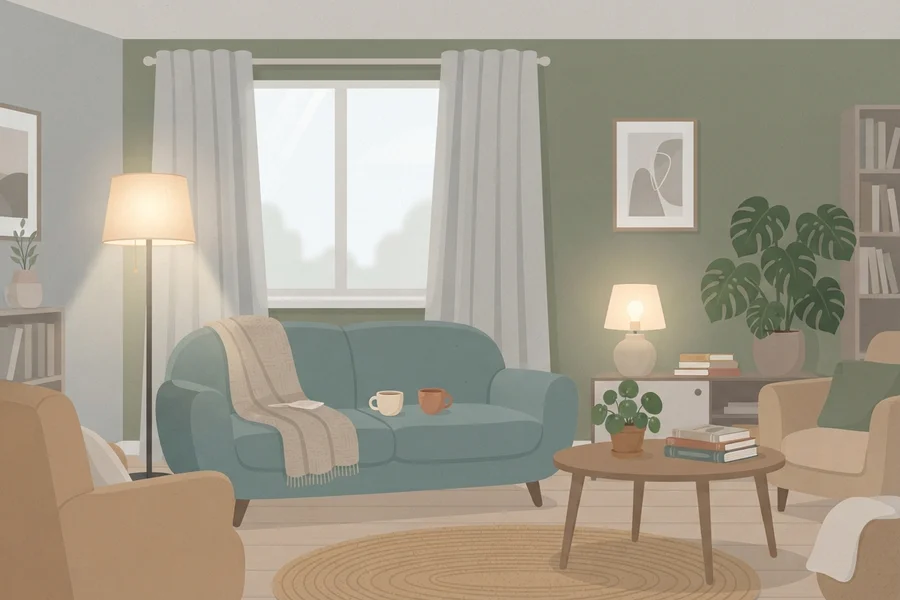
Dusk Threshold. Signs of depression sit at a noticeable, borderline level.
This lands right in the narrow middle of what this test measures: some of the five facets - mood, motivation, rumination, physical signs, follow-through - sit close to your own usual baseline, while others, often mood or energy, are showing up with real regularity.
A weekend that used to reset you might not be doing that anymore, even while sleep and daily tasks are holding closer to normal.
This band is deliberately narrow because it marks an actual crossing point, not a default catch-all - a handful of different answers, either direction, could have placed you somewhere else on this scale entirely.
Given how close this sits to the test's own midpoint, this is a good moment to pay closer attention to which of these patterns feels most true day to day - a mixed read like this one is easy to misjudge from the inside, in either direction.
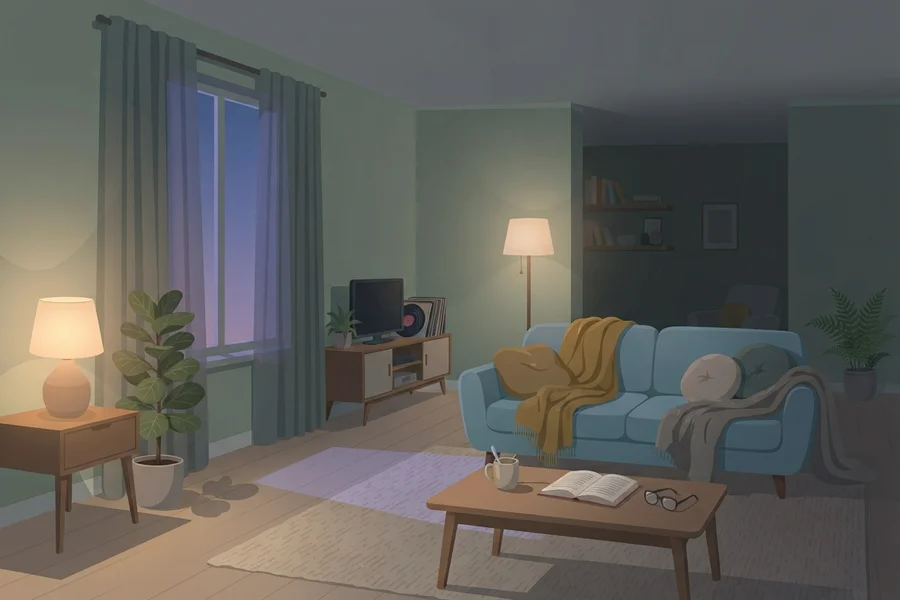
Lamp-Lit Room. Signs of depression are showing up frequently.
Most of the five facets this test tracks - mood, motivation, rumination, physical signs, and follow-through - are showing up with real regularity: more days carry this than don't, across enough of these areas at once to be hard to miss.
A once-reliable evening routine might now take real effort to start, and a bad night's sleep might barely register as different from a good one anymore.
None of this makes a diagnosis on its own - it's a level of self-reported signs, not a verdict about you as a person, and it says nothing about what's causing it or how long it's likely to last.
A pattern this broad is worth mentioning to a doctor or a mental health professional, in an ordinary conversation rather than an emergency one - there's no particular urgency attached to that step, just a reasonable next one.
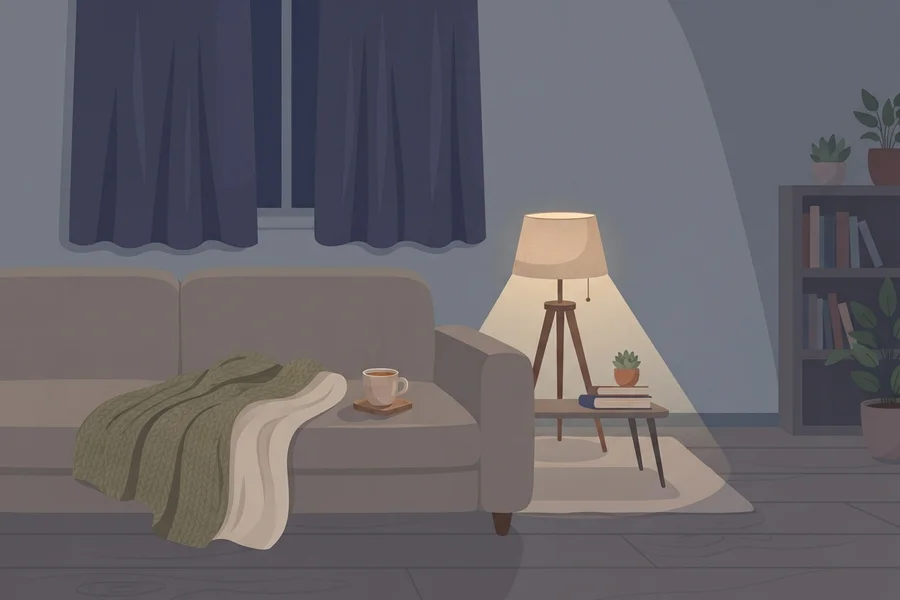
Deep Dark. Signs of depression are pronounced.
Nearly every one of the five facets this test tracks - mood, motivation, rumination, physical signs, and follow-through - is showing up with high frequency, spanning most days rather than sitting in just one area of your life.
A conversation that used to run on its own might now take real, deliberate effort from start to finish, and a task as small as replying to a message might be sitting untouched for longer than it used to.
A reading this high describes a broad, persistent pattern of self-reported signs - not a diagnosis, not a statement about how well you're managing your life, and not a fixed fact about who you are.
Talking this through with a doctor or a mental health professional is a genuinely useful next step here, whenever it's convenient - a plain conversation, not an emergency measure, and one worth having simply because a pattern this broad deserves more than a fifteen-question read can offer.
Your results are no accident
The classic 16-type personality test rooted in Jung's typology has been rebuilt from the ground up: a new CoreTypes methodology, and a far higher level of accuracy. These might be the most useful ten minutes you'll ever spend on yourself: you walk away with the key to your decisions, your relationships and your results — and it's yours for good.
Take the free testFrequently Asked Questions
Am I depressed?
This test can't answer that question directly - what it can honestly tell you is how often and how strongly a set of well-documented everyday depression signs have been showing up for you over the period it covers. That's a useful starting point, not a yes-or-no verdict.
Can this test tell me if I have depression?
No. A test like this is a starting point, not a diagnosis. Only a doctor or a mental health professional can actually diagnose depression, and they do it through conversation and a look at your history - not through a single questionnaire, online or otherwise. If any part of your result feels worth exploring, that conversation is the next step.
How accurate are depression tests and questionnaires?
A self-report tool like this one describes a snapshot of documented everyday experiences over a recent period - it's honest about what it covers, but it isn't a substitute for the accuracy a full clinical evaluation provides, which draws on far more than answers to a set of questions.
What's the difference between depression screening and diagnosis?
Screening is an early step toward a possible evaluation, not the same thing as a diagnosis - they're two distinct phases, with screening coming first. This test sits even a step earlier than a formal screening: it's a personal reading, not a clinical tool of any kind.
Can depression and anxiety happen together?
Yes - the two commonly show up together, even though they're separable experiences with their own distinct patterns. This test measures depression signs specifically, not anxiety, so a result here speaks only to that one side of the picture.
Methodology
This test takes a self-report approach: it asks about the frequency and intensity of five well-documented everyday facets of depressive experience - persistent low mood and a negative view of yourself and what's ahead, anhedonia (both in the moment and in what you expect from things beforehand), rumination, self-reported physical symptoms, and withdrawal from effort and connection. It's based on the general approach used in psychological research on depression, not built to replicate any one clinical instrument.
What it measures is how strongly and how often these five facets have been showing up for you recently - a self-report snapshot of a recent period, not a validated clinical screen and not a diagnosis.
This test is built for the general adult population. It isn't designed for teenagers, whose depression tends to center on a different dominant symptom than the ones covered here, or for the postpartum period, which is its own distinct, differently-timed experience with its own dedicated tools. It also doesn't measure anxiety, even though the two commonly occur together - depression and anxiety are separable experiences, and a single combined score couldn't honestly describe both.
This is not a diagnostic instrument, and it doesn't replace a conversation with a doctor or a mental health professional. If you want to read more, the NHS's overview of depression symptoms in adults covers the everyday picture in more depth, and its page on getting a diagnosis explains who makes that call and how to start.
References
- Beck, A. T. (1967/1976). Cognitive Therapy and the Emotional Disorders.
- Watson, D., Clark, L. A., Weber, K., Assenheimer, J. S., Strauss, M. E., & McCormick, R. A. (1995). Testing a tripartite model: II. Exploring the symptom structure of anxiety and depression in student, adult, and patient samples. Journal of Abnormal Psychology, 104(1), 15–25.