
Teenage Bipolar Test
Questions: 16Time: ≈ 4 min
Answer as the parent or guardian, thinking back over what you have seen in your teen. There are sixteen questions, about 4 minutes in all; pick the scene closest to what you’ve noticed. At the end you get a level of signs of a bipolar-type mood pattern and a plain answer to whether it still looks like a phase.


Teenage Bipolar Test: your result
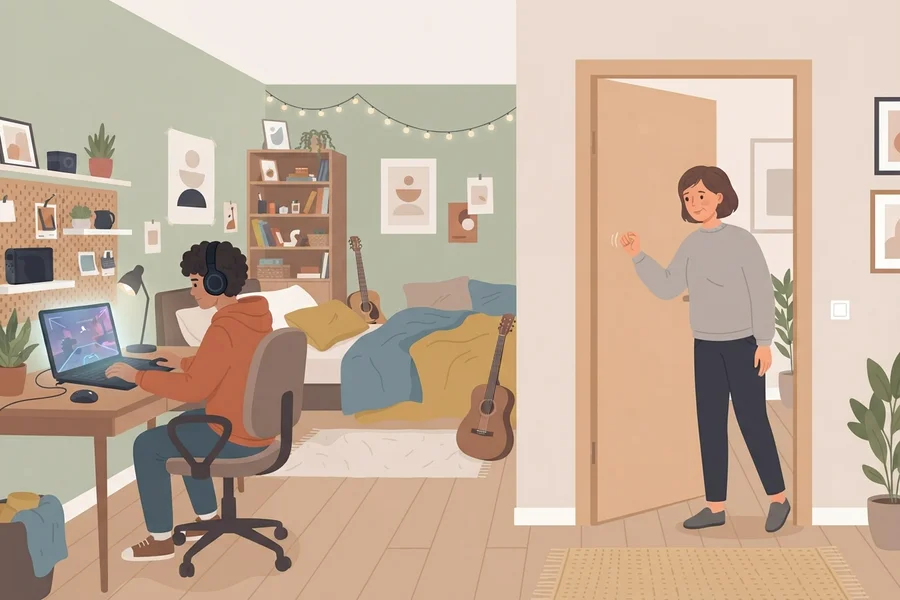
Minimal signs of a bipolar-type mood pattern in your teen this is still an ordinary phase.
What you've seen in your teen sits close to the ordinary weather of adolescence. A brighter week, a short fuse after a bad day, a quiet stretch after a falling-out with friends: each one follows something happening in their life and fades when that thing does.
Nothing you described stands apart as a chapter of its own. Interests and friendships hold up even when the mood sags, and the energy that surges now and then still looks like theirs.
That is a real strength. A teen whose moods follow life, rather than running on a separate clock, is easier to talk with, because the ups and downs make sense to both of you.
If this picture changes, the useful question is not how big a mood is but whether it arrives as a distinct stretch, clearly unlike the teen you know. Swings alone are not that.
Teenage Bipolar Test: your result
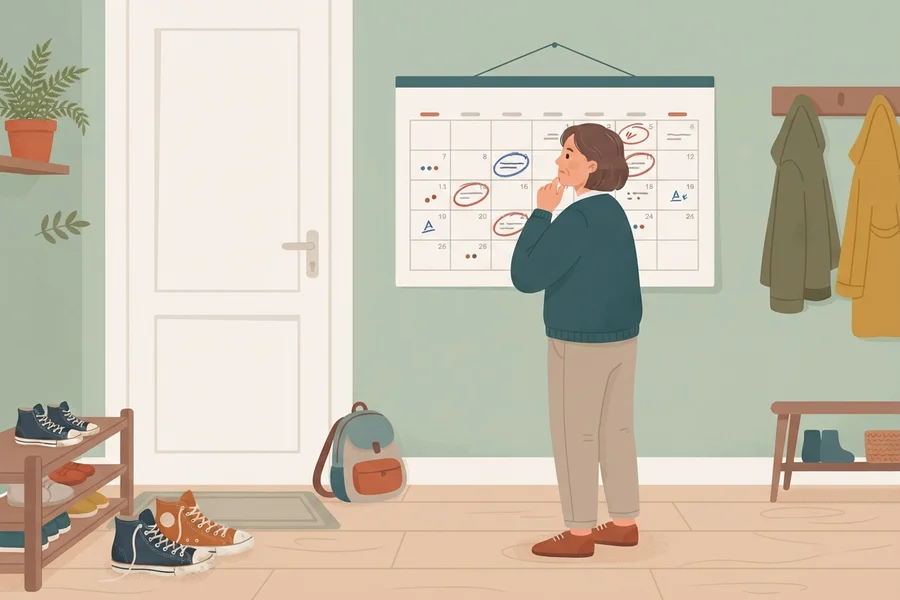
Mild signs of a bipolar-type mood pattern in your teen this is a phase with the first edge of a pattern.
A little of a bipolar-type mood pattern shows in your answers, and only at its lighter edges. There may have been a week of unusual brightness, a shorter fuse, one bolder choice than you'd expect, or a low spell that took the shine off a hobby or two.
What is missing matters as much. These signs aren't piling up across areas, and no single stretch is sharp enough to count as its own chapter. You can mention one, yet you'd struggle to say exactly where it began or ended.
Your teen's reactions still follow what is going on around them. A brighter or flatter run of days has a reason you can usually find, and that grounding is a strength worth naming.
Think of this as a phase with the first edge of a pattern. Jotting down dates when a stretch starts and stops costs nothing, and it lets you see the picture clearly instead of guessing at it.
Teenage Bipolar Test: your result
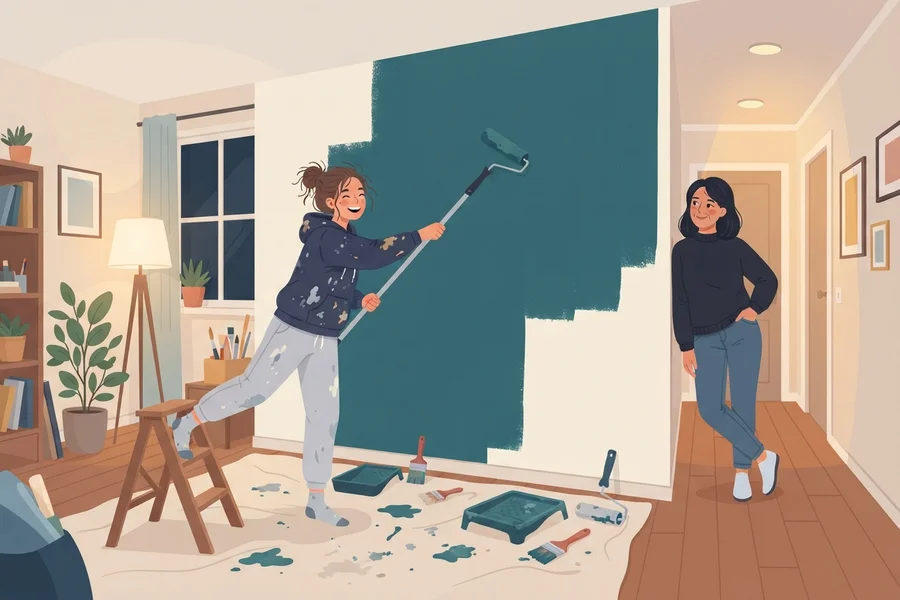
Moderate signs of a bipolar-type mood pattern in your teen a pattern is taking shape.
Several areas are really present in your answers, not just faintly. A stretch of lifted mood and energy came with less sleep than your teen needs, a short temper or one reckless-looking decision rode along, and a low spell reshaped part of an ordinary day.
You can point to a stretch and say roughly when it started and ended, and someone else near your teen has already remarked on it. The outline isn't sharp yet, but it is more than a blur.
The highs and lows are real enough to notice clearly, and yet the picture hasn't swallowed everything else. The teen you know is still very much in view, which is worth remembering.
A pattern is taking shape, neither absent nor in charge. This is where the answer to 'is it just the age?' moves from 'a phase' toward 'a pattern worth watching', and how each stretch begins and ends is the detail that tells you most.
Teenage Bipolar Test: your result
Noticeably elevated signs of a bipolar-type mood pattern in your teen a pattern has taken hold.
The areas you described show up together, with real force. Mood, energy and pace ran well above your teen's own level, and irritability, bolder choices or an inflated sense of what they can do came along with the same stretch.
Low stretches cut into interests, friendships and the shape of an ordinary day. The highs and lows stand out as chapters of their own, and more than one of them has been named, independently, by someone else close to your teen.
Your teen's energy, when it isn't running high, is warm and engaged with the people and things around them. That engagement belongs to them, and it is still there between stretches.
The cost is a pattern that has moved past ordinary adolescent variability, with real disruption to daily life while the stretches last. On the evidence of your answers, this is more than a phase of the age.

Teenage Bipolar Test: your result
Pronounced signs of a bipolar-type mood pattern in your teen this is clearly more than an ordinary phase.
Your answers describe all four areas at once, and they reshape daily life. Mood, energy and pace run sharply above your teen's own level, with very little sleep and no tiredness to show for it, and irritability, bold risks or grand self-belief ride along.
Low stretches pull interest, contact and the shape of the day down hard. The highs and lows stand apart as sharply separate chapters, with a real return to your teen's own self in between, and more than one person close to them has named it.
Between stretches, the teen you know is fully themselves, with their humor and engagement intact. That is the part to hold on to.
This is clearly more than an ordinary phase. It would be sensible, without any rush, to bring what you've seen to your teen's pediatrician, family doctor, or a mental health professional who works with children and adolescents. An evaluation draws on more than one person's account, eventually including your teen's own, because one observer, however close, has only one view.
None of this is anyone's fault, neither your teen's nor yours for watching so closely.
Your results are no accident
The classic 16-type personality test rooted in Jung's typology has been rebuilt from the ground up: a new CoreTypes methodology, and a far higher level of accuracy. These might be the most useful ten minutes you'll ever spend on yourself: you walk away with the key to your decisions, your relationships and your results — and it's yours for good.
Take the free testYour result card
More tests like this
 Religious Trauma Self-Test
Religious trauma test with 18 short questions on how much your religious past weighs on your daily life today. A private self-check, about 4 minutes.
 Panic Disorder Test
See how often sudden waves of fear catch you off guard, and how far they've started to shape your choices. A private panic disorder test, about 4 minutes.
 Paranoia Test
A 15-question self-report test on how often suspicion, mistrust, and guardedness show up for you. Not a diagnosis, just your own patterns reflected back.
How this test works
Methodology
This check is answered by a parent or guardian, because it rests on what an adult can see from the outside and remember: how your teen looked and acted during particular stretches of days or weeks. It is not a questionnaire for a teenager to fill in about themselves. The approach is based on research into how a bipolar-type pattern of mood and energy shows up in adolescents when parents describe it, and on how measures built for this age group are put together.
The sixteen questions cover four areas: lifted mood, energy and sleep need; short temper, risky choices and inflated confidence during those high stretches; low stretches, seen through interest, contact with people and the shape of the day; and whether any of it stands out as a distinct stretch, separate from your teen's usual self. That last area matters most for the top level. Constant irritability with no clear start or end is a different picture, not a louder version of this one.
Your answers come from one observer. Your teen's own account, and an evaluation that draws on several people over time, add what you cannot see from where you stand.
This test is not a diagnostic instrument and does not replace an assessment by a qualified professional.
Frequently Asked Questions
Is my teen bipolar or just being a teenager?
Changeable moods by themselves prove little. Plenty of teenagers swing by the hour, fall apart over a bad day and recover by evening. What counts is whether you can mark off a stretch of days or weeks that stood out from your teen's own baseline, high or low, and then passed. Stretches like that are what this test looks for; a mood that rises and falls with events reads more like a phase.
What is the difference between bipolar disorder and normal teenage mood swings?
A mood that follows an event, like a row with a friend, and fades once it's sorted out is ordinary adolescent weather. The pattern this test is about looks different: school, friendships or the rhythm of the day visibly suffer, it runs for days rather than hours, and it stands in clear contrast to how your teen usually is. So the question is less about any single mood and more about whether you can see a whole stretch.
Can this test tell me if my teen has bipolar disorder?
No. It reports a level of the pattern as you have seen it, and nothing more. Only a qualified child and adolescent clinician can diagnose, after meeting your teen and hearing from more than one person over time. A pediatrician, a family doctor or a mental health professional for children and adolescents is the place to start.
What is the difference between bipolar disorder and DMDD in teens?
Disruptive mood dysregulation disorder (DMDD) is a separate diagnosis, given to young people whose irritability is chronic and ever-present rather than arriving in episodes. A bipolar-type pattern comes in distinct stretches with a return to baseline in between. Telling the two apart is a clinician's job; a check built on a parent's report cannot settle it on its own.
At what age does bipolar disorder start in teens?
There is no single age that applies to every teenager. Young people differ widely, and a test cannot speak to timing. A clinician who evaluates your teen in person is the one who can say anything about it.
References
- Gracious, B. L., Youngstrom, E. A., Findling, R. L., & Calabrese, J. R. (2002). Discriminative validity of a parent version of the Young Mania Rating Scale. Journal of the American Academy of Child and Adolescent Psychiatry, 41(11), 1350–1359. doi:10.1097/00004583-200211000-00017
- Youngstrom, E. A., Frazier, T. W., Demeter, C., Calabrese, J. R., & Findling, R. L. (2008). Developing a 10-item mania scale from the Parent General Behavior Inventory for children and adolescents. Journal of Clinical Psychiatry, 69(5), 831–839. doi:10.4088/jcp.v69n0517
- Stringaris, A., Baroni, A., Haimm, C., Brotman, M., Lowe, C. H., Myers, F., Rustgi, E., Wheeler, W., Kayser, R., Towbin, K., & Leibenluft, E. (2010). Pediatric bipolar disorder versus severe mood dysregulation: risk for manic episodes on follow-up. Journal of the American Academy of Child and Adolescent Psychiatry, 49(4), 397–405. doi:10.1097/00004583-201004000-00014
- Birmaher, B., Axelson, D., Goldstein, B., Strober, M., Gill, M. K., Hunt, J., Houck, P., Ha, W., Iyengar, S., Kim, E., Yen, S., Hower, H., Esposito-Smythers, C., Goldstein, T., Ryan, N., & Keller, M. (2009). Four-year longitudinal course of children and adolescents with bipolar spectrum disorders: the Course and Outcome of Bipolar Youth (COBY) study. American Journal of Psychiatry, 166(7), 795–804. doi:10.1176/appi.ajp.2009.08101569