Toxic Friend Quiz
Answer 20 quick questions about how this friendship actually feels day to day. It takes about five minutes, and at the end you’ll get a plain read on what you’ve been noticing — not a verdict on your friend.

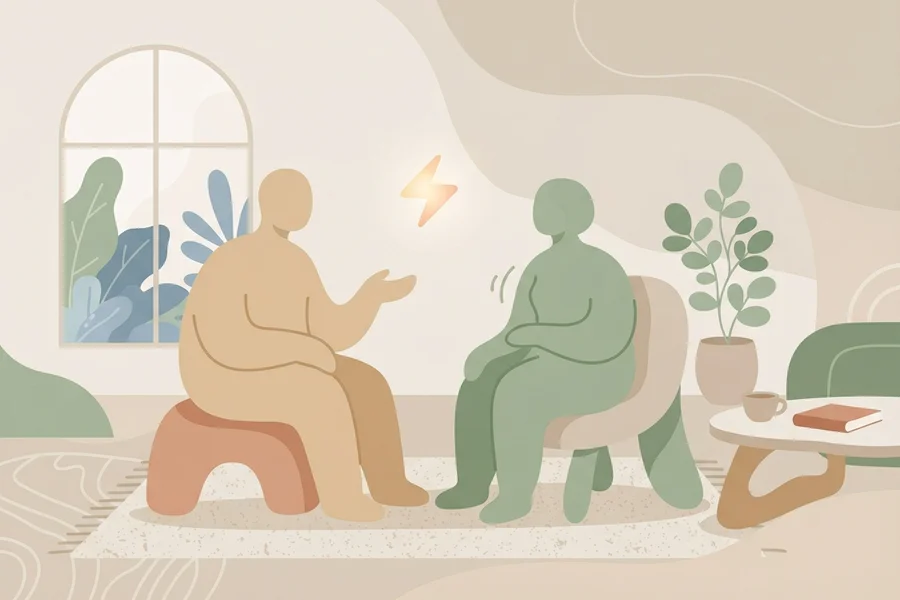
Familiar Ground. What you've noticed lines up with the everyday friction most real friendships go through — not a toxic sign.
What you've noticed here mostly comes down to plain, run-of-the-mill stuff — an argument that flares and settles, an occasional pang of envy — spread out rather than piling up into anything bigger.
A blow-up over something real, and it's forgotten by the next day. Good news lands and gets a genuine “congratulations,” maybe with the tiniest flicker of something else that fades fast.
There's something genuinely useful in naming it this plainly instead of reaching for a scarier word — it tends to explain more, not less.
Toxic isn't really the right word for what you've described here — friction like this, even the kind that stings, doesn't add up to that on its own.
Worth sitting with, though: was there one particular blow-up, or a rough patch lately, shaping how you answered today?

Two Truths at Once. What you've noticed holds real closeness and real friction at the same time — a genuinely split picture, not a toxic one.
This one doesn't sort cleanly into good or bad — real closeness and real friction both keep turning up in the same friendship, sometimes within the same afternoon.
You're glad to see them, and you come home a little drained. You've caught yourself defending this friendship to someone else while quietly sitting on a doubt you haven't said out loud.
Naming it as genuinely both, instead of forcing a side, is the more honest read — plenty of close relationships work exactly this way.
None of that makes it toxic by default — feeling two things about the same person is its own real, recognized experience, not a disguised version of a bad one. It is, admittedly, tiring to carry both feelings at once.
An open question worth keeping: what tends to tip you toward the good feeling versus the hard one, and has that mix looked different lately than it used to?

The Tilting Scale. What you've noticed traces mainly to effort or closeness moving, more than to anything that should worry you.
What you've noticed here isn't one dramatic moment so much as a pattern — you doing most of the reaching out, or the two of you simply seeing less of each other than you used to.
Plans take more coordinating than they once did. Time and support have leaned mostly your direction for a while now, not tied to one hard week for either of you.
Putting a plain name on that is worth something on its own — it points toward the balance moving, nothing more dramatic than that.
None of this proves the other person set out to cause it. Even so, carrying more than you get back for a long time takes something out of you, and drift rarely comes with an announcement.
Left unanswered: what this friend would say if you asked them how the last few months have felt, and whether either of you has actually put any of this into words yet.
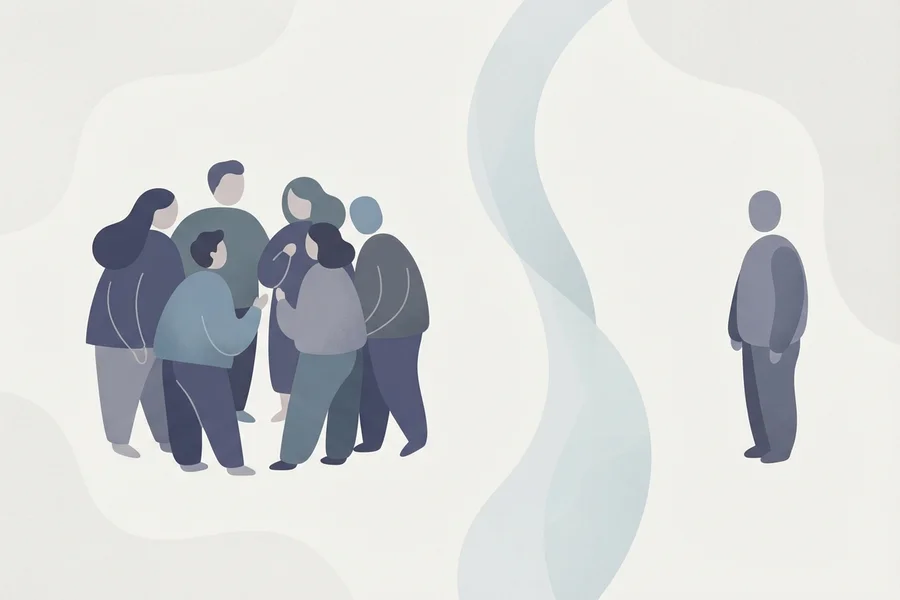
The Repeating Pattern. What you've noticed adds up to a pattern worth taking seriously, and worth having someone to talk it through with.
What you've noticed here is more specific than the other three: something aimed at you, on purpose, not the ordinary friction most friendships carry.
Being left out of something on purpose, to make a point. A version of the same argument going around behind your back that barely resembles what happened. Something you said in confidence turning up later, used against you.
None of that is a diagnosis, and it's not proof of who this friend is as a whole person — the fair, honest way to put it is that it's worth taking seriously.
If it would help to talk this through with someone else, the section on how this test was put together points to somewhere reasonable to start.
What's missing from this picture is how this friend would tell the same story, and whether what you've described has been going on for a while or traces back to one particularly rough patch.
Your results are no accident
The classic 16-type personality test rooted in Jung's typology has been rebuilt from the ground up: a new CoreTypes methodology, and a far higher level of accuracy. These might be the most useful ten minutes you'll ever spend on yourself: you walk away with the key to your decisions, your relationships and your results — and it's yours for good.
Take the free testFrequently asked questions
Is my friend toxic, or am I just too sensitive?
This isn't built to settle either question. It reflects what you noticed and how it left you feeling — your side of things, nothing more. And that unsettled feeling counts as real information on its own, even for readers whose answers land somewhere completely ordinary.
What's the difference between a toxic friend and just a bad friend?
“Toxic” isn't really one specific thing — most of what gets called that breaks down into several separate, ordinary patterns: an argument that runs hot, one person giving more than they get, real ambivalence, plain rivalry, a friendship quietly fading. Exactly one item on that list is treated here as genuinely worth worrying about: behavior aimed at hurting someone, on purpose.
How can I tell if a friendship has become one-sided?
That's its own separate thing, and much narrower than toxicity as a question. It comes down to who keeps doing the reaching out and the giving, full stop — nothing about anyone's motives. This test scores that imbalance on its own terms, apart from anything that looks like it was meant to hurt.
Why do I feel drained after spending time with a friend I actually like?
Because two things can be true about the same person: real fondness and real fatigue, both at once. That combination has a name — ambivalence — and it describes an enormous number of ordinary close relationships. It isn't a quieter way of saying toxic; it's its own well-studied category.
Can a quiz like this actually tell me if my friend is toxic?
No — nothing built this way can. Your friend never took it, never got a chance to explain their side, and can't be held to an answer they didn't give. What this reflects instead is your own read on your own experience of this friendship.
Methodology
Say a friendship feels off, and “toxic” is usually the word people reach for — even though what's underneath it varies a lot. A loud argument, a friend who's quietly stopped calling, genuinely liking someone while finding them draining, the sting of watching a friend get ahead — this test tries to tell those apart instead of filing them all under one word, and saves real concern for exactly one of them: something a friend does on purpose, meant to hurt. Friction and disagreement, on their own, are a normal part of close relationships.
What actually gets scored is narrower: the specific things a reader has noticed about one particular friendship, weighed against several possible explanations. It isn't a background check on the friend — the result reflects the reader's side of it, nothing more.
It has nothing to say about whether the friend meant any of it, what they'd say if asked, or whether the friendship is worth continuing. Those are separate questions, better answered by the reader than by a quiz.
There's also a limit built into the format: this comes from one person describing one relationship, unchecked against the friend's side. For that reason the wording here avoids the language used for abuse between partners or within families — that research wasn't built for friendships, and stretching it to fit here would claim more than the evidence supports. The strongest thing this test will say about any answer is that a pattern is worth taking seriously — never a diagnosis. Where that's the case, this is a fine place to start if talking it through with someone else would help.
References
- Haslam, N. (2016). Concept Creep: Psychology's Expanding Concepts of Harm and Pathology. Psychological Inquiry, 27(1), 1-17. doi:10.1080/1047840X.2016.1082418.
- Adams, R. E., & Laursen, B. (2007). The correlates of conflict: Disagreement is not necessarily detrimental. Journal of Family Psychology, 21(3), 445-458. doi:10.1037/0893-3200.21.3.445.
- Holt-Lunstad, J., & Uchino, B. N. (2019). Social Ambivalence and Disease (SAD): A Theoretical Model Aimed at Understanding the Health Implications of Ambivalent Relationships. Perspectives on Psychological Science, 14(6), 941-966. doi:10.1177/1745691619861392.
- Werner, N. E., & Crick, N. R. (1999). Relational aggression and social-psychological adjustment in a college sample. Journal of Abnormal Psychology, 108(4), 615-623. doi:10.1037/0021-843X.108.4.615.