
Teenage Anger Issues Test
Questions: 16Time: ≈ 4 min
Read each of the 16 situations and pick the answer closest to how you actually react, not how you’d like to. At the end you’ll see where your anger sits for your age and what that level means. It takes about 4 minutes.

Teenage Anger Issues Test: your result
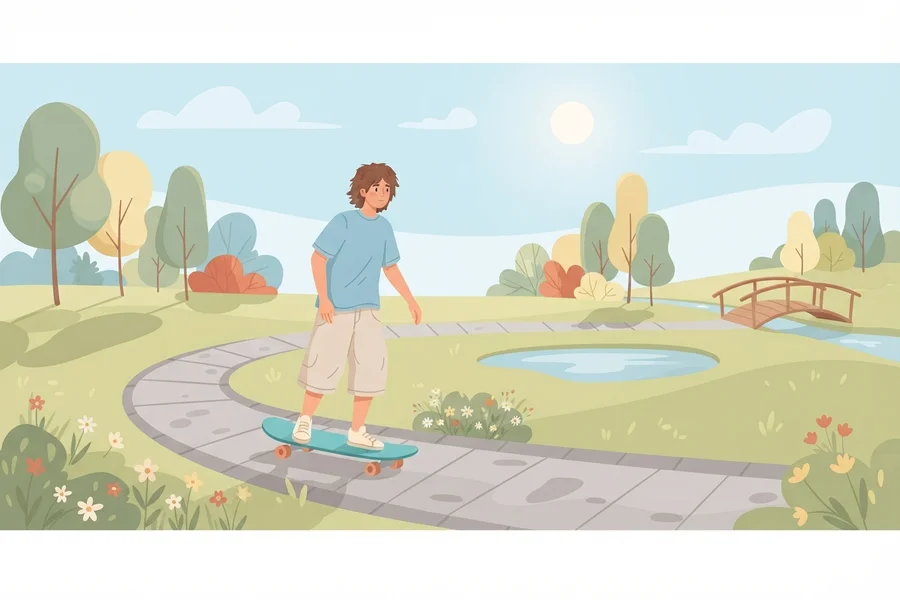
Cool Head It's the age, not a problem: your anger sits within what's typical for teenagers, and your flare-ups stay short and manageable.
Your anger works the way it does for plenty of teenagers: a quick flash when something annoys you, gone before it has done any damage. You don't hold on to it, and you don't need a whole evening to come back down.
In practice that means fewer fights with friends, fewer tense dinners at home, and a head that stays clear when a teacher or a sibling pushes your buttons. People around you probably find you easy to be around.
The price of that calm is easy to miss. A smooth surface can mean you handle friction well, or it can mean nothing has pushed you hard enough yet, or that you step around the difficult conversations instead of having them.
How your control holds up under long pressure, like a falling-out that drags on or a stretch of heavy exams, is something this result can't show. It's worth learning your own warning signs now, while things are quiet.
Teenage Anger Issues Test: your result
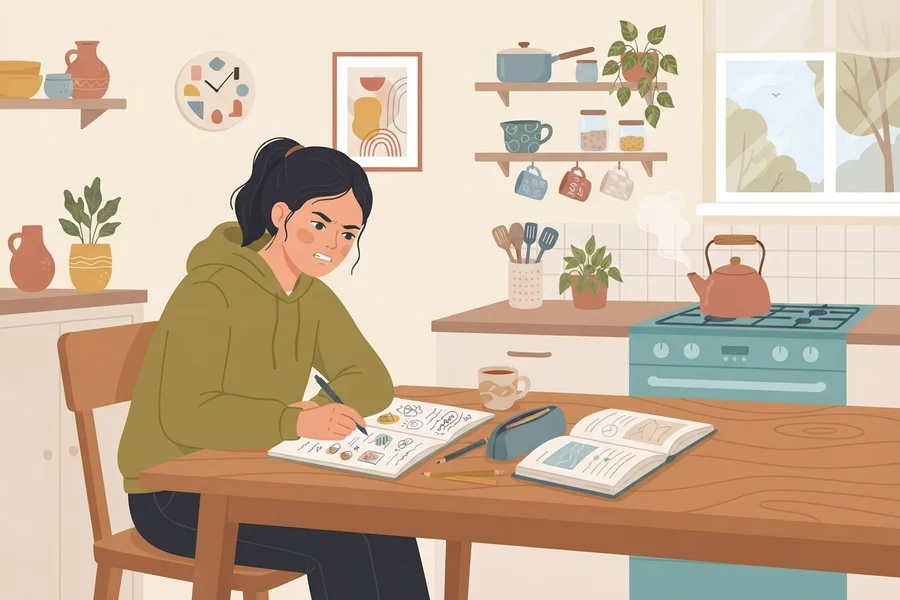
Simmer Still the age, not a problem, but your anger is running at the upper edge of what's typical for teenagers.
You're still inside the normal range for your age, just near the top of it. You flare up a little faster than the calmer end of the range, and the anger lingers longer once it has started.
Your brakes still work. You can catch the heat and step back before it snowballs, although that takes more effort than it used to.
The cost shows up in small places: a snappier answer to a parent, a longer silence after a row with a friend, less room between what happened and how hard you react. Those gaps are narrowing rather than widening.
A single result can't tell you whether this settles down with time or keeps climbing. Spotting it now, while the control is still in your hands, puts you ahead.
Teenage Anger Issues Test: your result
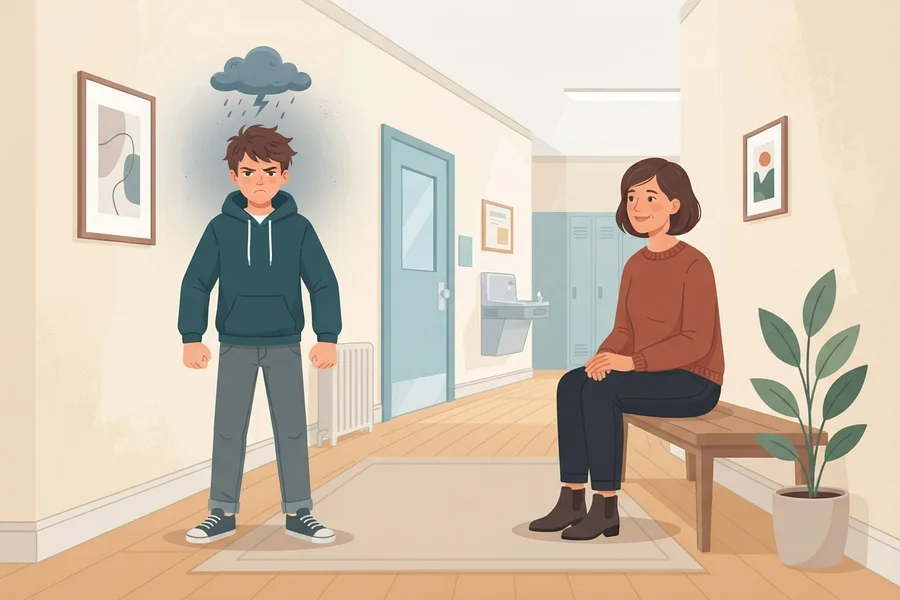
Storm Front This is more than the age: you have noticeably more anger, and less control over it, than is typical for teenagers.
Your answers describe anger that is strong, arrives fast and doesn't always stay with the moment that set it off. You can flare in a second, and you can also keep the fire going on purpose, which is a heavier mix than either one alone.
There's something solid in that. You feel your anger and let it out instead of swallowing it, which usually means whatever sits behind it matters to you.
The other side is that control is thin. Words, and sometimes actions, carry more anger than you meant them to, and friends, family and teammates are absorbing more strain than they would at the calmer end of the range.
This result reads how much anger there is and how well it's held; what is driving it stays out of view. A good next step is to mention it to an adult you trust, a school counsellor or a doctor. Nobody expects you to sort it out alone, and talking is an ordinary place to start.
Your results are no accident
The classic 16-type personality test rooted in Jung's typology has been rebuilt from the ground up: a new CoreTypes methodology, and a far higher level of accuracy. These might be the most useful ten minutes you'll ever spend on yourself: you walk away with the key to your decisions, your relationships and your results — and it's yours for good.
Take the free testYour result card
More tests like this
 Drinking Pattern Quiz
A private 16-question self-check on how much room alcohol currently takes up in your coping, control, and daily routine — not a diagnosis, just an honest look.
 Paranoia Test
A 15-question self-report test on how often suspicion, mistrust, and guardedness show up for you. Not a diagnosis, just your own patterns reflected back.
 Depression Test
A 15-question self-report reading of how often depression signs - low mood, low motivation, poor sleep - have shown up lately. Not a diagnosis.
How this test works
Methodology
Teenagers feel anger more readily and more strongly than adults do, so your answers are set against what is usual for your own age group and never against a grown-up yardstick. Something that would stand out in an adult can be ordinary here.
The questions are based on an approach from research on adolescent anger that treats two things as separate: a flare that happens on the spot, and anger that is kept burning deliberately. Both are read next to how well a person holds them in check. Sixteen situations cover how little it takes to set you off, how fast and how hard it hits your body, how well you cool down or let go, and whether the anger stays a private feeling or comes out in sharp words or physical acts. The answers add up to one overall level, and that level falls into one of three ranges.
For what anger does to you, what helps, and where to turn if it keeps getting the better of you, there is an NHS page written for the person who is feeling the anger.
You answer once, about yourself, so a rough day can tilt the picture, and the result is one piece of information among several. Use it as a way to look at your own reactions. It is not a diagnostic tool and it cannot stand in for a conversation with a professional.
Frequently Asked Questions
How do I know if my anger is a problem?
The test doesn't go looking for a diagnosis. It looks at how hard your anger hits and how well you're keeping hold of it right now, then shows where that sits for someone your age. That gives you something firmer to go on than judging yourself by your worst afternoon.
Is it normal that I get angry so easily at my age?
Yes, it is very common at your age. Two of the three results here describe ordinary teenage anger, with the second one only marking the top end of it. Just the third says your anger has gone past what is usual for someone your age.
Why am I angry so much of the time?
Sixteen answers can't show you a cause, and this test doesn't pretend to. What you get is a picture of how your anger behaves: how well you rein it in, how fast it flares, and whether you feed it on purpose. Why it behaves that way is a bigger question, and a person who knows you is better placed to help you sort it out.
What are the signs of anger issues, and which of them are mine?
The ones you recognise are the ones you pick. Each question describes a moment, and the answer that sounds like you marks that sign as yours, along with how far it goes. Your result then spells out in plain words what that looks like in your own case, so you don't have to tick through a list and guess.
Can a test like this diagnose me?
No. It works from the answers you give, and a diagnosis needs a trained professional who talks with you and knows what is going on in your life. If your result bothers you, or your anger is causing trouble at home or at school, talk to your school counsellor or a doctor.
References
- Burney, D. M., & Kromrey, J. (2001). Initial development and score validation of the Adolescent Anger Rating Scale. Educational and Psychological Measurement, 61(3), 446-460. doi:10.1177/00131640121971310
- Buss, A. H., & Perry, M. (1992). The aggression questionnaire. Journal of Personality and Social Psychology, 63(3), 452-459. doi:10.1037/0022-3514.63.3.452
- Arnett, J. J. (1999). Adolescent storm and stress, reconsidered. American Psychologist, 54(5), 317-326. doi:10.1037/0003-066X.54.5.317
- Farley, T. M., & McWey, L. M. (2024). Triggers and regulation: Qualitative experiences of anger and aggression among youth. The Family Journal (SAGE). doi:10.1177/10664807241257492