Mental Age Test
Answer 28 quick questions about your everyday feelings, activities, interests, and life stage – there’s no right answer, just whichever option actually sounds like you. In about 6 minutes you’ll get a plain, direct age in years: the one your everyday life currently reads as.


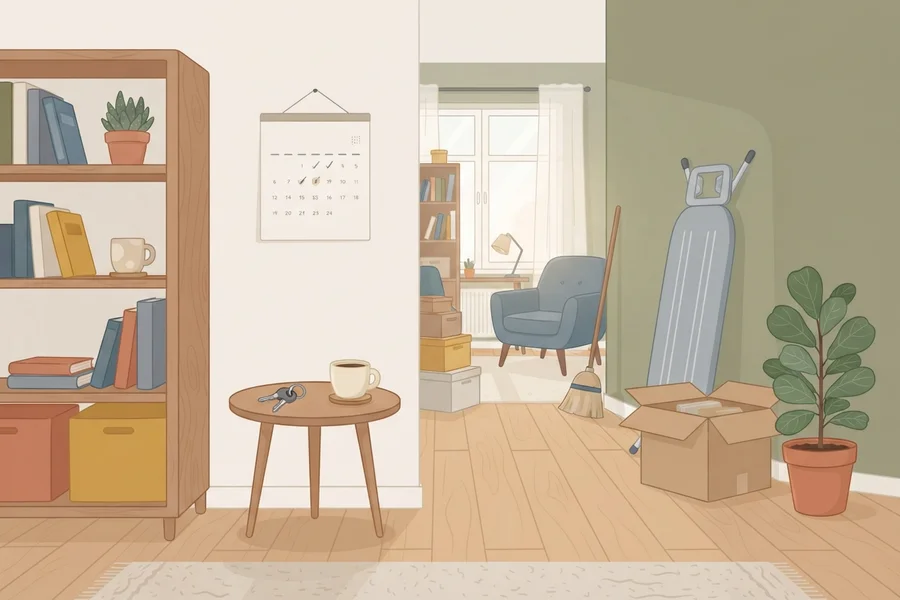
The First Draft. Living at the pace of late youth — about 18 to 24.
Right now, your everyday answers read as living at the pace of late youth — the everyday rhythm of about 18 to 24. An ordinary week leans toward activity and something new by default, your tastes are still actively shifting rather than settled, and the bulk of your working and family life still sits ahead of you rather than behind.
That shows up in small, concrete ways: a new interest gets tried before you've thought it through, a free evening defaults to doing something rather than resting, and very little about your routine feels locked in yet.
The real strength here is appetite — for the unfamiliar, for starting over, for trying the thing you haven't tried. That openness is genuinely valuable, and it's rare.
The honest caution, straight from the research behind this test: leaning even further into this pattern doesn't keep paying off without limit — whatever benefit comes with it can level off rather than keep climbing. Younger-reading isn't automatically the better reading, here or anywhere else on this scale.
What matters more than the number itself is what you actually do with a life this open right now.
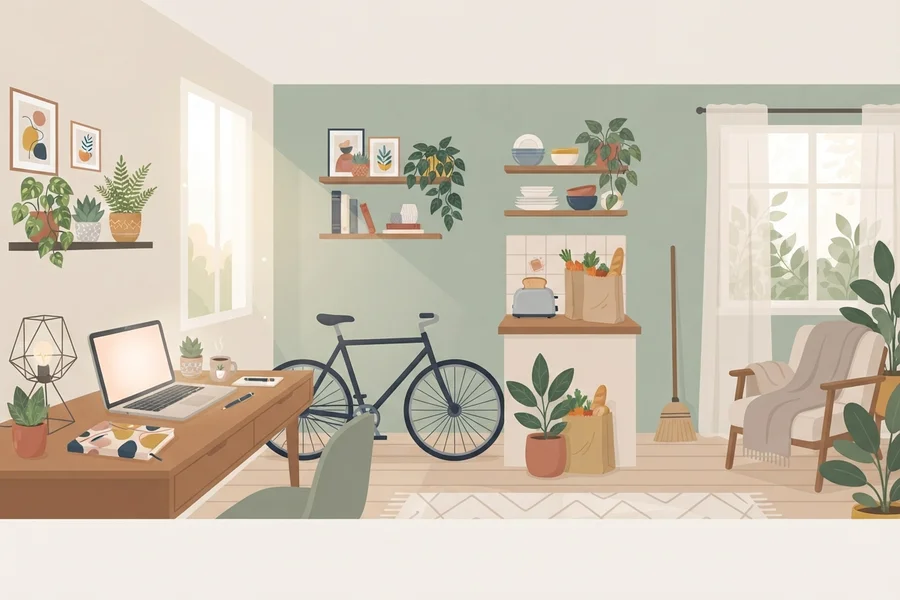
Finding Your Rhythm. Living at the pace of early adulthood — about 25 to 31.
Your everyday answers read as living at the pace of early adulthood — the everyday rhythm of about 25 to 31. A working role and a household that have found real shape but still have plenty of room to grow, tastes with a recognizable core alongside genuine new discoveries, and milestones landing roughly where you'd expect them to.
You're past the fully untested feel of just starting out, but nothing here reads as locked in either — there's still real momentum behind most of what you're doing.
The strength in this stretch is holding both at once: enough shape to build on, enough openness to keep changing direction if you want to.
The trade-off is that "settled but still moving" can feel like neither one thing nor the other on a hard day — not as anchored as later stretches, not as wide open as the earliest one.
Where that balance actually tips for you, week to week, says more than the number on its own.
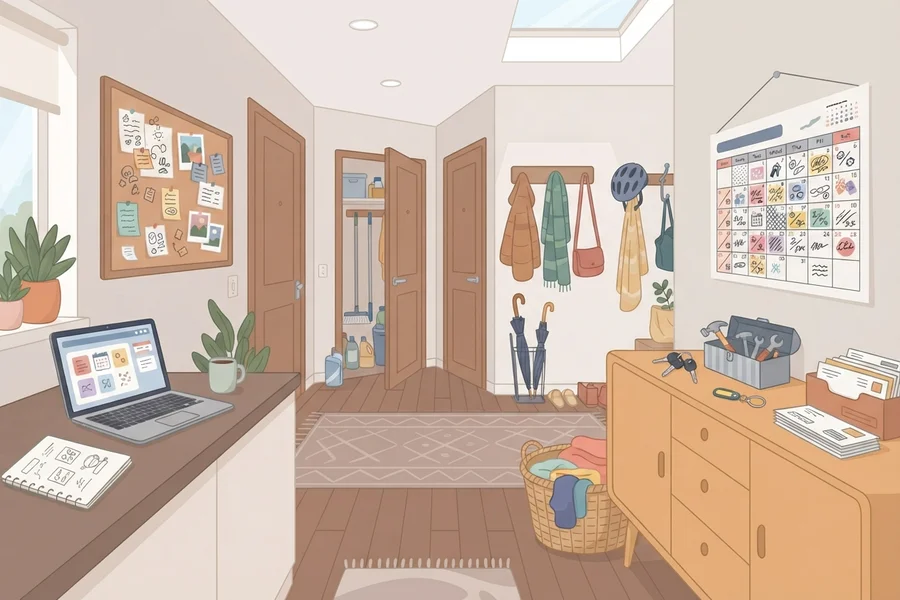
Steady Ground. Living at the pace of established adulthood — about 32 to 40.
Your everyday answers read as living at the pace of established adulthood — the everyday rhythm of about 32 to 40. Your working role is well past its early, still-forming shape, your household often centers on looking after other people as the default daily arrangement, and the big milestones are tracking closely with what's generally expected at this point.
Day to day, that shows up as an even mix rather than a lean either way — new technology and old habits get roughly equal use, new interests and familiar ones both still get your attention.
The strength here is genuine range: you're neither chasing every new thing nor refusing all of it, and that balance takes real, ongoing effort to hold.
The cost is that an even mix rarely announces itself the way an extreme does — it's easy to read this stretch as simply "normal" and stop paying attention to which way it's quietly drifting.
Which side of that mix has been winning more of your time lately?
The Long Settle. Living at the pace of midlife — about 41 to 49.
Your everyday answers read as living at the pace of midlife — the everyday rhythm of about 41 to 49. A long-settled working role, a caregiving load that's beginning to ease, and a pace that leans toward rest and the tried-and-tested somewhat more often than not.
You reach for what you already know works more than you chase what's new, and there's less of the try-everything territory the earliest stretch of this scale describes.
The strength is real, hard-won consistency — you know what works for you now, and you're not spending energy figuring that out from scratch anymore.
None of that is a step down from where you were: it's a different, equally valid position on this same scale, not a fading version of an earlier one.
What would it take for you to notice if steadiness quietly slid into simply avoiding anything new?

The Turning Page. Living at the pace of later midlife — about 50 to 58.
Your everyday answers read as living at the pace of later midlife — the everyday rhythm of about 50 to 58. Most of the milestones people generally reach by this point are already comfortably behind you, a real shift in your household's shape has either just happened or is close at hand, and your attention splits fairly evenly between what's ahead and what's already been lived.
Your tastes and your comfort with new technology both lean toward the familiar more often than not, though neither one is ruled out entirely.
The strength in this stretch is perspective — you're carrying enough lived experience to know what actually matters to you, without having fully turned away from what's still ahead.
The trade-off is that even split can feel like standing at a genuine crossroads rather than resting on solid ground.
Which way has your attention actually been leaning lately — forward, or back?
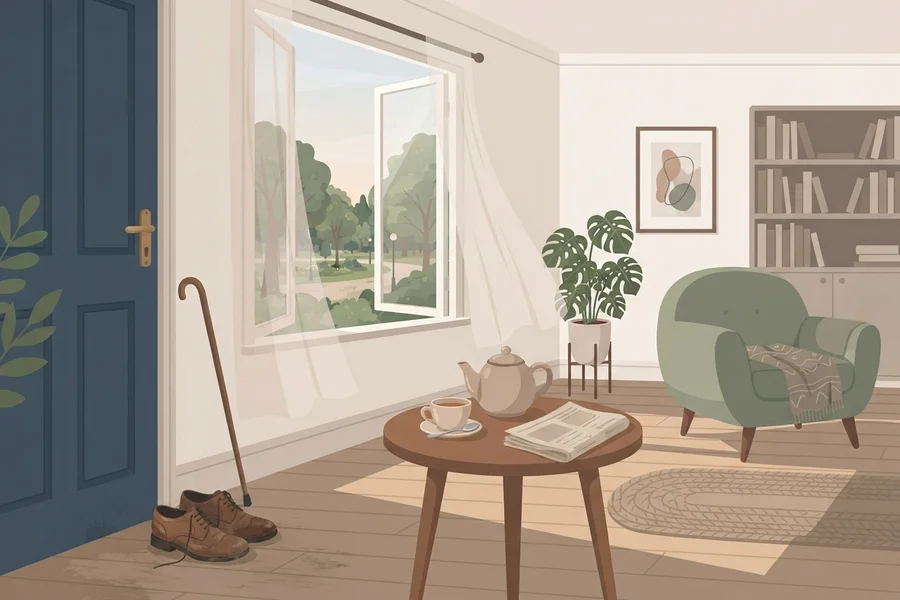
A Slower Current. Living at the pace of early older adulthood — about 59 to 68.
Your everyday answers read as living at the pace of early older adulthood — the everyday rhythm of about 59 to 68. Retirement has either recently arrived or sits close at hand, your caregiving role may be starting to run the other way, and your attention leans toward the present and toward memory more than toward what's still ahead.
Rest gets chosen over activity more often than not now, and the tried-and-tested generally wins out over the new.
The strength here is a kind of earned clarity: fewer things are still being figured out, and more of your time genuinely belongs to you.
The honest caution, straight from the research behind this test: this stretch sits well clear of either extreme this scale covers, so nothing here reads as a narrowing of what an ordinary day still holds.
What does a day that's genuinely yours actually look like for you right now?
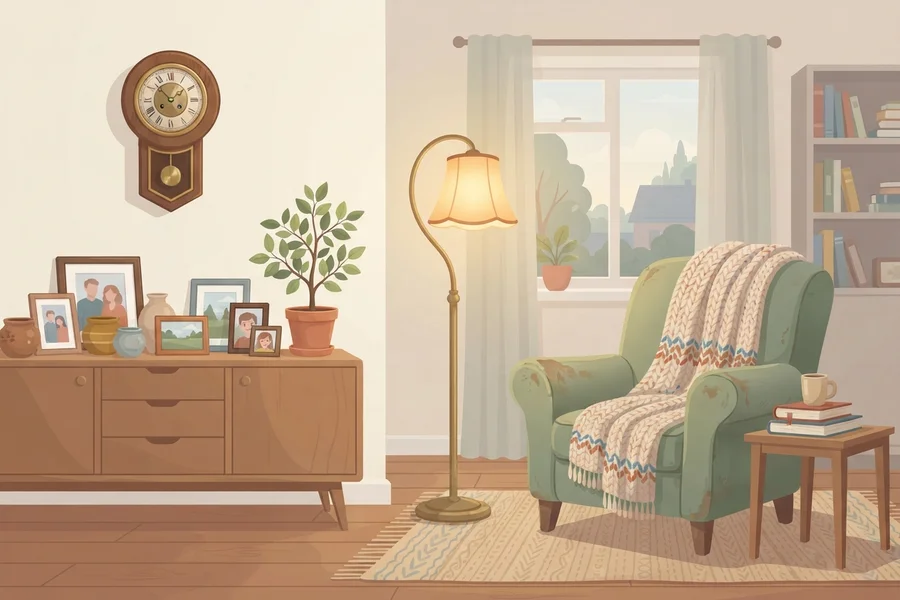
The Narrow Focus. Living at the pace of older adulthood — about 69 to 79.
Your everyday answers read as living at the pace of older adulthood — the everyday rhythm of about 69 to 79. A working role that wound down some time ago, every major milestone most people go through already behind you, and a settled, narrowed set of interests you hold onto closely rather than expanding.
Rest is the default across an ordinary week for you now, and new technology and passing trends are mostly left untried.
The strength here is focus: what you keep close, you actually know well, instead of spreading your attention thin across everything new that comes along.
None of that makes this a diminished version of the stretches before it — it's simply a different, equally described position on the same scale, not a lesser one.
What's still genuinely worth your full attention, out of everything you've narrowed down to?
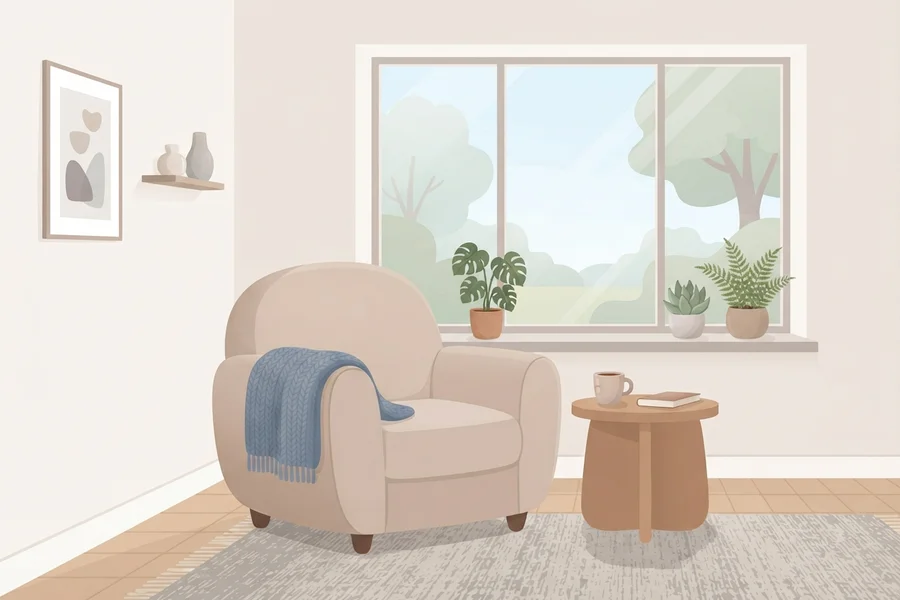
The Close Circle. Living at the pace of advanced age — about 80 to 98.
Your everyday answers read as living at the pace of advanced age — the everyday rhythm of about 80 to 98. Every major life transition is long completed, a settled handful of interests are held onto closely, and your everyday attention rests mostly on the present and on memory.
Being looked after, in some everyday measure, has become part of your ordinary pattern rather than an exception to it.
The strength worth naming plainly is what a lifetime this long actually holds: nothing left to prove, and nothing left half-finished by accident.
Like the earliest stretch of this same scale, this is one of the two ends the research behind this test warns hardest against reading as simply better or worse than any other point on it — it's the pattern itself, not a verdict.
What part of that pattern feels most like yours right now?
Your results are no accident
The classic 16-type personality test rooted in Jung's typology has been rebuilt from the ground up: a new CoreTypes methodology, and a far higher level of accuracy. These might be the most useful ten minutes you'll ever spend on yourself: you walk away with the key to your decisions, your relationships and your results — and it's yours for good.
Take the free testFrequently Asked Questions
Is mental age real?
It depends which sense of the phrase you mean. The old, intelligence-based sense — comparing a test score against an age-based average — has no honest basis for an adult test-taker; it was built for children and doesn't transfer. The sense that is well-studied and genuinely real is different: how your everyday feelings, activities, interests, and life stage compare with an age-typical pattern. That's exactly what this test's number is built from.
Is mental age the same as IQ?
No. This test doesn't measure IQ, cognitive ability, or intelligence in any form. It looks at everyday feelings, habits, interests, and life stage — not problem-solving or reasoning skill.
How is this number calculated?
Not with the old intelligence-based formula — this test doesn't use or compute that at all. The number here comes from averaging your own answers about how old your everyday feelings, activities, interests, and life stage read, the same way cognitive-age research has elicited exactly this kind of self-report for decades. It's never compared against your actual birth-certificate age, because this test never asks for it.
Can this be very different from your actual age?
Yes, easily, in either direction — a reading younger than your actual age or older than it. People's everyday feelings, habits, and life stage regularly pull away from their calendar age; that's a common, well-documented experience, not an unusual result. Whatever number comes back here is simply where your own answers land, nothing stranger than that.
Are tests like this scientifically accurate?
This is a self-reflection, entertainment-oriented read on a real, studied pattern — not a clinically precise or diagnostic measurement. That's also why the result comes back as a period of years rather than one exact year: the research behind this kind of number favors a bracket over a false single-year precision.
Methodology
This test approaches mental age the way cognitive-age research does: it adds up your own everyday self-placements — feelings, activities, interests, and life-stage markers — the same way this tradition elicits exactly this kind of self-report. It isn't a computed gap against your actual birth-certificate age: this test never asks for that age, so there's nothing of yours to measure a gap against.
It also isn't an IQ or intelligence reading. In intelligence testing, "mental age" already has a separate, technical meaning — a unit built by comparing a child's test result against the average for their age group, bounded to childhood and not meaningful beyond it. This test reuses that same public phrase for something else entirely: a naming collision, not a conceptual one.
The result comes back as a period of years, not a single exact year, on purpose: applied research in this tradition commonly substitutes a bracket for one open-ended year, and a coarser answer has been found to measure this pattern at least as well as a single raw year — a finding the American Psychological Association has covered directly.
This is a self-reflection tool, not a diagnostic or clinical assessment. The number it returns isn't a measure of intelligence, maturity, or a prediction about your future — and no period it can return is framed as the better outcome, since any apparent advantage of leaning toward either end can level off, or even reverse, at the extremes.
References
- Barak, B., & Schiffman, L. G. (1981). "Cognitive Age: A Nonchronological Age Variable." Advances in Consumer Research, Vol. 8, 602–606.
- Kastenbaum, R., Derbin, V., Sabatini, P., & Artt, S. (1972). "The Ages of Me: Toward Personal and Interpersonal Definitions of Functional Aging." Aging and Human Development, 3(2), 197–211. doi:10.2190/TUJR-WTXK-866Q-8QU7.
- Neugarten, B. L., Moore, J. W., & Lowe, J. C. (1965). "Age Norms, Age Constraints, and Adult Socialization." American Journal of Sociology, 70(6), 710–717. doi:10.1086/223965.
- Pinquart, M., & Wahl, H.-W. (2021). "Subjective Age From Childhood to Advanced Old Age: A Meta-Analysis." Psychology and Aging, 36(3), 394–406. doi:10.1037/pag0000600.