Enneagram Test
This is a free, independent test built on the classical nine-type Enneagram system — it isn’t affiliated with any other Enneagram site or app. Answer all 45 questions with your instinctive first reaction, not your ideal one, and you’ll get your type immediately at the end, with no email required.


Type 9: The Peacemaker, Steady in the Middle
You're the one who wants the room to feel calm, more than you want to be right in it. That preference runs deeper than a comment on your patience — it's closer to the actual thing you steer toward, most weeks of your life.
It shows up as an easy kind of warmth. People relax around you, and not by accident: you're genuinely reassuring, easy to sit with even during the messy parts, someone others believe will meet them evenly rather than escalate. Steadiness like that is a real asset in almost any room you're in.
Your own agenda is usually the first thing to give. It's easy for your own preferences to slide behind everyone else's just to keep the friction low, and for follow-through on your own plans to lag behind your knack for tending to everyone else's. Loose ends pile up quietly, because a smooth, harmonious moment mattered more than pushing your own point through.
None of this covers you completely. Most people reading this will recognize a few lines of it and shrug off a few others, and that's ordinary — not a sign the test missed you.

Type 6: The Loyalist, Built to Watch the Exits
Underneath most of your decisions sits one quiet question: can this actually be trusted before I commit to it? You'd rather know that than move fast.
That instinct makes you genuinely good in a crisis — engaged, responsible, the one who already clocked the real risk while everyone else was still optimistic. People lean on you precisely because you don't pretend a shaky plan is solid.
The other side of that same instinct is a restlessness that doesn't switch off easily. You scan for what could still go wrong even after a plan is approved, and you can swing between needing someone to reassure you and pushing back at the very reassurance you asked for — which is exhausting for you long before it's confusing for anyone watching.
No single result here, including this one, is the whole of you. Plenty of people who land closest to this pattern still see real pieces of themselves in one or two of the others — that overlap is normal, not a flaw in how the test scored you.

Type 7: The Enthusiast, Chasing the Open Door
Life feels right to you when there's still somewhere else it could go — another idea, another plan, a door still open down the hall.
That appetite makes you genuinely fun to have around: spontaneous, quick to try the new thing, comfortable in situations that would make more cautious people freeze. Your openness to whatever's next is a real asset, not just restlessness with a nicer name.
Sitting still is where the trouble starts. Uncomfortable, boring, or heavy stuff gets a quick reroute toward whatever's next and shinier, rather than a real look — and that habit can leave a trail of half-finished things behind you that never got the attention the exciting parts did.
This one description won't be the whole story. Most people reading it see themselves clearly in parts of it and recognize pieces of one or two other results too — which is exactly how a test like this is supposed to work, not a sign it missed you.

Type 4: The Individualist, Searching for the Real Thing
You want to be seen for something specific and true about you — not generically liked, but actually recognized as who you are underneath the surface.
That pull toward authenticity gives you real emotional range: you notice nuance other people miss, you're expressive in ways that make your version of things memorable, and you're genuinely comfortable naming feelings that other people would rather smooth over.
Comparison is where that same pull turns on you. It's easy to measure your own life against everyone else's highlight reel and land, again and again, on what's missing from yours — a habit that can leave you feeling more alone in a crowded room than the room actually warrants.
No result here fully accounts for a real person, this one included. Most readers find themselves scattered across two or three of these descriptions, and that's the normal shape of a test like this, not a miss.
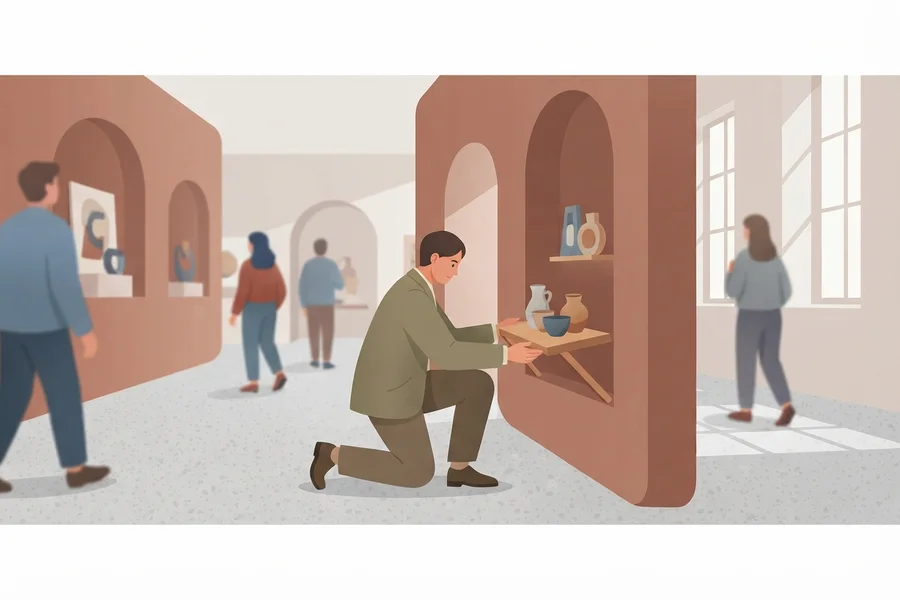
Type 1: The Reformer, Holding the Line
Somewhere close to the center of how you operate is a sense of how things ought to be — and a running, mostly private, tally of the gap between that and how things actually are.
That standard makes you genuinely dependable: principled, careful, the person whose work holds up because you actually checked it. People trust what you finish, because you don't let sloppy things pass just because they're convenient.
A low-grade tension rarely fully switches off in you — noticing what's wrong even in moments meant to be relaxed, and holding your irritation about it in check rather than letting it out, which takes more out of you than it looks like from the outside.
This is one honest cut through you, not the whole shape of you. Plenty of people who land here still see real pieces of themselves in other results too, and that overlap is expected, not a scoring error.

Type 2: The Helper, Carrying More Than Shows
Being genuinely needed by the people you care about matters to you more than almost anything else — it's less a preference than the thing you orient your whole day around.
That orientation makes you generous in a way that's hard to fake: warm, attentive to what other people actually need before they've said it, the kind of presence that makes people feel cared for without having to ask.
What it costs is a lopsided account of your own needs. You tend to overstate, even to yourself, how much you're giving, while quietly underplaying what you need back — and that imbalance can leave you resentful in ways you didn't quite see building.
A single result can't cover a whole person, and this one won't cover all of you either. Most readers see real pieces of themselves in a couple of these descriptions, which is exactly how the test is meant to work.

Type 3: The Achiever, Built for the Scoreboard
What you're actually chasing, underneath most of your effort, is proof — some visible result that shows the work was worth it, and that you are too.
That drive makes you genuinely effective: adaptable across different rooms and different audiences, driven in a way that gets real things finished, someone people put on the project when it actually has to land.
A lot of your energy ends up managing the image rather than the substance underneath it — shaping how things look to whoever's watching until it's honestly hard, even for you, to say what's genuine and what's polish.
None of this is the entire person reading it, including you. Most people recognize real pieces of themselves in more than one of these nine results, and that overlap is ordinary, not a failure of the test to pin you down.

Type 8: The Challenger, Nobody's Hand to Play
What matters most to you is staying strong enough that nobody else gets to make your decisions for you — self-sufficiency isn't a nice-to-have for you, it's closer to a requirement.
That stance makes you genuinely decisive: confident under pressure, willing to say the hard thing plainly, someone people actually want in the room when a real call has to get made fast.
The cost is how far you're willing to push to prove the point — testing limits, leaning into confrontation more readily than backing down, even when backing down would have cost you less than the fight did.
This is one real slice of you, not the complete picture. Most people reading this recognize themselves clearly here and still see real pieces of one or two other results too, which is the normal, expected overlap, not a miss.
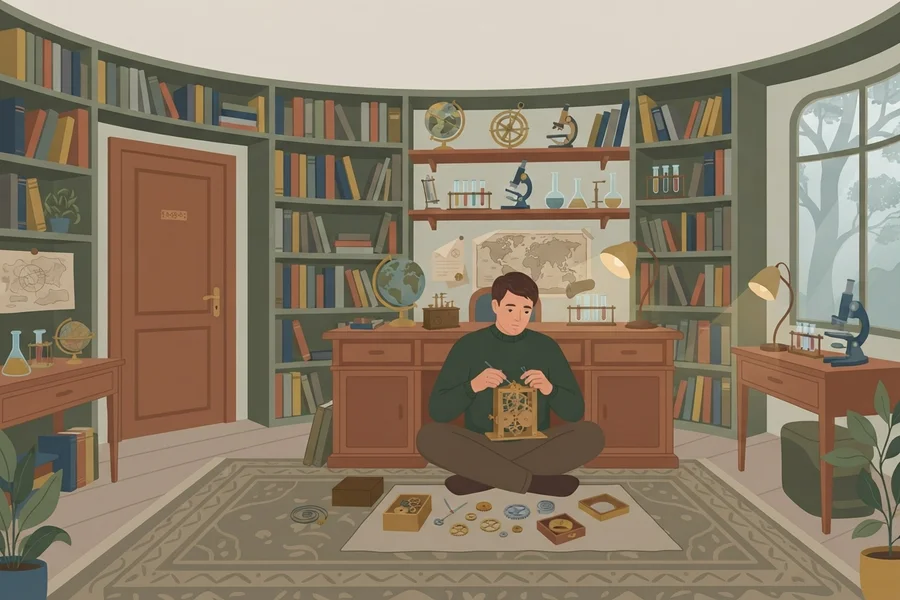
Type 5: The Investigator, Keeper of a Private Room
You'd rather understand something fully before you commit to it than commit first and figure it out as you go — that preference runs through most of how you operate.
It makes you genuinely sharp: perceptive about details other people miss, capable of original thinking precisely because you gave yourself the room to actually think, rather than reacting on the spot.
What it costs is connection. You conserve your time, your energy, and your privacy carefully, holding back more of yourself than you let show — which can leave people who care about you working harder than they should, just to reach you.
No description this short is the whole of anyone, this one included. Most readers see real pieces of themselves scattered across two or three of these nine results, and that's the ordinary, expected shape of a test like this.
Your results are no accident
The classic 16-type personality test rooted in Jung's typology has been rebuilt from the ground up: a new CoreTypes methodology, and a far higher level of accuracy. These might be the most useful ten minutes you'll ever spend on yourself: you walk away with the key to your decisions, your relationships and your results — and it's yours for good.
Take the free testFrequently Asked Questions
What are the 9 Enneagram types, and how are they different?
They're nine separate ways of being wired, not nine strengths of one shared quality — each built around its own particular worry and its own particular pull, more like nine different engines than nine settings on one dial. Any pair of them can look alike from the outside and still run on genuinely different worries underneath.
How do I actually figure out which type I am?
Pay less attention to what you do once in a while and more to what keeps showing up — the same underlying worry or pull surfacing again and again across genuinely different situations. That kind of consistency tells you more than any single behavior does. A test like this one gives you a solid first guess worth checking against your own life, not a label handed down as final.
Is the Enneagram scientifically valid, or accurate?
Researchers who've actually studied the Enneagram are far from settled on it, and a fair amount of that work questions how well the model holds up under rigorous testing. This test treats it as a descriptive lens for thinking about your own patterns, not as a scientifically proven measurement — no single result here should be read as hard, validated fact.
How many questions does an Enneagram test usually have, and how long does it take?
It varies a lot from one version to the next — some run through dozens of paired comparisons, others rate one statement at a time, and total length swings widely across them. This one runs 45 questions that touch on every one of the nine, takes roughly ten minutes start to finish, and hands you a complete answer right away, and it does not cost anything.
Can your Enneagram type change over time?
Most people who study this treat the underlying type as fixed — less something you grow into and more something that was already there, just showing up differently at different points in your life. What actually moves around is how loudly it runs the show and how much room your circumstances give it to do that.
Methodology
This test works from the Enneagram model, a nine-way map of personality rather than one trait scored in degrees. Each of the nine has its own core worry and its own core want, and those two things — not how tidy or outgoing someone happens to be day to day — are what the test is actually trying to locate.
That's what separates the 45 questions here from a typical personality quiz: rather than tallying habits, they're aimed at the motive sitting behind a given reaction, across five different kinds of situations.
Worth saying plainly: research into this specific model is still young, and it hasn't cleared the kind of rigorous validation bar some other personality frameworks have. It's also common for someone's answers to land almost evenly across two of the nine rather than settling clearly on one — if that's you, treat whichever type wins here as a reasonable first read on yourself, not the final word on who you are. Ideas about "wings," or a type shifting toward another under pressure, don't have solid research behind them, and this test doesn't use either one. And whatever pattern you land on describes how you tend to relate to what you're afraid of and what you're drawn toward — it isn't a diagnosis, and it isn't a label for any recognized mental health condition.
For more background: the APA's entry on personality type and Wikipedia's overview of the Enneagram of Personality both go deeper into where the model comes from and how it has been studied.
References
- Hook, J. N., Hall, T. W., Davis, D. E., Van Tongeren, D. R., & Conner, M. (2021). The Enneagram: A systematic review of the literature and directions for future research. Journal of Clinical Psychology, 77(4), 865–883. doi:10.1002/jclp.23097
- Sutton, A. (2012). "But is it real?" A review of research on the Enneagram. The Enneagram Journal, 5(1), 5–20.
- Norcross, J. C., Koocher, G. P., & Garofalo, A. (2006). Discredited psychological treatments and tests: A Delphi poll. Professional Psychology: Research and Practice, 37(5), 515–522. doi:10.1037/0735-7028.37.5.515